Seven Audacy stations teamed up and raised $3.2 million for St. Jude’s Children’s Research Hospital during the 36th annual “Country Cares for St. Jude Kids Radiothon.” All proceeds go towards supporting St. Jude’s life-saving mission: Finding cures. Saving children.®
Between December 11 and 12, U.S. 101 (WUSY-FM) in Chattanooga, US99 (WUSN-FM) in Chicago, 99.5 WYCD (WYCD-FM) in Detroit, KMLE Country 107.9 (KMLE-FM) in Phoenix, Y108 (WDSY-FM) in Pittsburgh, 103.7 KSON (KSON-FM) in San Diego and Froggy 101 (WGGY-FM) in Wilkes-Barre held on-air radiothons, asking listeners to become Partners In Hope and contribute monthly donations. The $3.2 million raised will help ensure St. Jude patients and their families never receive a bill from St. Jude for treatment, housing, travel or food. This allows them to focus their full energy and attention on recovery.
Hosted by local on-air personalities and national Audacy talent, including Katie Neal, Holly Hutton and Rob Stone, the two-day radiothon drove significant listener engagement and donations. Highlights included an emotional interview on 103.7 KSON with a St. Jude mother, who detailed how the organization provided her daughter with years of life beyond initial medical expectations. This year’s event also featured an exclusive St. Jude takeover hour hosted by Country superstar Luke Combs.
“Our national radiothon series is fueled by the incredible dedication of our Audacy team, who put their hearts into supporting the kids at St. Jude,” said Tim Roberts, Country Format Vice President, Audacy. “Radio’s greatest strength is its ability to unite communities, and the selfless support from our audience this year has been nothing short of inspiring. Our partnership with St. Jude remains a cornerstone of our mission, and every dollar donated is a victory in the fight to end childhood cancer.”
Listeners can tune in to participating Audacy Country stations and connect with them via the social platforms listed below.
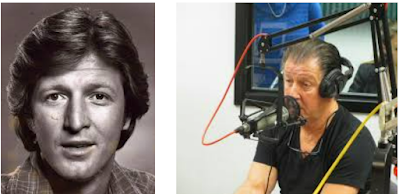
Howie Klein, a pioneering record executive, radio DJ, and dedicated political activist, passed away Wednesday, at the age of 77 after a long battle with pancreatic cancer. His sister announced the news via a social media post.
Howie Klein (1948-2025)
Born Howard Klein on February 20, 1948, in Brooklyn, New York, he began his music career at Stony Brook University, where he booked iconic acts like Jimi Hendrix, the Who, Pink Floyd, the Doors, and Janis Joplin.
After traveling abroad, he settled in San Francisco and hosted one of the first regular punk radio shows on KSAN in the late 1970s, interviewing bands such as the Sex Pistols, Devo, and Iggy Pop.In 1978, Klein co-founded 415 Records, a key independent label that signed influential new wave and punk acts like Romeo Void, Translator, and Wire Train.
He joined Sire Records in 1987, contributing to its golden era with artists including Madonna, the Smiths, Depeche Mode, and Lou Reed.
Klein then became president of Reprise Records (a Warner Bros. subsidiary) from 1989 to 2001, overseeing a roster that included Neil Young, Joni Mitchell, Green Day, Alanis Morissette, Eric Clapton, Fleetwood Mac, and many others. Known for his artist-friendly approach, he championed creative freedom amid industry censorship battles, notably against groups like the Parents Music Resource Center (PMRC).
In 2001, following the AOL-Time Warner merger, Klein resigned. He later focused on progressive politics, co-founding the Blue America PAC, blogging at DownWithTyranny.com, and advocating for causes like free speech and social justice. His contributions to music history are preserved in the Howie Klein Collection at the Rock & Roll Hall of Fame.
Klein is remembered as a visionary who bridged punk, alternative, and mainstream music while fiercely defending artistic expression. His passing has been mourned widely in music and political circles.
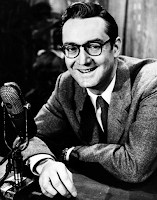
➦In 1921..Stephen Valentine Patrick William Allen was born in 1921 (Died October 30, 2000). He was a radio and TV personality, musician, composer, actor, comedian, and writer. In 1954, he achieved national fame as the co-creator and first host of The Tonight Show, the first late-night television talk show.
Steve Allen
Though he got his start in radio, Allen is best known for his extensive network television career. He gained national attention as a guest host on Arthur Godfrey's Talent Scouts. After he hosted The Tonight Show, he went on to host numerous game and variety shows, including his own The Steve Allen Show, I've Got a Secret, and The New Steve Allen Show. He was a regular panel member on CBS's What's My Line?, and from 1977 until 1981 wrote, produced, and hosted the award-winning public broadcasting show Meeting of Minds, a series of historical dramas presented in a talk format.
Allen was a pianist and a prolific composer. By his own estimate, he wrote more than 8,500 songs, some of which were recorded by numerous leading singers. Working as a lyricist, Allen won the 1964 Grammy Award for Best Original Jazz Composition. He also wrote more than 50 books, including novels, children's books, and books of opinions, including his final book, Vulgarians at the Gate: Trash TV and Raunch Radio (2001).
Allen was an announcer for radio KFAC in Los Angeles, then moved to the Mutual Broadcasting System in 1946, talking the station into airing his five-nights-a-week comedy show Smile Time, co-starring Wendell Noble. After Allen moved to CBS Radio's KNX in Los Angeles, his music-and-talk half-hour format gradually changed to include more talk in an hour-long late-night format, boosting his popularity and creating standing-room-only studio audiences.
During a show's segment, Allen went into the audience with a microphone to ad lib on-air for the first time. It became a commonplace part of his studio performances for many years. His program attracted a huge local following, and as the host of a 1950 summer replacement show for the popular comedy Our Miss Brooks, he was exposed to a national audience for the first time.
Allen died at age 78 on October 30th, 2000 after a minor traffic accident caused a blood vessel in his heart wall to rupture.
➦In 1926...WSM, the “WSM Barn Dance” began regular Saturday night broadcasts. Within two years it was renamed the “Grand Ole Opry.”
➦In 1950...The Gillette Safety Razor Company & Mutual radio signed agreements for the radio rights for the next six years to baseball’s World Series and All-Star games. The price tag: a comparatively paltry $6 million dollars.
➦In 1953...The soap opera “Big Sister” was heard for the last time on CBS radio. The 15-minute melodrama had been on the air daily for 16 years. “Big Sister” was the ongoing story of Sue Evans Miller and her relationship with her big sister, Ruth Evans.
➦In 1954...Original "The Shadow" radio programs lurked around the airwaves for the final time. It originated in 1930 with vigilante crime-fighter Lamont Cranston battling greed and corruption on a weekly basis. “Who knows what evil lurks in the hearts of men? The Shadow knows….”
➦In 1963...Capitol Records rushed released its first single by The Beatles. “I Want to Hold Your Hand”, backed with “I Saw Her Standing There”, was released after DJ Carroll James on WWDC in Washington, DC had begun airing an imported copy. "Hand" reached #1 on February 1, 1964. The flood of music by John, Paul, George and Ringo had started the British Invasion, changing contemporary music forever.
➦In 1965...Beatle Paul McCartney was interviewed on pirate radio station “Radio Caroline” while spending Christmas at his father’s home in Cheshire, England. Later Paul crashed from the moped he was riding and suffered a five-inch cut to his mouth.
➦In 1974...one of the true titans of both big-time radio & TV, Jack Benny died of pancreatic cancer at age 80.
His weekly radio show was consistently top rated over a 23 year run ending in 1955. He appeared regularly on CBS-TV from 1950-65. He is credited with developing a broadcast format for comedy that is still being widely followed today.
Benny had been a minor vaudeville performer before becoming a national figure with The Jack Benny Program, a weekly radio show that ran from 1932 to 1948 on NBC and from 1949 to 1955 on CBS. It was among the most highly rated programs during its run.
Benny's long radio career began on April 6, 1932, when the NBC Commercial Program Department auditioned him for the N.W. Ayer agency and their client, Canada Dry, after which Bertha Brainard, head of the division, said, "We think Mr. Benny is excellent for radio and, while the audition was unassisted as far as orchestra was concerned, we believe he would make a great bet for an air program." Recalling the experience in 1956, Benny stated that Ed Sullivan had invited him to guest on his program (1932), and "the agency for Canada Dry ginger ale heard me and offered me a job."
Christmas is an annual festival commemorating the birth of Jesus Christ, observed primarily on December 25 as a religious and cultural celebration among billions of people around the world.
A liturgical feast central to Christianity, preparation for Christmas begins on the First Sunday of Advent and it is followed by Christmastide, which historically in the West lasts twelve days and culminates on Twelfth Night. Christmas Day is a public holiday in many countries, is observed religiously by a majority of Christians, as well as celebrated culturally by many non-Christians, and forms an integral part of the annual holiday season.
The traditional Christmas narrative recounted in the New Testament, known as the Nativity of Jesus, says that Jesus was born in Bethlehem, in accordance with messianic prophecies. When Joseph and Mary arrived in the city, the inn had no room, and so they were offered a stable where the Christ Child was soon born, with angels proclaiming this news to shepherds, who then spread the word.
There are different hypotheses regarding the date of Jesus's birth. In the early fourth century, the church fixed the date as December 25, the date of the winter solstice in the Roman Empire. It is nine months after Annunciation on March 25, also the Roman date of the spring equinox. Most Christians celebrate on December 25 in the Gregorian calendar, which has been adopted almost universally in the civil calendars used in countries throughout the world.
However, part of the Eastern Christian Churches celebrate Christmas on December 25 of the older Julian calendar, which currently corresponds to January 7 in the Gregorian calendar. For Christians, believing that God came into the world in the form of man to atone for the sins of humanity rather than knowing Jesus's exact birth date is considered to be the primary purpose of celebrating Christmas.
by Dave Van Dyke, President Bridge Ratings Media Research
War...what is it good for?” was a question that defined a generation.
In 2025, a similar question gets quietly asked about traditional radio. Not out loud. Not boldly. But in budget meetings, strategy decks, and hallway conversations.
Radio… what is it good for?
Let’s answer it clearly — without nostalgia, without defensiveness, and without pretending the world hasn’t changed.
It’s Good for Trust
In a world flooded with algorithms, fake virality, bot-driven engagement, and content designed purely to manipulate dopamine, radio remains one of the few mass media platforms built on human credibility.
Real voices. Real communities. Real accountability.
Listeners don’t just “consume” radio — they believe it. That matters more in 2025 than it did in 1995.
It’s Good for Companionship
Radio’s greatest asset has never been music alone. It’s the feeling that someone is with you in the car, at work, in the kitchen, or on the late-night drive home. While every digital platform fights for attention, radio quietly delivers presence.
Spotify gives you songs. TikTok gives you noise.
Radio gives you company.
It’s Good for Local Identity
In a media world optimized for scale, speed, and sameness, radio still reflects place. Traffic. Weather. Local sports. Community disasters. School closings. Lost dogs. Charity drives. Local humor. Radio didn’t abandon the concept of community. The rest of media did.
It’s Good for Stability in Chaos
As consumers manage an increasingly stressful world and bounce between platforms, formats, and fragmented attention, radio provides a consistent daily rhythm. Morning shows structure days. Drive times frame transitions. Even commercials — yes, commercials — tell us what matters locally. In an overstimulated economy, radio offers a rare thing: media you don’t have to manage.
It’s Good for Business (When We Let It Be)
Radio sales people too often sell radio like it’s broken. It isn’t.
It remains:
A trusted brand environment
A high-reach local platform
A powerful support medium
A lower-cost entry for local advertisers
Radio doesn’t fail businesses. Businesses fail when they underutilize what radio actually does best: influence, frequency, and familiarity.
So… What Is Radio Good For?
Not perfection. Not trends. Not competing with TikTok on TikTok’s terms.
Radio is good for connection. Radio is good for belief. Radio is good for routine. Radio is good for community.
And in 2025, as media grows louder, colder, and more automated — those aren’t weaknesses.
They’re advantages.
-----------
Dave Van Dyke is currently President and founder of media consumption analysis research firm Bridge Ratings and its subsidiary StreamStats LLC, the company has been providing radio stations with proprietary on-demand streaming data based on format core listener music consumption behavior.
➦In 1818...The Christmas carol Silent Night was first performed at St Nicholas parish church in Oberndorf, a village in the Austrian Empire on the Salzach River in present-day Austria.
A young priest, Father Joseph Mohr, had come to Oberndorf the year before. He had written the lyrics of the song "Stille Nacht" in 1816 at Mariapfarr, his father's hometown in the Salzburg Lungau region. The melody was composed by Franz Xaver Gruber, schoolmaster and organist in the nearby village of Arnsdorf.
Before Christmas Eve, Mohr brought the words to Gruber and asked him to compose a melody and guitar accompaniment for the Christmas Eve mass, after river flooding had damaged the church organ. The church was eventually destroyed by repeated flooding and replaced with the Silent Night Chapel. It is unknown what inspired Mohr to write the lyrics, or what prompted him to create a new carol.
Reginald A Fessenden
➦In 1906... Quebec physicist Reginald A. Fessenden sent his first radio broadcast himself playing ‘O Holy Night’ on his violin for telegraph operators and other sailors aboard ships in the Atlantic and Caribbean.
In the late 1890s, reports began to appear about the success Guglielmo Marconi was having in developing a practical radio transmitting and receiving system. Fessenden began limited radio experimentation and soon came to the conclusion that he could develop a far more efficient system than the spark-gap transmitter and coherer-receiver combination which had been championed by Oliver Lodge and Marconi.
Wireless Station at Brant Rock, MA
On December 21, 1906, Fessenden made an extensive demonstration of the new alternator-transmitter at Brant Rock, showing its utility for point-to-point wireless telephony, including interconnecting his stations to the wire telephone network. A detailed review of this demonstration appeared in The American Telephone Journal.
Two additional demonstrations took place a few days later, which may have been the first audio radio broadcasts of entertainment and music ever made to a general audience. (Beginning in 1904, the U.S. Navy had broadcast daily time signals and weather reports, but these employed spark transmitters, transmitting in Morse code).
On Christmas Eve 1906, Fessenden used the alternator transmitter to send out a short program from Brant Rock. It included a phonograph record of Ombra mai fu (Largo) by George Frideric Handel, followed by Fessenden himself playing on the violin Adolphe Adam's carol O Holy Night, singing Gounod's Adore and be Still, and finishing with reading a passage from the Bible: 'Glory to God in the highest and on earth peace to men of goodwill' (Gospel of Luke 2:14).
He petitioned his listeners to write in about the quality of the broadcast as well as their location when they heard it. Surprisingly, his broadcast was heard several hundred miles away; however, accompanying the broadcast was disturbing. This noise was due to irregularities in the spark gap transmitter used.
➦In 1922...the BBC broadcast the first British radio play. It was entitled, "Truth about Father Christmas".
➦In 1928...the first broadcast of “The Voice of Firestone” was heard on the NBC Blue Radio Network, Monday night at 8:30. “The Voice of Firestone” became a hallmark in radio broadcasting, keeping its same night and sponsor for its entire 27-year run. Beginning September 5, 1949, the program of classical and semi-classical music was simulcast on television.
Lionel Barrymore
➦In 1939...The radio version of the classic “A Christmas Carol” with Lionel Barrymore as Scrooge aired live for the first time on Orson Welles’ Campbell Playhouse on CBS. On prior Christmases Barrymore had just read the story beginning in 1934.
➦In 1944...The Andrews Sisters starred in the debut of “The Andrews Sisters’ Eight-to-the-Bar Ranch” on ABC radio. Patty, Maxene, and LaVerne ran a fictional dude ranch. George “Gabby” Hayes was a regular guest along with Vic Schoen’s orchestra. The ranch stayed in operation until 1946.
➦In 1948...Perry Como made his television debut when NBC televised the Chesterfield Supper Club 15-minute radio program.
➦In 1931...Lawrence Tibbett was the featured vocalist as radio came to the Metropolitan Opera House in New York City. The first opera broadcast was “Hansel und Gretel”, heard on the NBC network stations. In between acts of the opera, moderator Olin Downes would conduct an opera quiz, asking celebrity guests opera-related questions.
The program’s host and announcer was Milton Cross, who stayed with the weekly broadcasts for 43 years.
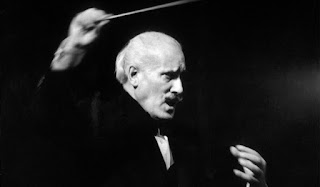
Arturo Toscanini
➦In 1937...Arturo Toscanini conducted the first broadcast of “Symphony of the Air” over NBC radio.
➦In 1945...Gary Lee Sandy born. Sandy played program director Andy Travis on the television sitcom WKRP in Cincinnati.
➦In 1948...92.3 FM NYC frequency signed-on as WMCA-FM. (Today the station is WINS 92.3 FM and is owned by Audacy Communications, simulcasts All-News 1010WINS).
For the next year, it operated daily from 3p-9p, simulcasting WMCA, 570 AM.
The WMCA Happy Face logo
In December 1949, Nathan Straus, president of WMCA, announced he was closing down the station because he was losing $4000 a month.
He had said several times that baseball games were cut short on the FM, deliberately to elicit response from listeners and he had received only 2 letters in regard to this practice during all of the summer of 1949.
Straus cited several reasons for the failure of FM: drifting of receivers, difficulty in tuning them, the union rule that announcers who were simulcast on FM and AM be paid double in New York and he said people could already hear WMCA on AM.
Further, Straus said that he had twice tried to give WMCA-FM away and couldn't.
This announcement drew sharp criticism from Major Edwin Armstrong, the inventor of the FM system of broadcasting, who said that Straus was not giving FM a fair chance.
Straus announced that WMCA-FM would quit permanently on December 31, 1949, but the day before, a group of businessmen and people associated with WIBG in Philadelphia announced their intention of buying WMCA-FM for $7500.
So, WMCA-FM continued its 3p-9p schedule throughout 1950, however the negotiations with the WIBG group fell through.
In late 1950, WHOM 1480 AM, announced that it would purchase WMCA-FM. An agreement was reached and 92.3 became WHOM-FM on February 26, 1951.
By 1975, the station had evolved into a Pop/Rock leaning AC format, with calls of WKTU.
On July 24, 1978, WKTU abruptly switched to an "All Disco" format as "Disco 92", which eventually evolved into more of a Rhythmic CHR by the Fall of 1979.
In the summer of 1984, WKTU became a mainstream CHR.
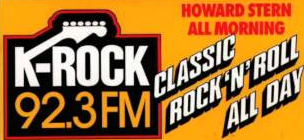
Then, in July of 1985, after airing the Live Aid concert, the station switched to a mainstream AOR format, featuring new and classic rock as WXRK "K-Rock".
In September 1985, Howard Stern (who had been fired from WNBC earlier that year) joined the station, initially for afternoons and in early 1986 switched to mornings.
In 1987, WXRK had instituted a classic rock format and on January 5, 1996, evolved into an alternative/active rock format.
On April 4, 2005, WXRK debuted a mainstream rock format, encompassing music from the 60's to today.
On December 16, 2005, Howard Stern broadcast his last show on the station, before his anticipated move to Sirius Satellite Radio on January 9, 2006.
On January 3, 2006, 92.3 became an "all-talk" station (with the exception of weekends when it features a rock format) using the "Free FM" slogan and featuring David Lee Roth in mornings. Calls were officially changed to WFNY on January 1. In April 2006, David Lee Roth was replaced with Opie & Anthony.
On May 24, 2007 at 5pm, "K-Rock" returned to 92.3. Calls were changed back to WXRK on May 31, 2007.
On March 11, 2009, 92.3 switched to a CHR format as "92.3 Now FM", with the "K-Rock" format moving to 92.3's HD2 channel.
92.3 changed calls to WNOW on November 8, 2012.
On May 22, 2014 at 2pm, 92.3 re-branded themselves as "92.3 AMP."
Calls changed to WBMP on June 23, 2014. In 2017, the station was sold by CBS Radio to Entercom (now Audacy). The format was flipped to Alternative upon the deal closing and calls were changed once again to WNYL.
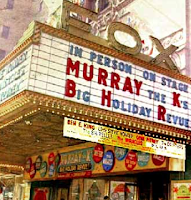
➦In 1964...In New York, "Murray The K's Big Holiday Show" featured the Zombies, the Nashville Teens, and the Hullabaloos.
➦In 1995...legendary singer/crooner, actor, comedian, and Rat-Pack member Dean Martin died of respiratory failure at age 78.
➦In 2006...the “hardest working man in show business,” urban star James Brown died of pneumonia at an Atlanta hospital. He was 73.
The one-time radio station owner was nicknamed the "Godfather of Soul", died.
➦In 2008... actress & chanteuse Eartha Kitt, best known for her hit songs C’est Si Bon & Santa Baby, who was the 2nd Catwoman on the 1960’s Batman TV series, succumbed to colon cancer at age 81.
Gary Sandy is 80
🎂HAPPY BIRTHDAYS:
Actor Hanna Schygulla (“Barnum,” ″Casanova”) is 82.
Actor Gary Sandy (“WKRP In Cincinnati”) is 80.
Country singer Barbara Mandrell is 77.
Actor Sissy Spacek is 76.
Actor CCH Pounder is 73.
Guitarist Robin Campbell of UB40 is 71.
Singer Annie Lennox is 71.
Singer Steve Wariner is 71.
Actor Klea Scott (“Millennium”) is 57.
Guitarist Noel Hogan of The Cranberries is 54.
Singer Dido is 54.
Singer Mac Powell of Third Day is 53.
Country singer Alecia Elliott is 43.
Singer Jess and Lisa Origliasso of The Veronicas are 41.
Actor Perdita Weeks (2018′s “Magnum P.I.”) is 40.
Singer-guitarist Lukas Nelson of Lukas Nelson and Promise of the Real is 37.
✞REMEMBRANCES
In 1946..W C Fields, writer and comedian (Bank Dick, It's A Gift), dies at 67
In 1977..Charlie Chaplin, British actor and comedian (Modern Times, The Kid), dies in Switzerland at 88
In 1979..Joan Blondell, American actress (Real McCoys), dies of leukemia at 73
In 1989..Billy Martin, American baseball 2nd baseman (MLB All Star 1956; World Series 1951, 52, 53, 56; NY Yankees) and manager (World Series 1977 NY Yankees), killed in a car accident at 61
In 1995..Dean Martin, American singer ("That's Amore"; "Everybody Loves Somebody"; "Sway"), comedian and actor (Martin and Lewis, The Dean Martin Show), dies of throat cancer at 78
In 1996..Jon Benet Ramsey, Colorado child beauty queen, murdered at 6
In 2006..James Brown, American R&B, gospel, soul and funk singer-songwriter known as 'The Godfather of Soul' ("Sex Machine"; "Papa's Got A Brand New Bag"; "Hot Pants"), dies of heart failure at 73
In 2008..Eartha Kitt, American singer (Santa Baby), dancer, comedian, actress and activist (Catwoman-Batman), dies at 81
In 2009..Tony "T-Bone" Bellamy, American rock guitarist (Redbone), dies of liver failure at 63
In 2016..George Michael, English singer-songwriter and pop superstar (Wham! - "Careless Whisper"; "Wake Me Up Before You Go-Go"; solo - " I Want Your Sex"; "Faith"), dies of suspected heart failure at 53
Singer Barry Manilow, 82, announced Monday that he has been diagnosed with lung cancer.
Doctors discovered a cancerous spot on his left lung during an MRI ordered after a prolonged bout of bronchitis. He described the early detection as "pure luck" and credited his doctor, noting that tests suggest it has not spread.
The Grammy-winning artist, known for hits like "Mandy" and "Copacabana," plans to undergo surgery to remove the spot but will not require chemotherapy or radiation.
The diagnosis has forced him to reschedule his January 2026 U.S. arena concerts (part of his farewell tour) to February, March, and April.
Manilow remains optimistic, joking that recovery will involve "chicken soup and I Love Lucy reruns," and urged fans to get tested for any symptoms.
Barry Manilow, the iconic American singer and songwriter with a career spanning over 60 years, revealed he has lung cancer. He shared his diagnosis on social media, saying it was "pure luck and a great doctor" it was caught early. @VictorOquendo has more. https://t.co/gf9up6jN4Jpic.twitter.com/xP37wy74Pw
This is not Manilow's first health challenge; he previously battled throat cancer in 2020, along with issues like bronchial pneumonia, heart problems, and vocal cord troubles.
Fans have flooded social media with support following his announcement.
British singer-songwriter Chris Rea, best known for the enduring festive hit "Driving Home for Christmas", has died at the age of 74.
Rea passed away peacefully in hospital Monday following a short illness, surrounded by his family. A spokesperson for his wife Joan and their two children released a statement expressing immense sadness and confirming his death.
The Middlesbrough-born musician, whose distinctive gravelly voice and bluesy slide guitar defined his sound, recorded 25 studio albums over a career spanning decades. Hits like "Fool (If You Think It's Over)" (a Grammy-nominated track from 1978), "The Road to Hell", "Let's Dance", and "On the Beach" brought him widespread success, particularly in the UK and Europe, where albums such as The Road to Hell (1989) and Auberge (1991) topped the charts.His 1986 song "Driving Home for Christmas" — originally released as a B-side and later featured on the 1988 compilation New Light Through Old Windows — became a perennial holiday favorite.
Written during a snowy drive home with his wife while he was banned from driving, the track has charted in the UK every Christmas since 2007 and featured in this year's M&S Food advert.
Rea overcame significant health challenges, including a pancreatic cancer diagnosis in the 1990s (leading to the removal of his pancreas and development of diabetes) and a stroke in 2016. Despite these, he continued creating music, often drawing from his blues roots.
Tributes poured in from fans, fellow artists, and his hometown of Middlesbrough, where he was hailed as a "Teesside icon" who put the town on the map. His family noted that his music has been the soundtrack to many lives and his legacy will endure through his songs.
Brian Stelter, CNN's chief media analyst, published a detailed article Monday titled "Inside the Bari Weiss decision that led to a ‘60 Minutes’ crisis." The story covers a major internal controversy at CBS News, where Bari Weiss (who became CBS News editor-in-chief in October 2025 following Paramount's acquisition of her media company, The Free Press) decided to shelve a "60 Minutes" segment at the last minute.
Key Details from Stelter's Report:
The segment, titled “INSIDE CECOT,” was reported by correspondent Sharyn Alfonsi. It focused on the conditions inside CECOT, a notorious maximum-security prison in El Salvador, where the Trump administration had deported Venezuelan men (including allegations of torture and brutal treatment).
The story had been in development for weeks, screened multiple times, cleared by legal and standards teams, and even promoted publicly by CBS ahead of its planned airdate on Sunday, December 21, 2025.
Bari Weiss
Weiss reportedly got personally involved in political stories after President Trump criticized a recent "60 Minutes" interview with Rep. Marjorie Taylor Greene.
On Saturday, Weiss raised concerns about the lack of response from the Trump administration (e.g., no on-the-record comment from officials like Stephen Miller) and suggested adding such a perspective.
The decision to pull the story was finalized hours before airtime, with a different segment substituted.
Alfonsi sent an internal memo calling the move "political" and a "betrayal" of sources, arguing that government refusal to comment shouldn't kill a story (and that it was factually correct and ready).
Weiss defended the decision in a staff call on December 22, stating the story "was not ready," didn't "advance the ball" (as similar reporting existed from outlets like The New York Times), and lacked sufficient context or critical voices.
Fallout
Staff at "60 Minutes" and CBS News were reportedly furious, with some threatening to quit over what they saw as corporate censorship or capitulation to political pressure.
The incident sparked widespread media criticism, with figures like Sen. Brian Schatz (D-Hawaii) calling it an "embarrassment."
Stelter's reporting drew from sources inside CBS and included details from Alfonsi's memo and the staff call transcript.
Bari Weiss, the newly appointed editor-in-chief of CBS News hired by CEO David Ellison to shake up the network, has launched a new series of town halls and debates titled "Things That Matter" — a joint venture between CBS News and her media company, The Free Press.
The series, billed as “The people, conversations, and debates shaping America,” will tackle major issues including immigration, capitalism, public health, criminal justice, foreign policy, artificial intelligence, and the state of politics.
Upcoming guests include Vice President J.D. Vance and OpenAI CEO Sam Altman. Planned debate topics include “Gen Z and the American Dream,” “God and Meaning,” and “The Sexual Revolution.” Specific air dates and locations — described only as “held across the country” — were not announced.
Weiss is expected to moderate many of the events, following her role in the December 13 premiere, a town hall with Erika Kirk (widow of Charlie Kirk and CEO of Turning Point USA). CBS reported 1.9 million total viewers and 265,000 in the key 25-54 demographic, while calling it the most-watched interview in CBS News history on social media.
The "Things That Matter" series builds on the success of CBS News’ recent special “Town Hall With Erika Kirk,” hosted by Weiss, and marks the first major collaboration since Paramount acquired The Free Press for $150 million.
This road-based approach aligns with broader changes at CBS News under Weiss. New "Evening News" anchor Tony Dokoupil will also travel the country in January, visiting 10 cities in 10 days — Miami, Atlanta, Dallas, Denver, San Francisco, Detroit, Minneapolis, Chicago, Cincinnati, and Pittsburgh — for a series called “Live in America” to “share the most urgent, important stories with Americans, rather than talking to them.”
CBS News Editor-in-Chief Bari Weiss abruptly pulled a "60 Minutes" segment on Sunday, hours before its scheduled airing, sparking a major internal controversy and accusations of political interference.
The segment, titled "Inside CECOT", featured correspondent Sharyn Alfonsi interviewing Venezuelan men deported by the Trump administration to El Salvador's notorious maximum-security prison (Centro de Confinamiento del Terrorismo, or CECOT). It highlighted allegations of brutal torture, abuse, and inhumane conditions, despite the deportees' claims of no criminal records.
Weiss decided to shelve the piece after multiple screenings and clearances by CBS lawyers and standards editors. In an internal memo to top "60 Minutes" producers, she stated the story lacked sufficient context, particularly the administration's perspective and legal rationale for the deportations under the Alien Enemies Act. She argued it did not "advance the ball," as similar reporting (e.g., by The New York Times) had already covered the prison conditions, and insisted on more reporting, including on-the-record comments from officials like Stephen Miller. Weiss described the hold as standard editorial practice to prioritize viewer understanding.
Alfonsi strongly disputed this in her own leaked internal memo to colleagues, calling the decision "not an editorial decision, it is a political one" and amounting to "corporate censorship." She noted the segment had been screened five times, cleared legally and factually, and that her team had sought interviews from DHS, the White House, and State Department—requests the administration ignored as a "tactical maneuver" to kill the story. Alfonsi argued that allowing government silence to veto reporting hands officials a "kill switch" for inconvenient journalism, betraying sources who risked their lives to speak out. She compared it to CBS's past decision to spike a tobacco whistleblower story, which damaged credibility.
Here’s the full text of the Weiss memo:
Hi all,
I’m writing with specific guidance on what I’d like for us to do to advance the CECOT story. I know you’d all like to see this run as soon as possible; I feel the same way. But if we run the piece as is, we’d be doing our viewers a disservice.
Last month many outlets, most notably The New York Times, exposed the horrific conditions at CECOT. Our story presents more of these powerful testimonies—and putting those accounts into the public record is valuable in and of itself. But if we’re going to run another story about a topic that has by now been much-covered we need to advance it.
Among the ways to do so: does anyone in the administration or anyone prominent who defended the use of the Alien Enemies Act now regret it in light of what these Venezuelans endured at CECOT? That’s a question I’d like to see asked and answered.
At present, we do not present the administration’s argument for why it sent 252 Venezuelans to CECOT. What we have is Karoline Leavitt’s soundbite claiming they are evildoers in America (rapists, murderers, etc.). But isn’t there much more to ask in light of the torture that we are revealing? Tom Homan and Stephen Miller don’t tend to be shy. I realize we’ve emailed the DHS spox, but we need to push much harder to get these principals on the record.
The data we present paints an incongruent picture. Of the 252 Venezuelans sent to CECOT, we say nearly half have no criminal histories. In other words, more than half do have criminal histories. We should spend a beat explaining this. We then say that only 8 of the 252 have been sentenced in America for violent offenses. But what about charged? My point is that we should include as much as we can possibly know and understand about these individuals.
Secretary Noem’s trip to CECOT. We report that she took pictures and video there with MS-13 gang members, not TdA members, with no comment from her or her staff about what her goal on that trip was, or what she saw there, or if she had or has concerns about the treatment of detainees like the ones in our piece. I also think that the ensuing analysis from the Berkeley students is strange. The pictures are alarming; we should include them. But what does the analysis add?
We need to do a better job of explaining the legal rationale by which the administration detained and deported these 252 Venezuelans to CECOT. It’s not as simple as Trump invoking the Alien Enemies Act and being able to deport them immediately. And that isn’t the administration’s argument. The admin has argued in court that detainees are due “judicial review”—and we should explain this, with a voice arguing that Trump is exceeding his authority under the relevant statute, and another arguing that he’s operating within the bounds of his authority. There’s a genuine debate here. If we cut down Kristi Noem analysis we’d have the time.
My general view here is that we do our viewers the best service by presenting them with the full context they need to assess the story. In other words, I believe we need to do more reporting here.
I am eager and available to help. I tracked down cell numbers for Homan and Miller and sent those along. Please let me know how I can support you.
Yours,
Bari
Weiss also defended her actions in a Monday editorial call, emphasizing the need for contentious but respectful debate and insisting the story was simply "not ready." CBS has reiterated it will air eventually.
NewsTalk 1130 WISN in Milwaukee is refreshing its weekday lineup starting Friday, January 2, 2026, to build on the station's strong momentum and deliver trusted local talk programming.
The key change: Longtime midday host Benjamin Yount moves to morning drive (6-9 a.m.), succeeding longtime host Jay Weber, who is stepping away from daily mornings at the end of December to launch a twice-weekly iHeartPodcast in 2026 while continuing as a contributor to WISN and iHeartMedia.
Benjamin Yount
Yount, who has hosted the 9-11 a.m. slot since earlier this year (after joining WISN in 2020 as News Director and primary fill-in host), expressed enthusiasm for the shift: “WISN has always been about serving Wisconsin with smart, honest conversation, and I’m honored to take on morning drive. Our listeners count on us to start their day informed and engaged, and I’m excited to continue that in a new time slot while keeping the same commitment to strong local coverage.”
Filling the 9-11 a.m. midday slot is Jason Goch, who will also anchor news during Yount's morning show. Goch brings over 20 years of experience in spoken-word radio, including sports talk and general interest programming, and has previously served as a guest host on WISN.
“WISN is one of the most respected talk stations in the country, and I’m thrilled to join the lineup,” Goch said. “Midday is a great opportunity to connect with listeners on the issues that matter most, and I’m excited to contribute both on the air and in supporting WISN’s live, local mornings.”
Program Director Jerry Bott described the moves as strategic: “This lineup builds on WISN’s momentum and reflects our focus on serving listeners with strong, credible voices throughout the day. Benjamin has earned the trust of our audience and brings proven ratings success to morning drive, while Jason is a terrific addition whose experience and versatility strengthen our local programming bench.”
The rest of WISN’s weekday schedule remains unchanged. This adjustment follows Weber’s transition from his 18-year run in mornings (and 35+ years with the station overall), positioning Yount—a familiar and trusted voice—as the new morning anchor to maintain continuity for listeners.
The NewsBusters report (from the Media Research Center, a conservative media watchdog) is a year-end analysis of political jokes on major late-night shows in 2025.
It claims that hosts told a total of 7,045 jokes about Donald Trump across six programs: The Daily Show, Jimmy Kimmel Live!, The Tonight Show Starring Jimmy Fallon, Late Night with Seth Meyers, The Late Show with Stephen Colbert, and After Midnight (which ended in June).
Key findings from the report:
Total political jokes analyzed: 13,097 across 818 episodes from January 6 to December 19, 2025.
92% of those jokes targeted conservatives (12,011 total), up from 82% in 2024.
Trump was the top target by far, accounting for more than half of all political jokes and over 10 times more than any other figure. Breakdown by show:
Late Night with Seth Meyers: 1,885 Trump jokes
Jimmy Kimmel Live!: 1,668
The Late Show with Stephen Colbert: 1,458
The Daily Show: 1,128
The Tonight Show Starring Jimmy Fallon: 851
After Midnight: 55 (short run)
The report highlights this as evidence of escalating anti-conservative bias in late-night comedy, especially with Trump's second term beginning in 2025, and notes that liberal guests overwhelmingly outnumbered conservatives (nearly 100:1 in some periods).
It has been covered in outlets like the New York Post, AOL, and conservative sites, often framing late-night TV as one-sided "therapy" for the left.
This is part of NewsBusters' ongoing tracking of late-night political humor, which has consistently shown high volumes of Trump-focused jokes in recent years.