Monday, September 29, 2025

Forecast: AM Radio To Vanish By 2034


James Cridland, a prominent radio futurologist, consultant, and editor of the daily podcast newsletter Podnews, has long analyzed global audio trends, with a particular focus on the shifting landscape of traditional radio formats. 

In his latest Radioland newsletter Cridland makes an explicit statement predicting that AM radio's audience in the US will "entirely vanish by 2034," his writings and analyses consistently highlight a steep, accelerating decline in AM listening, driven by US trends such as the rise of digital streaming, podcasting, and the removal of AM receivers from electric vehicles (EVs). 

Previously, he has warned of AM's obsolescence, framing it as a medium increasingly irrelevant to younger generations and ill-equipped for modern consumption.

🔑Key vulnerabilities:

Technological Obsolescence and EV Shift: Cridland has repeatedly noted that AM radio is being phased out of new cars due to interference from EV electronics, a trend he calls a "last-ditch effort" by the US industry to stay relevant. In a 2023 post titled "AM Radio's US Defenders," he discusses lobbying efforts to mandate AM in vehicles, but argues it's too late—AM's poor audio quality and static issues make it incompatible with digital expectations. He predicts this will sever AM's core listening habit (in-car commuting), which accounts for a significant portion of its audience.

James Cridland
Audience Aging and Generational Drop-Off:
Drawing from US data like Nielsen's Edison Research reports, Cridland points to AM's reliance on listeners over 55. Younger cohorts (under 35) show near-zero engagement, with time spent listening to traditional radio (including AM) halving in the last two decades for teens. In a 2025 Radioland edition, he references UK trends mirroring the US, where listening among 10-18-year-olds has fallen nearly 50% in 20 years—extrapolating this to the US, he implies AM could see its core demographic "age out" without replenishment.

Digital Migration and Competition: Cridland highlights how podcasts and streaming (e.g., Spotify, Apple Music) are capturing spoken-word audio—AM's traditional strength (talk/news/sports)—with 20% year-on-year ad growth in podcasts vs. stagnant radio revenue. In his 2021 analysis "More Talk, Less Music," he cites NPR's Spoken Word Audio Report, showing younger US audiences favoring on-demand audio over scheduled broadcasts. He argues music-focused AM stations are even more doomed, as streaming offers better discovery.

Cridland's tone is pragmatic rather than alarmist; he views AM's "end" as evolutionary, urging stations to pivot to digital or hybrid models (e.g., DAB+ in Europe, which he praises for sustaining radio reach).US Listening Trends Underpinning the Prediction.

Cridland bases his forecasts on verifiable US data, which paint a dire picture for AM specifically:

Overall Radio Reach: About 80% of Americans 12+ listen to terrestrial radio weekly, but this masks AM's niche status—only ~15-20% of that is AM, per Nielsen (down from 30% in 2010).

Decline Rates: Edison Research shows AM listening time among adults 25-54 dropped 25% from 2019-2024, accelerated by the pandemic (commute listening vanished) and EV adoption (projected 50% of new cars by 2030). For 18-34-year-olds, AM engagement is under 5%, with a compound annual decline of ~10-15%.

📻Extrapolation to 2034: If current trends hold (e.g., 10% annual drop in share among under-50s), AM's weekly audience could shrink from ~40 million today to under 1 million by 2034—effectively "vanishing" as a mass medium.

Growing Reliance On Podcasts For News


A recent Pew Research Center survey (conducted August 18-24, 2025) reveals growing reliance on podcasts for news among U.S. adults, with 32% now saying they get news from podcasts at least sometimes—up from 22% in 2020. 

This includes 10% who do so often, highlighting podcasts' rise as a key news platform amid digital shifts.

Breakdown by Demographics

Age:
Younger adults lead adoption. About 39% of those under 50 get news from podcasts often or sometimes, versus 24% of those 50+. Specifically, 41% of 18-29-year-olds use them at least sometimes, dropping to 17% for 65+.
Education and Income: College graduates (higher usage) and those with incomes over $75K are more likely to tune in than those with high school education or lower incomes.
Gender: Usage is similar across men (25%) and women (21%), though overall trends show slight male edges in some cohorts.

Among podcast news users, preferences lean toward in-depth content:69% listen to explanatory podcasts on news topics.
  • 61% tune into opinion-based shows.
  • 58% prefer daily news summaries.
Willingness to pay remains low: Just 6% of U.S. adults have paid for or donated to news podcasts in the past 12 months. Only 6% prefer podcasts as their primary news source, trailing TV (34%), news websites/apps (21%), and social media (14%). However, 10% get news from podcasts often, underscoring their role as a supplementary format.

Disney Urged to Exit Broadcast Television, Shut Down ABC


Investment firm Needham & Co. last week released a provocative research note recommending that The Walt Disney Company completely shutter its ABC broadcast television network rather than pursue a sale. 

The firm’s analysts argue that exiting the broadcast television business entirely would unlock significant financial benefits for Disney while mitigating the regulatory and operational risks associated with maintaining a traditional network.

Risks of Broadcast Television:
 Needham’s report points to the recent controversy involving late-night host Jimmy Kimmel as a case study in the vulnerabilities of operating a regulated broadcast network. The “Kimmel-Kirk sequence of events” began with controversial remarks made by Kimmel, which sparked backlash and led to boycotts from some ABC affiliates. This situation escalated quickly, drawing scrutiny from both the public and regulators, and highlighting the challenges Disney faces in managing a network subject to FCC oversight. Needham argues that such incidents underscore the volatility and reputational risks tied to broadcast television, particularly in an era of heightened cultural and political sensitivity.

Financial Case for Shutting Down ABC: The analysts at Needham estimate that closing ABC’s broadcast operations could deliver substantial financial upside for Disney shareholders. Specifically, they project that:
  • Shareholder value could increase by approximately $20 billion, driven by the elimination of costly broadcast infrastructure and regulatory burdens.
  • Disney’s overall valuation could rise by 10%, reflecting improved investor confidence in a streamlined, forward-looking business model.
  • Revenue growth could improve by 40-60 basis points (0.4% to 0.6%), as resources are redirected toward higher-growth segments like streaming.
These projections are rooted in the belief that broadcast television is a declining asset, weighed down by shrinking viewership, high operational costs, and regulatory constraints. 

Needham proposes that Disney could transition ABC’s programming to its streaming services, such as Hulu or a dedicated Disney app, effectively simulcasting content without relying on traditional broadcast affiliates. This approach would allow Disney to maintain its popular programming—such as live sports, news, and entertainment—while bypassing the costly affiliate model and FCC regulations.

The firm emphasizes that streaming platforms are better positioned to capture younger audiences, who increasingly favor on-demand content over linear television.

According to Nielsen’s Gauge report, broadcast television accounted for just 18.5% of total viewership in June 2025—a record low—while streaming platforms commanded a dominant 46% share. These figures underscore the seismic shift in consumer behavior, with viewers gravitating toward flexible, digital-first viewing experiences.

Disney Streaming: From Cheapest to Most Expensive


When Disney launched its streaming service Disney+ for $6.99 a month in 2019, it was cheaper than many other services out there. Starting in October, it will be 172% more expensive than it was six years ago.

Back then, Netflix had just raised its price to $8.99 per month for its basic service. HBO’s streaming service, then called HBO Now, cost $14.99. Apple TV+, which also launched in 2019, cost $4.99 but also had a tiny content library consisting of about eight originals. Hulu, which is owned by Disney and unlike the others had an ad-supported tier at the time, had recently lowered its ad tier to $5.99 per month while its ad-free tier was $11.99.

In the intervening years, these streaming services repeatedly raised their prices and ad-supported tiers became commonplace.

With Disney’s latest price hike — its fourth in four years — slated to go into effect in October, Disney+ and Hulu are now some of the most expensive streaming services. Disney raised the prices of its Disney+ and Hulu bundles as well, which cost only $1 more than a single subscription. On the company’s latest earnings call, it announced it would merge Disney+ and Hulu into a single app next year.

Comcast Names A Co-CEO


Comcast Corporation (CMCSA) announced that Michael J. Cavanagh will become Co-Chief Executive Officer alongside Chairman Brian L. Roberts, effective January 2026. Cavanagh will also join the Comcast Board of Directors at that time.

Michael Cavanaugh
“Mike’s proven leadership and collaboration over the past decade make him the perfect partner to lead Comcast’s growth strategy,” said Roberts. “I’m excited to work with him as Co-CEO and our talented management team for years to come.”

Cavanagh, who joined Comcast in 2015 as CFO and now serves as President, said, “It’s an honor to work with Brian and the Comcast NBCUniversal team during this transformative time.”

Before Comcast, Cavanagh spent over 20 years in financial services, including as Co-CEO of JPMorgan Chase’s Corporate & Investment Bank and as its CFO for six years, guiding the firm through the financial crisis.

The 59-year-old Cavanagh will assume Comcast’s Co-CEO role amid a turbulent time for traditional media. Comcast’s cable business is losing subscribers as audiences shift to broadband platforms for entertainment, news, and sports. To adapt, Comcast is spinning off its legacy cable assets from NBCUniversal into a new company, Versant, wagering that its broadcast and streaming operations will thrive without being tied to cable channels like E!, CNBC, or Syfy.

NPR Motion Exposes CPB Tensions


On Saturday, NPR filed an emergency motion in federal court in Washington, D.C., asking Judge Randolph D. Moss to temporarily block the Corporation for Public Broadcasting (CPB) from awarding a $57.9 million grant over five years to a newly formed nonprofit consortium, Public Media Infrastructure (PMI). 

The grant funds the operation of the Public Radio Satellite System (PRSS), a critical satellite network that NPR has managed for over 40 years, enabling hundreds of public radio stations and independent producers to distribute programming nationwide.

Background and Dispute The Grant and Consortium: Earlier on Friday, CPB announced the award to PMI, whose members include New York Public Radio, PRX (Public Radio Exchange), American Public Media (APM), and Station Resource Group (a consulting firm). CPB selected PMI after a competitive bidding process, arguing it promotes a more diverse and decentralized public media ecosystem amid shrinking federal budgets.

NPR contends the decision violates federal procurement rules, ignores PRSS's historical reliability, and risks disrupting the system during a vulnerable time. NPR CEO Katherine Maher emphasized in a letter to member stations that the move threatens the "integrity and stability" of public radio, potentially leading to service outages for stations without NPR affiliations.

NY State Radio: Bold Gold Media To Acquire Silent WDLA AM/FM


Bold Gold Media Group is expanding its presence in Upstate New York by acquiring two radio stations, WDLA-FM and WDLA-AM, previously operated by Townsquare Media and licensed to Walton, New York. 

The stations, which respectively broadcast a country music format and a news/talk format before Townsquare ceased their operations, mark a strategic addition to Bold Gold’s portfolio in the region.

Vince Benedetto, President of Bold Gold Media Group, expressed enthusiasm for the acquisition, emphasizing the company’s strong ties to the area. “We have a deep love and connection to the Catskill Mountains and Delaware County,” Benedetto said. 

“We are thrilled to bring our unique blend of programming to the vibrant Walton community. Having served the neighboring town of Hancock for many years, we are eager to extend our commitment to local, community-focused broadcasting to even more residents of Delaware County.”

The company plans to leverage its expertise in community-driven radio to revitalize the WDLA stations, offering programming that resonates with the cultural and informational needs of Walton and the broader Delaware County area. 

While specific plans for the stations’ formats have not been announced. The move further solidifies Bold Gold Media Group’s footprint in Upstate New York, where it already operates several stations.

NAB Pushes to Eliminate Broadcast Ownership Limits


The National Association of Broadcasters (NAB) is urging the Federal Communications Commission (FCC) to abolish local radio ownership restrictions and ease television ownership caps, citing an outdated regulatory framework in today’s competitive media environment. 

In a September 19, 2025, filing, NAB argued that traditional broadcasters face intense competition from unregulated streaming services, digital platforms, and social media giants.

Ahead of the FCC’s September 30 quadrennial ownership review, NAB met with commissioners’ staff to advocate for deregulation. The group’s filing marks a bolder stance than its 2018 call for partial radio deregulation, now proposing the complete removal of local radio ownership limits.

Radio’s Declining Influence 

NAB highlighted a sharp decline in AM/FM radio’s dominance, with Edison Research showing its share of listening time dropping to 34% in Q2 2025 from 52.1% in 2014. Streaming music (23%) and YouTube (14%) have eroded radio’s audience. Radio ad revenue has also fallen 30% since 2007, from $17.4 billion to an estimated $12.17 billion in 2025, per BIA Advisory Services. 

Current rules, unchanged since 1996, cap station ownership based on market size, but NAB argues these limits are obsolete.

Bad Bunny to Perform at Super Bowl


Bad Bunny, the Puerto Rican superstar whose real name is Benito Antonio Martínez Ocasio, has been  announced as the headliner for the Apple Music Super Bowl LX halftime show. 

This marks a major milestone for the Latin trap and reggaeton artist, who has dominated global charts with hits like "MIA," "I Like It," "Me Porto Bonito," and "Dákiti." The news broke during halftime of NBC's Sunday Night Football game between the Green Bay Packers and Dallas Cowboys, and Bad Bunny shared a teaser video on X (formerly Twitter) featuring his track "Callaíta," where he sits on a goalpost to hype the reveal.Event DetailsDate and Location: The performance will take place on February 8, 2026, at Levi's Stadium in Santa Clara, California (home of the San Francisco 49ers, in the Bay Area).

Report: NWS Struggles with Crisis Staffing


The National Weather Service (NWS) is grappling with severe staffing shortages following Trump administration budget cuts, which led to nearly 600 workers—about one in seven—leaving through firings, resignations, or retirements, according to The Washington Post.

 As of Saturday, staff are stretched thin, with some working double shifts, others relying on a "buddy system" where nearby offices monitor severe weather for understaffed regions, and non-essential services like school presentations being cut.

Despite an exemption from a government-wide hiring freeze and promises from NOAA's incoming head to prioritize filling vacancies, hundreds of positions remain open. 

This strain comes as the Atlantic hurricane season peaks, with two storms under watch (one potentially threatening the eastern U.S. by early October) and wildfires escalating in the West. 

Exhausted employees have maintained forecasting with minimal disruptions, but concerns grow about sustainability, especially with a potential government shutdown looming next week that could leave staff working without pay.

The NWS Employees Organization's legislative director, Tom Fahy, described the situation as "severely stretched," noting that offices in California’s Central Valley and western Kansas can no longer operate 24/7, and a dozen others run on reduced staff. Retired NWS veteran John Sokich, with 45 years of service, warned that the agency’s ability to cope is like a sprinter running a mile—unsustainable, risking missed forecasts as staff "run out of gas."

Dolly Parton Postpones Live Concerts


Dolly Parton has postponed her upcoming Las Vegas concerts, citing health concerns. 

In a Sept. 28 social media post, the 79-year-old singer explained, "I’ve been dealing with some health challenges, and my doctors advise a few procedures." 


She noted that these issues prevent her from rehearsing and delivering the high-quality performance her fans deserve. 

While Parton can continue working on other projects from Nashville, she needs time to prepare for the stage. She reassured fans, saying, "Don’t worry about me quittin’ the business—God hasn’t told me to stop yet, but He’s telling me to slow down for now to get ready for more big adventures with you all."

NewsNation’s Rise: Nexstar’s Cable Network Marks Five Years


Nexstar Media’s NewsNation, a Chicago-based cable news network launched on September 1, 2020, celebrated its fifth anniversary in 2025, evolving from a fledgling operation into a competitive player.

Originally a three-hour prime-time block on WGN America, it has grown into a 24/7 network, carving a niche behind Fox News, MSNBC, and CNN with a middle-of-the-road approach.

NewsNation topped CNN and MSNBC in viewership during its coverage of slain conservative activist Charlie Kirk’s memorial service on September 21, 2025, signaling its growing influence.
  • Early Struggles:
    Launched amid a pandemic and polarizing election, the network faced low ratings, programming shakeups, and management exits, including VP Jennifer Lyons in 2021. An early Trump interview in 2020 was criticized as weak, failing to boost traction.
  • Turnaround Under New Leadership: Since 2021, former Fox News executive Cherie Grzech and ABC News veteran Michael Corn have driven expansion. High-profile hires like Chris Cuomo (2022) and new studios in New York and Washington, D.C., bolstered prime-time offerings. Grzech, now president of news, oversees 550 employees, with 5,500 local journalists from Nexstar’s 200 stations enhancing breaking news coverage.
  • Cultural Impact: A 2024 Saturday Night Live parody marked NewsNation’s rising profile, with Grzech noting that being “noticed” reflects success.
Unique Edge Headquartered in Chicago: NewsNation leverages Nexstar’s local TV network for unmatched on-the-ground reporting, earning its “scrappy underdog” label. Despite trailing the “big three,” its focus on unbiased news and local resources positions it as a growing force in cable news.

Judge Tosses 7 Charges for Poaching Unaired Fox Video


U.S. District Judge Kathryn Kimball Mizelle in the Middle District of Florida dismissed seven of the 14 federal charges against Tampa-based media consultant and former Deadspin editor Tim Burke, ruling that the Wiretap Act counts violated the First Amendment. 

Burke, 46, was indicted in February 2024 for allegedly using "compromised credentials" to access and leak unaired 2022 Fox News footage from Tucker Carlson's show, including antisemitic remarks by Ye (formerly Kanye West) during an interview, as well as behind-the-scenes clips criticizing Fox Nation. The leaks were shared with Media Matters for America and Vice News, sparking national attention and a DOJ probe.

Tim Burke
Burke faced 14 counts, including conspiracy, unauthorized computer access under the Computer Fraud and Abuse Act (CFAA), and wiretapping under the Electronic Communications Privacy Act. Prosecutors alleged Burke conspired with Washington resident Marco Gaudino (sentenced in August 2025 to five years' probation and a year of house arrest) to scour the internet for credentials from broadcasters, sports leagues, and media outlets, then access protected video streams like NBA game footage and the Fox clips.

The seven wiretap-related charges were tossed because the government's interpretation of "intercept" was too broad and treated statutory exceptions (e.g., for "readily accessible" public information) as affirmative defenses rather than essential elements. Judge Mizelle called the government's argument "legally insufficient," requiring prosecutors to prove no exceptions apply to avoid constitutional issues. Defense argued the footage was obtained from publicly configured websites, protecting journalistic newsgathering.

Remaining Charges: Seven CFAA counts persist, focusing on unauthorized access and dissemination. Burke's trial, originally set for October 2025, was delayed to January 2026 for evidence review.

Radio History: Sep 29


➦In 1907...Gene Autry born (Died at age 91  – October 2, 1998). He was nicknamed The Singing Cowboy. Autry was the owner of a television station, several radio stations in Southern California, and the Los Angeles/California/Anaheim Angels Major League Baseball team from 1961 to 1997.


Autry was the owner of a television station, several radio stations in Southern California, and the Los Angeles/California/Anaheim Angels Major League Baseball team from 1961 to 1997.

From 1934 to 1953, Autry appeared in 93 films, and between 1950 and 1956 hosted The Gene Autry Show television series. During the 1930s and 1940s, he personified the straight-shooting hero—honest, brave, and true—and profoundly touched the lives of millions of Americans. Autry was also one of the most important pioneering figures in the history of country music, considered the second major influential artist of the genre's development after Jimmie Rodgers. 

Gene Autry
His singing cowboy films were the first vehicle to carry country music to a national audience.  In addition to his signature song, "Back in the Saddle Again", and his hit "At Mail Call Today", Autry is still remembered for his Christmas holiday songs, most especially his biggest hit "Rudolph, the Red-Nosed Reindeer" as well as "Frosty the Snowman", "Here Comes Santa Claus", and "Up on the House Top".

Autry is a member of both the Country Music Hall of Fame and Nashville Songwriters Hall of Fame, and is the only person to be awarded stars in all five categories on the Hollywood Walk of Fame, for film, television, music, radio, and live performance.

From 1940 to 1956, Autry had a huge hit with a weekly show on CBS Radio, Gene Autry's Melody Ranch. His horse, Champion, also had a CBS-TV and Mutual radio series, The Adventures of Champion. In response to his many young radio listeners aspiring to emulate him, Autry created the Cowboy Code, or Ten Cowboy Commandments. These tenets promoting an ethical, moral, and patriotic lifestyle that appealed to youth organizations such as the Boy Scouts, which developed similar doctrines. The Cowboy Code consisted of rules that were "a natural progression of Gene's philosophies going back to his first Melody Ranch programs—and early pictures."

He also sold several radio stations he owned, including KSFO in San Francisco, KMPC in Los Angeles, KOGO in San Diego, and other stations in the Golden West radio network.

➦In 1920...Joseph Horne Company's department stores sell radios that are already equipped with headphones and a button for tuning. In The Pittsburgh Sun the price is stated to be $10 or equivalent to over a hundred dollars today.

Radio receiver circa 1920

In 1920 the tuned radio frequency receiver (TRF) had a major improvement. The local oscillator and audio amplifier that were invented around that time were milestone improvements for the radio receiver.  The radio receiver became simpler and cheaper than before because the loud speaker could now be integrated with the chassis of radio.

➦In 1926...NBC incorporated. NBC is the oldest major broadcast network in the United States.  The network started programming Nov. 15 with 24 stations.

Saturday, September 27, 2025

Radio History: Sep 28


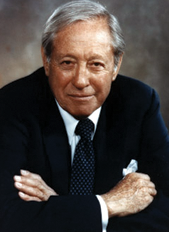
➦In 1901...William S. Paley, the chief executive, who built Columbia Broadcasting System (CBS) from a small radio network into one of the foremost radio and television network operations in the United States, was born.
Will Paley
In 1927, Paley's father, brother-in-law and some business partners bought a struggling Philadelphia-based radio network of 16 station called the Columbia Phonographic Broadcasting System. Samuel Paley's intention was to use his acquisition as an advertising medium for promoting the family's cigar business, which included the La Palina brand. Within a year, under William's leadership, cigar sales had more than doubled, and, in 1928, the Paley family secured majority ownership of the network from their partners. Within a decade, William S. Paley had expanded the network to 114 affiliate stations.

Paley quickly grasped the earnings potential of radio and recognized that good programming was the key to selling advertising time and, in turn, bringing in profits to the network and to affiliate owners. Before Paley, most businessmen viewed stations as stand-alone local outlets or, in other words, as the broadcast equivalent of local newspapers. Individual stations originally bought programming from the network and, thus, were considered the network's clients.

Paley changed broadcasting's business model not only by developing successful and lucrative broadcast programming but also by viewing the advertisers as the most significant element of the broadcasting equation. Paley provided network programming to affiliate stations at a nominal cost, thereby ensuring the widest possible distribution for both the programming and the advertising. Affiliates were required to carry programming offered by the network for part of the broadcast day, receiving a portion of the network's fees from advertising revenue. At other times in the broadcast day, affiliates were free to offer local programming and sell advertising time locally.

During his prime, Paley was described as having an uncanny sense for popular taste and exploiting that insight to build the CBS network. As war clouds darkened over Europe in the late 1930s, Paley recognized Americans' desire for news coverage of the coming war and built the CBS news division into a dominant force just as he had previously built the network's entertainment division.

During World War II, Paley served in the psychological warfare branch in the Office of War Information, under General Dwight Eisenhower, and held the rank of colonel. It was while based in London, England, during the war when Paley came to know and befriend Edward R. Murrow, CBS's head of European news. In 1946, Paley promoted Frank Stanton to president of CBS. CBS expanded into TV and rode the post-World War II boom to surpass NBC, which had dominated radio.

➦In 1919...Doris Singleton born (Died at age 92 – June 26, 2012). She began her career in show business as a vocalist in the late 1930s with Art Jarrett's orchestra. Her distinctive low, lyrical voice made her a favorite in the radio industry.

Doris Singleton
Singleton worked in New York during World War II both as a guest star and in regular roles on numerous hit radio shows, including The Whistler and The Alan Young Show, on which she played Young's girlfriend, Betty Dittenfeffer. She played Ruth Henshaw on the radio version of December Bride.

During a guest appearance on the radio show My Favorite Husband in 1948 she met Lucille Ball and began their long professional relationship. She had a recurring role in I Love Lucy playing Carolyn Appleby in ten episodes between 1953 and 1957. In 1953, she made her television debut as Gloria Harper in the episode "Jungle Devil" on the series, The Adventures of Superman.

Singleton also appeared on numerous other television shows including Richard Diamond, Private Detective, The Dick Van Dyke Show, Pete and Gladys, Hazel, The Real McCoys, The Twilight Zone, The Munsters, The Fugitive, Dynasty, Phyllis, Family Affair, Hogan's Heroes, State Trooper, Gunsmoke, and Frontier Doctor.

Singleton played the sympathetic neighbor, Susie, to Annie Fargé's scatterbrained character "Angel Smith" in the CBS sitcom, Angel from 1960 to 1961. Singleton also appeared in All in the Family as Edith's hotel roommate, Lydia Stonehurst, in the 1971 episode "Edith has Jury Duty". She also appeared in two Perry Mason episodes, titled "The Crooked Candle" and "The Purple Woman".

She guest-starred on My Three Sons, playing two different characters who had recurring roles throughout the long run of the show. At the time of her death in June 2012, Singleton was the last surviving major recurring adult cast member from the "Lucy" shows.

➦In 1919...Thomas Dudley Harmon born (Died at age 70 – March 15, 1990). He was a football player, military pilot, actor, and sports broadcaster.

Tom Harmon
Harmon grew up in Gary, Indiana, and played college football at the halfback position for the University of Michigan from 1938 to 1940. He led the nation in scoring and was a consensus All-American in both 1939 and 1940 and won the Heisman Trophy, the Maxwell Award, and the Associated Press Athlete of the Year award in 1940. He was inducted into the College Football Hall of Fame in 1954.

During World War II, Harmon served as a pilot in the U.S. Army Air Forces. In April 1943, he was the sole survivor of the crash of a bomber he piloted in South America en route to North Africa. Six months later, while flying a P-38 Lightning, he was shot down in a dogfight with Japanese Zeros near Kiukiang in China.

After the war, Harmon played two seasons of professional football for the Los Angeles Rams and had the longest run from scrimmage during the 1946 NFL season.

After retiring as a player in 1947, Harmon returned to his career as a sports broadcaster, becoming one of the first and most successful athletes to make the transition from player to broadcaster. During the 1948 season, he broadcast Rams' games for KFI radio in Los Angeles. In the late 1940s, he was the play-by-play announcer for NBC on the first television broadcast of a Rose Bowl Game. From around 1950 to 1962, Harmon worked as a sportscaster for the CBS network. He also handled the nightly sport report on KTLA television in Los Angeles from 1958 to 1964.

In 1962, Harmon joined the sports staff of the ABC radio network. He developed a concept for a 10-minute daily sports program. He hired the crew, purchased the equipment, found sponsors, and then sold the program to ABC. His 10-minute broadcasts became a staple of the ABC radio network. By 1965, his company, Tom Harmon Sports, was generating annual gross revenue of $1 million and had six full-time employees.

He also worked as the play-by-play announcer for UCLA Bruins football games on KTLA during the 1960s and 1970s. In his later years, he was the host of Raider Playbook on KNBC in Los Angeles and also handled play-by-play responsibility for Los Angeles Raiders' preseason games.

➦In 1936...Bachelor's Children was a domestic daytime drama radio broadcast which originated on Chicago's WGN in 1935-36, it debuted on this date on CBS Radio Networ. Later it aired on NBC Radio until September 27, 1946.

It followed the daily travails of two friends, Dr. Bob Graham and Sam Ryder, and the two women they loved. When Dr. Bob was a young man doing military service, his sergeant took care of him during a difficult time. Years later, the sergeant's dying request was that Bob become guardian of his two young daughters. Dr. Bob fell in love with Ruth Ann and Sam with her twin sister, Janet.

Rudy Vallee

➦In 1939...The Fleischmann Hour with Rudy Vallee, came to the end of its ten-year run on NBC Radio Network.

➦In 1963..."She Loves You" by the Beatles was first played in NYC by disc-jockey, "Murray The K", on 1010 WINS. It is believed that this was the first time a Beatles song has been played anywhere in the United States. The response was tepid.

Jimmy Kimmel Returning to ABC Stations Nationwide


Nexstar Media Group will resume airing Jimmy Kimmel Live! on its 32 ABC-affiliated stations Monday, reversing its decision to preempt the show due to controversial comments by host Jimmy Kimmel about Charlie Kirk’s killer. Sinclair Broadcast Group also announced it will restore the program on its 38 ABC stations, ending a short-lived protest that began last week after Kimmel’s remarks on Sept. 15.

ABC briefly suspended the show on Sept. 17 but reinstated it on Sept. 23, achieving record ratings despite the blackout by Nexstar and Sinclair. The return of Jimmy Kimmel Live! to all U.S. markets is a win for Disney and ABC, which faced backlash for allegedly yielding to pressure from the Trump administration. Critics, including Hollywood guilds, accused Disney of failing to defend First Amendment rights, with some consumers threatening to boycott services like Disney+.

The controversy escalated when FCC Chairman Brendan Carr warned of “news distortion” complaints against ABC stations unless Kimmel was fired, stating on a Sept. 17 podcast that broadcasters could either “change conduct” or face FCC action. Nexstar’s initial decision to pull Kimmel was seen as an effort to curry favor with Carr, especially as the company awaits FCC approval for its $6.2 billion acquisition of Tegna. Both Nexstar and Sinclair denied their decisions were influenced by government pressure.


Disney explained its temporary suspension of the show as an effort to avoid “inflaming a tense situation,” but after discussions with Kimmel, reinstated the program. Nexstar, based in Irving, Texas, operates 23 owned ABC stations and provides services to nine others, including stations in Salt Lake City (KTVX), New Orleans (WGNO), and Nashville (WKRN). 

In a Sept. 17 statement, Nexstar’s broadcasting president Andrew Alford called Kimmel’s comments “offensive and insensitive,” arguing they did not reflect the values of the communities served by their stations.

ABC's Long Term Prognosis Not Encouraging for Jimmy Kimmel


On Wednesday, September 24, 2025, "Jimmy Kimmel Live!" averaged 2.41 million viewers, a strong performance compared to its 2025 season average of 1.7 million but a sharp 61.7% drop from Tuesday’s record-breaking 6.26 million, driven by the show’s highly publicized return after a suspension. 

The Tuesday episode, fueled by national attention over Kimmel’s controversial comments about the assassination of Charlie Kirk, marked one of the show’s highest viewership nights in its 22-year history. 

However, Wednesday’s decline reflects the typical fade of event-driven audiences, though the numbers remained elevated due to ongoing media buzz and social media traction.

📺Late-Night Ratings for Wednesday, September 24, 2025

Here’s how "Jimmy Kimmel Live!" stacked up against competitors in linear TV viewership (live + same-day Nielsen data):
  • Gutfeld! (Fox News): 3.23 million viewers
  • Jimmy Kimmel Live! (ABC): 2.41 million viewers
  • The Late Show with Stephen Colbert (CBS): 1.99 million viewers
  • The Tonight Show Starring Jimmy Fallon (NBC): 1.24 million viewers
Kimmel’s 2.41 million viewers placed it second among late-night shows, trailing Fox News’ "Gutfeld!" by 33.7% but outperforming CBS’s "The Late Show" by 21.3% and NBC’s "The Tonight Show" by 94.1%. Notably, "Gutfeld!" continued its dominance in the late-night landscape, capitalizing on its appeal to conservative audiences and averaging 3.2 million viewers for the year, a 107% lead over Kimmel’s 2025 average of 1.6 million. In the advertiser-coveted 25-54 demographic, 

"Gutfeld!" drew 381,000 viewers compared to Kimmel’s 261,000 (a 46% gap), while in the 18-49 demo, "Gutfeld!" led with 248,000 to Kimmel’s 177,000.


Digital Performance as a Lifeline:  The significant drop from Tuesday to Wednesday prompted media analysts like CNN’s Brian Stelter to shift focus to Kimmel’s digital reach. On Thursday, Stelter highlighted the show’s YouTube performance, noting that Wednesday’s monologue garnered over 5 million views within 24 hours, ranking among Kimmel’s most-watched clips of 2025. This pivot underscores the growing importance of streaming and social media for late-night shows as linear TV audiences dwindle. 

Industry observers predict that "Jimmy Kimmel Live!" will likely fall below 2 million viewers by the following week, reverting closer to its 2025 average of 1.7 million. This would place the show well below its historical means (e.g., 2.4 million in 2015) and exacerbate financial concerns for ABC, a Disney-owned network. 

Kimmel’s reported annual salary of $17 million, combined with the costs of a large production staff and filming in high-cost Los Angeles, suggests the show is operating at a loss. For context, CBS’s "The Late Show with Stephen Colbert," which averages 1.99 million viewers (30% more than Kimmel’s season average), reportedly loses $40 million annually due to similar high production costs and declining ad revenue in the late-night space.

However, with Kimmel’s contract reportedly expiring in 2026, ABC’s financial calculus may not support a renewal.

San Antonio Radio: Connoisseur Outlines Cluster Leadership Changes


Connoisseur Media has announced significant leadership changes for its San Antonio cluster, effective January 1, 2026. 
  • Morgan Harrison, currently the Director of Sales for the former Alpha Media cluster in San Antonio, has been promoted to Market Manager, succeeding Lance Hawkins, who will retire at the end of 2025 after a distinguished tenure. 
  • Concurrently, Dax Davis, who has served as Integrated Sales and Sports Programming Manager, will assume the role of Director of Sales while retaining his oversight of sports programming.
The San Antonio cluster under Connoisseur Media includes a diverse portfolio of six radio stations and robust digital assets:
  • 550 KTSA-AM: A news/talk station with a legacy of local and national coverage.
  • 94.1 San Antonio Sports Star (KTFM): A sports-focused outlet catering to the city’s passionate fanbase.
  • 102.7 JACK FM (KJXK): Known for its “playing what we want” adult hits format.
  • Norteño 720 (KSAH): A regional Mexican music station serving the Hispanic community.
  • WE 94.5 (KTFM): A contemporary hits station targeting younger audiences.
  • Tejano 95.7 (KLEY): Specializing in Tejano music, a cultural staple in South Texas.
Morgan Harrison
Harrison’s promotion follows her successful leadership in driving sales for the cluster, which Connoisseur acquired from Alpha Media in a 2023 transaction. Her deep market knowledge and client relationships positioned her as the ideal candidate to lead the cluster into its next phase. 

Harrison commented, “I am incredibly honored and humbled to step into the role of Market Manager. I’m grateful to Jeff Warshaw for believing in me to help share his incredible vision, and to Lance Hawkins for his guidance and trust in me to fill the big shoes he leaves behind as he heads into retirement. Radio has always been about the 3C’s that Connoisseur Media boldly represents in Clients, Community, and Colleagues, and I’m excited to build on a great mission with those at the forefront, along with my colleague, Dax Davis.”

Hawkins, a veteran in the radio industry, leaves behind a legacy of operational excellence, and his retirement marks the end of a significant chapter for the San Antonio market.

Davis, stepping into the Director of Sales role, brings a track record of innovation in sports programming and integrated sales strategies. His dual role ensures continuity in the cluster’s sports content, particularly for KTFM’s sports-focused programming, which includes local teams like the San Antonio Spurs and regional college sports. His leadership will focus on expanding revenue through cross-platform advertising, leveraging both radio and digital channels.