Tuesday, April 8, 2025

TV Ratings: 8.5M Watched Women's NCAA Championship


The 2025 NCAA Division I Women’s College Basketball Championship game, broadcast on ABC, drew an average of 8.5 million viewers, a sharp decline from the previous year’s record-setting 18.5 million. Preliminary ESPN ratings indicate a peak audience of 9.8 million across all platforms. While this year’s average fell below the 2024 “March Madness” tournament overall, it marked a 22% increase over the 2023 tournament’s average viewership.

The University of Connecticut clinched the national title, defeating the defending champion University of South Carolina 82-59 in a rematch of the 2022 final, which South Carolina had won. For UConn, this victory marked their first women’s championship since 2016 and their twelfth overall.

Last year’s championship, a high-profile clash between Iowa’s Caitlin Clark and an undefeated South Carolina, set an unattainable benchmark. The 2025 game also trailed the 2023 final (LSU vs. Iowa), which averaged 9.9 million viewers. All three of the past women’s championship games aired on ABC on Sunday afternoons, but this year’s matchup struggled to recapture the previous years’ buzz.

Skydance, Paramount Deal Extended As FCC Dithers


The $8 billion merger agreement between Skydance Media and Paramount Global reached a critical juncture Monday as its initial deadline expired without finalization. The deal, originally slated to close by this date, has been automatically extended for an additional 90 days—pushing the new target to July 7, 2025—due to the pending approval from the FCC. 

The extension is built into the terms of the pact, triggered when all closing conditions except regulatory approvals have been satisfied or waived, reflecting the complexity of transferring Paramount’s broadcast licenses, including those of its 28 CBS-owned television stations.

The merger, announced last July, after months of turbulent negotiations, aims to unite Skydance—a production powerhouse behind films like Mission: Impossible and Top Gun: Maverick—with Paramount Global, home to iconic assets like CBS, MTV, and a vast film library. 

Valued at an enterprise level of $28 billion, the deal positions Skydance at $4.75 billion, with significant financial backing from the Ellison family (Oracle founder Larry Ellison contributing $6 billion) and RedBird Capital Partners ($2 billion). National Amusements Inc. (NAI), Paramount’s controlling shareholder led by Shari Redstone, will receive $1.75 billion plus the assumption of $650 million in debt, totaling a $2.4 billion enterprise value, while Paramount’s Class B shareholders are set to get $15 per share. An October 2024 filing clarified that Skydance CEO David Ellison, not Larry, will control 100% of the Ellison family’s voting interests in the merged entity.

The FCC’s delay stems from its review of the license transfers, complicated by broader political and legal pressures. Republican FCC Chairman Brendan Carr, a Trump appointee, has tied the merger’s fate to unrelated controversies, notably a “news distortion” complaint from the Center for American Rights over a CBS 60 Minutes interview with Kamala Harris from October 2024. 

Carr’s aggressive anti-DEI stance—vowing to block mergers involving companies with diversity policies—adds further uncertainty, despite Paramount scaling back some DEI programs in February 2025 to align with Trump administration directives. The FCC’s informal 180-day review timeline, which began in late 2024, can be paused or extended, and while the first extension keeps the deal alive, a second 90-day buffer could push closure to October 4, 2025, if needed. Failure to close by then, or a regulatory block, could lead to termination, with Paramount owing Skydance a $400 million breakup fee.

Legal challenges also loom, including a Delaware class-action lawsuit from New York City pension funds, filed in early 2025, seeks to block the deal, alleging it shortchanges public shareholders and that Redstone favored her own interests.

Philly Radio: Cataldi Says Age Discrimination Forced Out Producer


Angelo Cataldi, the legendary former host of 94WIP’s morning show in Philadelphia, HAS stirred controversy by alleging that the departure of his longtime producer, Joe Weachter, from the station was a case of age discrimination. 

Cataldi made these remarks during an appearance on Howard Eskin’s Saturday morning podcast. The discussion, which initially focused on general radio industry trends, took a sharp turn when Cataldi brought up Weachter’s exit, framing it as emblematic of broader shifts in corporate media priorities.

Cataldi, who retired in February 2023 after over three decades at WIP, didn’t hold back. 

He described Weachter, who had been his producer for nearly the entirety of his tenure, as “a great producer and a terrific guy” whose departure was “just wrong” and “awful.” He asserted that Weachter, who retired officially on March 20, 2025, after 38 years at WIP—35 of those producing the morning show—was pushed out due to his age and salary. 

“It was, in my estimation, age discrimination,” Cataldi said. “He was let go because he was older, and on a ledger sheet he made a certain amount of money, and the corporate people couldn’t justify it.” He lamented the shift to a “different world” in radio, one he believes no longer treats employees fairly, prioritizing cost-cutting over loyalty or merit.

Weachter’s exit came amid Audacy’s post-bankruptcy restructuring. The Philadelphia-based company, WIP’s parent, emerged from bankruptcy in early 2025 and promptly cut around 200 jobs nationwide, including Weachter and another WIP veteran, Dave Breitmaier. While Weachter’s departure was publicly framed as a retirement—complete with a tribute on his final show and induction into the WIP Hall of Fame—Cataldi’s comments suggest it was less voluntary than portrayed. Sources close to the situation hint that Weachter, the station’s longest-tenured employee, may have been gently nudged out, with the “retirement” label softening the narrative.

The claim has sparked debate among Philly radio fans and insiders. Some see Cataldi’s outspokenness as a defense of a loyal colleague, consistent with his reputation for bluntness. Others question whether it’s a definitive case of age discrimination or simply a business decision in a struggling industry—Audacy’s layoffs hit across age groups, after all.

US-Imposed Tariffs Unsettles Ad Market


U.S.-imposed tariffs can negatively impact the media and entertainment industry in several indirect but significant ways, even though intellectual property like films, TV shows, and digital content isn’t typically subject to tariffs as a "service." The effects stem from broader economic disruptions, increased production costs, and shifts in consumer behavior rather than direct taxation of media products. Here’s how these tariffs ripple through the industry:

First, tariffs on imported goods—such as electronics, manufacturing equipment, and raw materials—raise the cost of physical production. For example, cameras, lenses, lighting gear, and computing hardware (like GPUs and SSDs) used in filmmaking, post-production, and visual effects often come from countries like China, Japan, or Taiwan. With tariffs potentially reaching 54% on Chinese goods, 24% on Japanese products, or 32% on Taiwanese imports, as speculated in recent analyses, the price of this equipment could skyrocket. This forces studios to either absorb the costs (cutting into budgets) or pass them on to consumers, potentially reducing demand for new content or hardware-driven experiences like streaming devices and gaming consoles.

Second, the industry feels the pinch through supply chain disruptions. Hollywood relies heavily on global collaboration—think Canadian VFX studios, European co-productions, or Asian-made broadcast equipment. Tariffs on goods from Canada (e.g., 25% on non-energy imports) or Mexico could increase costs for shooting locations, props, and wardrobe materials sourced from these regions.

Third, advertising revenue—a lifeline for media companies—takes a hit. “The fundamental issue on tariffs is they cause uncertainty,” Martin Sorrell, founder and executive chairman of S4 Capital and founder and former CEO of WPP, told Marketing Brew. In uncertain times, he added, “clients delay decision-making—they either postpone, or they cancel, or they delay.”

Ninety-four percent of US advertisers said they were concerned about the impact of tariffs on ad spend, according to a survey of 100 “advertising decision-makers” by the Interactive Advertising Bureau conducted in February. Of those surveyed, 45% said they planned to reduce overall ad spend.

Many advertisers, like automotive or consumer goods firms, face higher costs due to tariffs on their supply chains (e.g., 25% on Mexican auto parts). In response, they often slash ad budgets, especially during economic uncertainty or a tariff-induced recession. With entertainment giants like Disney, Netflix, and Warner Bros. Discovery increasingly reliant on ad-supported tiers, a downturn in spending could shrink profits. Analysts have already lowered 2025 ad growth forecasts, with some predicting a drop from 7% to as low as 3.6% if tariffs persist.

Fourth, consumer spending power erodes as tariffs drive up prices for everyday goods—think groceries, cars, or electronics. When households pay more for essentials, discretionary spending on subscriptions, movie tickets, or theme park visits drops. Disney’s parks, which generate most of its profit, could see reduced attendance if tourism from tariff-affected countries like Canada or Europe weakens. Similarly, streaming services might face "streamflation," where higher operational costs lead to price hikes, risking subscriber churn.

Gomez Sounds The Alarm: Whoever Speaks Up, Will Be Targeted

FCC's Anna Gomez
Democrat FCC Commissioner Anna Gomez sounded the alarm Monday at the NAB Show In Las Vegas.

She made it clear thar she perceives as a dangerous overreach from Washington and to rally the industry to stand up and speak out.

Gomez didn’t mince words, accusing the Trump administration of turning the FCC into a political weapon aimed at silencing dissenters who challenge its agenda. “I can imagine there’s a chilling effect at work here. Whoever speaks up is going to be targeted,” she said. “I get it—these groups have to navigate this climate, and sticking your neck out isn’t easy. But if they’re targeted, I hope they’ll consider what giving in means for our democracy.”

Gomez personally funded her trip to the NAB Show in Las Vegas after a government travel restriction left her with no other option

Her remarks came with a pointed critique of the past three months in Washington, where she’s witnessed the Trump administration pressuring the FCC into actions she repeatedly labeled as troubling. “There’s a coordinated, administration-wide push to censor and control,” Gomez said. “The weaponization of the FCC’s licensing power is just one piece of that puzzle.”

She went further, claiming that investigations are being wielded as tools of intimidation. “They’re harassing and bullying broadcasters to tweak their editorial choices and churn out content that flatters this administration—it’s alarming,” she said. Still, Gomez doubts the FCC would take the drastic step of revoking licenses or imposing fines. “The harassment itself is the goal, not some final punishment. They know this wouldn’t hold up under our legal authority,” she argued.

While Gomez took the stage in Vegas, fellow Commissioner Carr skipped the event. He’s previously pushed back against such criticism, insisting his actions have been “mischaracterized” and that his focus is on fairness for all.

Audio Platforms Play Critical Roles For Blacks


The National Association of Black Owned Broadcasters (NABOB), in collaboration with Nielsen, released a new report highlighting the profound influence and distinctive engagement of Black consumers with audio media. 

The report, part of Nielsen’s ongoing efforts to provide data-driven insights into diverse audiences, emphasizes the critical role audio platforms—particularly radio and podcasts—play in connecting with Black America, a demographic with growing cultural and economic clout.

The report reveals that nearly 90% of Black consumers rely on radio as a trusted source for entertainment, information, and community connection, reinforcing its status as a cornerstone of Black media consumption. This high engagement is especially notable given that Black adults spend over 84 hours per week with media overall—more than any other U.S. demographic—according to Nielsen’s broader 2025 findings. 

Radio alone reaches an average of 27.4 million Black adults weekly, underscoring its unmatched scale among ad-supported audio options. The report also highlights generational nuances, with Black Millennials emerging as key influencers. About 55% of them identify as trendsetters, and they are 50% more likely to purchase products endorsed by local radio hosts, showcasing the power of culturally resonant voices.

Podcasts are another area of significant growth, with Black listenership surging in recent years. The report notes that host-read podcast ads achieve a 73% brand recall rate among Black listeners, a testament to the medium’s effectiveness in fostering authentic connections. This aligns with broader trends of Black consumers seeking content that reflects their experiences, a demand that Black-owned media outlets are uniquely positioned to meet. The report argues that brands “must prioritize investment in Black-owned media platforms” to tap into this $2 trillion buying power demographic, challenging the dominance of mainstream outlets like Cox Media Group stations, which often lead in Black audience share but lack the ownership diversity NABOB champions.

Defense Fund Growing For Stabbing Suspect


A tragic incident unfolded at Kuykendall Stadium in Frisco, Texas, during a high school track meet last Wednesday, where 17-year-old Austin Metcalf, a junior and standout football player at Frisco Memorial High School, was fatally stabbed in the chest. The suspect, 17-year-old Karmelo Anthony, a student from rival Frisco Centennial High School, was arrested at the scene and charged with first-degree murder. He remains in Collin County Jail on a $1 million bond. The altercation, reportedly sparked by a dispute over seating in a school tent during a weather delay, lasted mere seconds, leaving Metcalf to die in the arms of his twin brother, Hunter, who witnessed the event and tried to stop the bleeding.

Metcalf top, Anthony
The case quickly escalated into a national story, fueled by racial undertones—Metcalf was white, Anthony is Black—and a subsequent explosion of online misinformation. Within hours of Anthony’s arrest, a fundraising campaign on GiveSendGo, launched by his family, surged to nearly $200,000 (with reports citing figures between $165,000 and $170,000 by April 7, 2025) to support his legal defense. The family’s fundraiser claimed Anthony acted in self-defense, alleging he was “jumped” by Metcalf and his brother, and decried the public narrative as “false, unjust, and harmful.” This came after an earlier crowdfunding effort on another platform, which had raised over $140,000, was abruptly taken down, possibly due to policy violations or public backlash.

The fundraising success coincided with a wave of fake social media posts impersonating officials, including Frisco Police Chief David Shilson and the Collin County Medical Examiner’s Office. These posts spread inflammatory falsehoods, painting Metcalf as a violent, drug-addicted bully who initiated a “mutual combat altercation” by “sucker-punching” Anthony and smashing his phone. One fabricated post, falsely attributed to Shilson, claimed the stabbing wasn’t racially motivated but leaned on racially charged language, referring to Anthony only as a “Black teen” or “suspect” while naming Metcalf explicitly. Another hoax, posing as a medical examiner’s report, alleged Metcalf died of an MDMA and fentanyl overdose, not the stab wound—claims swiftly debunked by authorities, as no official autopsy had been released by April 7.

The incident and its aftermath shocked the nation, amplified by the heartbreaking detail from Metcalf’s family that he died in Hunter’s arms, calling for his parents as they rushed to the hospital, where he was pronounced dead. Anthony, meanwhile, told police he acted in self-defense after Metcalf “put his hands on me,” a claim echoed by his attorney, Deric Walpole, who cautioned against premature judgment. Witnesses reported the two didn’t know each other, with one stating Anthony approached Metcalf’s tent uninvited, leading to the fatal clash.

The rapid fundraising—nearly $200,000 in hours—drew outrage from some, who saw it as rewarding a killer, while supporters argued it ensured Anthony’s right to a fair defense in a case muddied by misinformation.

The Anthony family offered condolences Monday to the other student’s loved ones and called for the public’s patience as they “seek the truth” through the courts. The statement, issued on behalf of Karmelo Anthony’s family by their legal team, says they are “sincerely saddened that a life was lost.”

Reuters Retracts Bogus Report


Reuters retracted a story that had claimed President Donald Trump was considering a 90-day pause on his new tariff plan. The retraction came after the initial report caused significant market volatility, with stocks briefly rallying on the news before plunging again once the story was debunked. Reuters attributed the error to CNBC, stating that it had relied on CNBC’s incorrect reporting as the source for its original headline.

The confusion appears to have originated from a misinterpretation of comments made by Kevin Hassett, the director of the National Economic Council, during an interview on Fox News’ "Fox and Friends."

 Hassett was asked about the possibility of a 90-day tariff pause, an idea suggested by billionaire investor Bill Ackman over the weekend. However, Hassett’s response was vague and non-committal: “I think the president is going to decide what the president is going to decide.” 

This was misconstrued by some outlets and social media users as an indication that a pause was under consideration. A post on X by user Walter Bloomberg escalated the situation by claiming Hassett had confirmed Trump was considering a 90-day pause “for all countries except China,” a statement that was then picked up and broadcast by CNBC.

Reuters initially published a headline at 15:19 EDT (10:19 AM local time) stating, “HASSETT: TRUMP IS CONSIDERING A 90-DAY PAUSE IN TARIFFS FOR ALL COUNTRIES EXCEPT CHINA-CNBC,” based on CNBC’s reporting. 

This triggered a rapid market response, with the Dow Jones Industrial Average and other indexes swinging from deep losses to gains. However, within an hour, the White House labeled the reports “fake news,” with Press Secretary Karoline Leavitt explicitly denying any such consideration. Reuters subsequently retracted the story, acknowledging that its reliance on CNBC’s erroneous coverage had led to the mistake.

Posts on X later confirmed that Reuters had indeed issued the initial headline to its terminal but withdrew it after realizing the error, pointing to the chaotic sequence of events involving CNBC’s role in the miscommunication.

TV Ratings: Tariffs Drama Causes Business Nets To Spike


The tariff drama surrounding President Donald Trump’s aggressive trade policies in April 2025 has proven to be a boon for business news networks like CNBC and Fox Business, capitalizing on the uncertainty and market volatility to drive viewership and engagement. As tariffs—such as the baseline 10% on most imports and escalating rates up to 50% on specific countries like China—unfolded, these networks found themselves at the center of a fast-moving story that gripped investors, businesses, and the public.
 
The network leaned into the drama, offering wall-to-wall coverage of the market swings—stocks surged briefly on the false pause rumor before plummeting again—featuring expert panels with Wall Street heavyweights like JPMorgan CEO Jamie Dimon, who warned of inflation and economic slowdown. 

CNBC’s live reporting, including interviews with White House officials dismissing the pause as “fake news,” kept audiences hooked, while its digital platforms saw spikes in traffic as viewers sought clarity amid conflicting headlines. The network’s focus on how tariffs hit tech giants like Tesla and Amazon, alongside practical segments on “winners and losers,” resonated with its business-savvy audience, boosting its relevance during a period of economic unease.

Fox Business, meanwhile, thrived by aligning its coverage with Trump’s narrative, framing the tariffs as a bold move to rebalance trade and revitalize American industry. 

Anchors like Maria Bartiromo championed the policy, with segments featuring Trump’s economic advisors like Kevin Hassett, who downplayed fears of a “nuclear winter” on “Fox & Friends.” The network’s coverage of Trump’s social media posts—such as his threat of 50% tariffs on China if retaliatory measures weren’t dropped—drove a feedback loop with its audience, amplifying the administration’s messaging. Fox Business also capitalized on the Rust Belt angle, spotlighting lawmakers like Ohio Rep. Michael Rulli, who praised the tariffs’ early impact on industrial towns, appealing to its core viewership. 

Both networks saw tangible benefits: CNBC’s minute-by-minute market analysis catered to traders and CEOs, while Fox Business’s pro-Trump spin energized its loyal base.

Fox & Friends Going On The Road For Breakfast

FOX News Channel’s (FNC) FOX & Friends (weekdays, 6-9 AM/ET) will present its signature 'Breakfast with Friends’ series on Thursday, April 10th from Shorty’s Diner in Richmond, Virginia. 

FOX & Friends co-host Brian Kilmeade will be on location from 6-9 AM/ET speaking with diner patrons about news of the day. Kilmeade will be joined by Virginia Governor Glenn Youngkin (R) to discuss his involvement in the Make America Healthy Again movement, his future plans once his term as governor ends and other news of the day. Additionally, Virginia Lt. Gov. Winsome Earle-Sears will join Kilmeade to discuss her run for Virginia Governor.

FOX & Friends is FNC’s flagship morning franchise featuring co-hosts Steve Doocy, Ainsley Earhardt, Brian Kilmeade and Lawrence Jones. Every weekday morning from 6-9 AM/ET, the show highlights the latest in news, weather, sports and entertainment with a casual and spontaneous discourse and is the most watched morning program in cable news.

K-C Radio: New Country Q104 Introduces New Shows


Steel City Media’s Country “Q104” KBEQ Kansas City has  announced a refreshed on-air lineup, April 7, 2025, blending new talent with familiar voices to energize its “New Hit Country” format.

Leading the charge is Kyle Matthews, who joined KBEQ in February as Music Director and now takes over mornings alongside Mallory Kay. 

Matthews arrives from Townsquare Media’s “Wow Country 104.3” KAWO Boise, where he served as Brand Manager and afternoon host. His resume also includes two stints at NRG Media’s “Froggy 98.1” KFGE Lincoln, NE (2016-2018 and 2019-2022), with a period at Audacy’s “95.1 K-Frog” KFRG Riverside, CA in between. Kay, previously hosting nights at sister station CHR “Mix 93.3” KMXV, brings her vibrant energy to the morning slot. 

The show welcomes back Joe “Tater” Cavanagh as a contributor with his “Nashville Insider” segment. Cavanagh, who left KBEQ in 2024 to pursue songwriting in Nashville, returns after an eight-year run at the station in roles including Production Director, midday host, morning show producer/co-host, and Promotions Manager.

  • Marissa Leggio steps into the midday slot, a significant jump for the University of Missouri-Kansas City graduate who joined Steel City Media in May 2024 as part of the promotions team. Her rapid rise reflects Q104’s commitment to nurturing local talent.
  • The lineup rounds out with Lydia “LT” Taylor continuing to anchor afternoons and Erika Jay holding down nights, ensuring continuity for listeners during key drive-time and evening hours.

Charlotte Radio: The KAT Names Graham B For Morning Show


iHeartMedia’s Country station "96.9 The Kat" (WKKT) in Charlotte has announced that Graham Bunn would join Sarah Lee as the new morning co-host, succeeding Paul Schadt, who retired earlier that year. 

Paul Schadt, a beloved figure in Charlotte radio, had stepped away from his daily hosting duties in February 2025 after an illustrious 44-year career, 27 of which were spent at WKKT. Schadt, a 2014 Country Radio Hall of Fame inductee. Following his retirement, Schadt transitioned into a station ambassador role, maintaining a presence through occasional on-air and on-site appearances.

Graham B
Graham Bunn joins Sarah Lee to form the new morning team starting Thursday.  "Graham B & Sarah Lee," continuing the station’s tradition of delivering new country hits and listener-friendly content. Bunn initially gained recognition as a contestant on reality TV shows like The Bachelorette, Bachelor Pad, and Bachelor in Paradise. He later transitioned into radio, hosting mornings at "Go Country 105" (KKGO-FM) in Los Angeles from 2014 to 2018. 

More recently, Bunn hosted the country music competition series Real Country on USA Network and has worked on projects for Spotify and Amazon, including the podcast Country Shine. A North Carolina native raised in Raleigh, Bunn expressed excitement about returning to his home state, noting his lifelong passion for country music and his honor in joining WKKT, a station he described as a dream opportunity.

Obamas' Fame Star Appears To Be Fading


Even as they’ve intentionally fueled divorce rumors, their political and cultural influence has plummeted to a historic low. A March 2025 CNN poll revealed that just 4% of Democratic-leaning adults view Barack Obama as the party’s ideological leader—a stark fall from grace. 

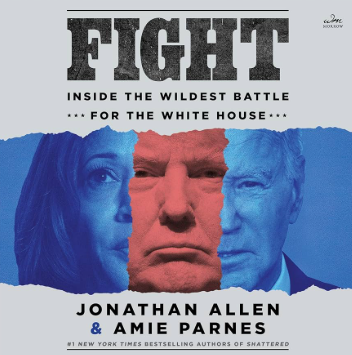
The decline follows a damning revelation in the new book Fight: Inside the Wildest Battle for the White House, which argues that Obama’s outsized ego has fractured the Democratic Party.

Far from a partisan hit piece, the book comes from Jonathan Allen of NBC and Amie Parnes of The Hill—both tied to left-leaning outlets. Their reporting pulls no punches, quoting an anonymous party operative who bluntly stated, “Obama destroyed that s**t,” referring to the party’s cohesion. The critique centers on Obama’s 2012 launch of Organizing for Action, a nonprofit that insiders say siphoned money and influence away from the Democratic establishment, pitting him against allies who’d worked with the Clintons and Bidens.

The authors conclude: “He left the party weaker than he found it,” a sentiment echoing through a party now grappling with his legacy’s fallout.


And then there's word that Michelle Obama’s latest project has stumbled out of the gate, with her new podcast emerging as an embarrassing misfire after failing to crack the charts.

The podcast, pairing Michelle with her brother Craig Robinson to chat with a roster of celebrity guests, was poised for instant success given her star power. Yet, it’s fallen flat. The debut episodes, released on YouTube, scraped together just 62,000 views in their first 24 hours—a dismal showing for a figure of her stature. On Spotify, the numbers tell a similar story, with the show languishing at No. 34 on the platform’s most-listened-to list, per the latest streamer data.

The initial rollout featured two episodes: the first, You Should Start a Podcast with Your Sibling, leaned on family charm, while the second, Some Friendships Need to Go, brought in executive producer and actress Issa Rae. Despite the high-profile talent, Michelle’s podcast has yet to resonate, casting a shadow over her post-White House media ambitions.

Detroit Radio: MAB Honors WJR As Station of The Year


On Saturday, the Michigan Association of Broadcasters (MAB) held its annual Broadcast Excellence Awards at the Sound Board inside MotorCity Casino Hotel. WJR 760 AM was honored as the Market One Station of The Year, marking a significant achievement for the station.

In accepting the award, WJR Program Director Ann Thomas expressed her appreciation, saying, “I would like to sum up this award with one word. Gratitude. Gratitude to the MAB, gratitude to Marie Osborne and her team for helping us put these together, and gratitude to the best team in radio at WJR. The Great Voice of The Great Lakes.”

In addition to the Station of The Year award, WJR received three other notable awards during the ceremony, including Best Regularly Scheduled Broadcast Personality or Team for “’JR Afternoon with Chris Renwick,” as well as Best Commercial and overall Digital Excellence.

Previous to the ceremony, The MAB awarded WJR with an additional 18 awards, bringing the station’s total wins for 2025 to 24.

The Michigan Association of Broadcasters is a non-profit organization that represents and promotes commercial and public radio and television broadcast stations in Michigan. The organization provides advocacy and resources to its members to help them better serve their communities, audiences, advertisers, and staff. Learn more at MichiganMedia.com.

R.I.P.: Clem Burke, Drummer For The Group Blondie

Clem Burke (1955-2025)
 
Clem Burke, the renowned drummer for the iconic rock band Blondie, passed away Monday, at the age of 70. His death followed a private battle with cancer. Blondie announced the news through an emotional statement shared on their official social media channels, penned by founding members Debbie Harry and Chris Stein on behalf of the entire band.

In their tribute, they described Burke as more than just a drummer, calling him "the heartbeat of Blondie." They praised his unmatched talent, energy, and passion for music, emphasizing his immeasurable contributions to the band’s distinctive sound and overall success. The statement highlighted his role as an inspiration both on and off the stage, noting his vibrant spirit and the profound impact he had on those who knew him. The band extended condolences to Burke’s family, friends, and fans worldwide, asking for privacy as they mourned his loss.

Born Clement Anthony Bozewski on November 24, 1954, in Bayonne, New Jersey, Burke joined Blondie in 1975, shortly after the band’s formation. His dynamic drumming style, influenced by legends like Keith Moon and Ringo Starr, became a cornerstone of Blondie’s sound, blending punk rock energy with new wave and pop sensibilities. 


He played on every Blondie album, from their 1976 self-titled debut to their most recent release, Pollinator in 2017. Hits like "Heart of Glass," "Call Me," "The Tide Is High," and "Rapture"—the latter recognized as the first No. 1 song to feature rap—bear the mark of his powerful and versatile percussion.

Beyond Blondie, Burke’s career was expansive and varied. During the band’s hiatus in the 1980s, he collaborated with numerous artists, including Iggy Pop, the Ramones (where he briefly performed as "Elvis Ramone"), Bob Dylan, Joan Jett, and the Eurythmics, among others. His relentless work ethic and adaptability earned him a reputation as a "rock and roll survivalist." Burke was also inducted into the Rock and Roll Hall of Fame with Blondie in 2006, a testament to his enduring legacy in music.

Radio History: April 8


➦In 1922...during the early years of radio, WABC in New York City began experimental broadcasts around this time, though the exact date is debated. While some sources suggest WABC’s first broadcast might align with April 8, 1922, it’s more broadly accepted that the station, initially operated by the American Broadcasting Company (not to be confused with the later ABC network), was part of the rapid proliferation of stations following KDKA’s pioneering 1920 broadcast. On or near this date in 1922, WABC aired a mix of music and talk, marking an early step in New York’s radio landscape. This event reflects the chaotic, innovative spirit of the time, as stations scrambled to establish a foothold without standardized regulations.

➦In 1937...The BBC made strides in international broadcasting when it launched its first foreign-language radio service in Arabic on this date, though some records cite January 3, 1938, as the official start. Assuming the April 8, 1937, date holds in certain contexts, this broadcast from London aimed to counter propaganda from Italy and Germany in the Middle East, airing news and cultural programs. It was a strategic move ahead of World War II, showcasing radio’s growing role in global influence and diplomacy. The service laid groundwork for the BBC’s expansive World Service, though its early reach was limited by rudimentary technology and regional instability.

Bing Crosby
➦In 1948...The Ampex Corporation delivered its first Model 200 magnetic tape recorder to Bing Crosby Enterprises on this date, revolutionizing radio production. Before this, live broadcasts or cumbersome disc recordings dominated. Crosby, a radio superstar, had been pushing for pre-recording capabilities to avoid grueling live schedules. The Model 200, demonstrated in a San Francisco studio, allowed high-quality sound capture on tape, editable and replayable—ushering in a new era of flexibility for shows like Crosby’s Philco Radio Time. This innovation shifted radio from a live-only medium to one where production could be polished, impacting everything from sitcoms to news.

➦In 1961…The BBC banned the Top 40 hit 'A Hundred Pounds of Clay' by Gene McDaniels. The ban arose because the censors interpreted the song as suggesting women were created simply to be sexual beings, and the BBC felt something that was considered blasphemous should not air to avoid controversy.

Larry Norton
➦In 1981...Radio personality Larry "Snortin" Norton completed a publicity stunt. Norton spent 20-plus days on the air at WGRQ-FM in Buffalo. Norton launched his virtually sleepless quest March 19, grabbing only two hours of shut-eye per night to break the record. Norton officially ended with 484 hours on the air, shattering the previous listing in the Guinness Book of World Records of 367 hours.

Norton launched his virtually sleepless quest March 19, grabbing only two hours of shut-eye per night to break the record. Norton officially ended with 484 hours on the air, shattering the previous listing in the Guinness Book of World Records of 367 hours.

➦In 1985…John Frederick Coots died at age 78 (Born - May 2, 1897). He was a songwriter, who composed over 700 popular songs and over a dozen Broadway shows. In 1934, Coots wrote the melody with his then chief collaborator, lyricist Haven Gillespie, for the biggest hit for them both "Santa Claus Is Comin' to Town." The song became one of the biggest sellers in American history.

In 1934, when Gillespie brought him the lyrics to "Santa Claus Is Coming to Town", Coots came up with the skeleton of the music in just ten minutes. Coots took the song to his publisher, Leo Feist Inc., who liked it but thought it was "a kids' song" and didn't expect too much from it.  Coots offered the song to Eddie Cantor who used it on his radio show that November and it became an instant hit. The morning after the radio show there were orders for 100,000 copies of sheet music and by Christmas sales had passed 400,000.

➦In 1987...WFIL 560 AM, Philadelphia ended it's run as "Famous 56".  Capturing The True Sound Of Famous 56! Click Here To Listen.

In February 1964, Triangle moved the WFIL stations to a new state-of-the-art broadcast center at the corner of City Line and Monument Avenues in Philadelphia, from which WPVI continued to broadcast.

Starting on September 18, 1966, WFIL began playing "Top 40" rock and roll. It quickly became the most successful non-RKO "Boss Radio" formatted station, known locally as "The Pop Music Explosion".