
More audio is now consumed in the U.S. through mobile devices than through traditional radio receivers.And this week Edison Research breaks down that data a bit and look at how different age groups consume audio through a mobile device versus a radio.
For many young people, a “traditional radio receiver” translates to an in-car radio versus a mobile device, which they probably have been carrying with them for years. Those in the older demos have a lifetime of listening and a full range of traditional radio hardware that may come to mind: radios in stereo cabinets, tabletop radios, clock radios, boomboxes, or Walkmen. It’s no wonder we see such dramatic differences by age.
In 2014, seven years after the birth of the iPhone, mobile and radio were in a dead heat for time spent listening to all audio by those age 13-34.
Today almost half of all audio consumed by 13-34s in the U.S. is done on a mobile device (48%), with 19% of the audio time going to a traditional radio receiver. Keep in mind that this includes all listening in all locations. The rest of the listening is split among devices such as computers, TVs, CD players, etc. This might be surprising for those who believe 13-34s are all-mobile-device-all-the-time – they aren’t.
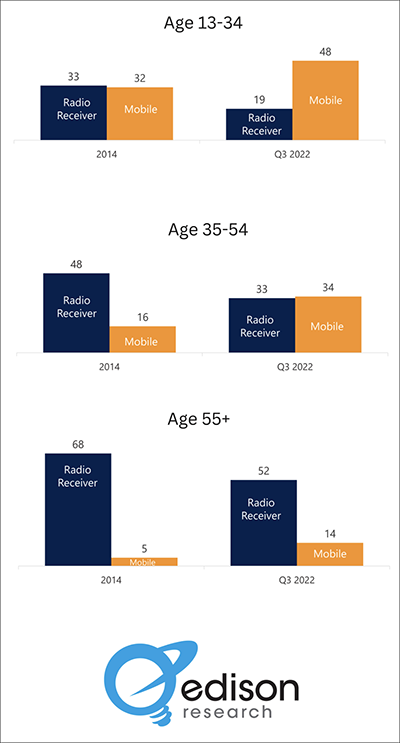
Among 35-54-year-olds, when we started Share of Ear in 2014, the share of time spent on a mobile device trailed the share on a traditional radio by 32-points – 48% to 16%. As of our most recent update, the mobile device has erased this entire deficit and actually now leads radio by one percentage point.
Since 2014, the share of time spent with audio through a mobile phone by those age 35-54 has doubled. This group has spent their adulthood with increasingly advanced mobile tech, but they are still exposed to traditional radio receivers through their existing in-home hardware in-car radios.


