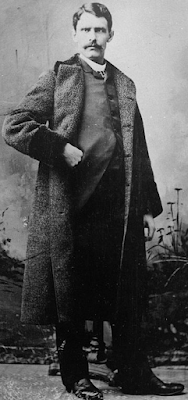
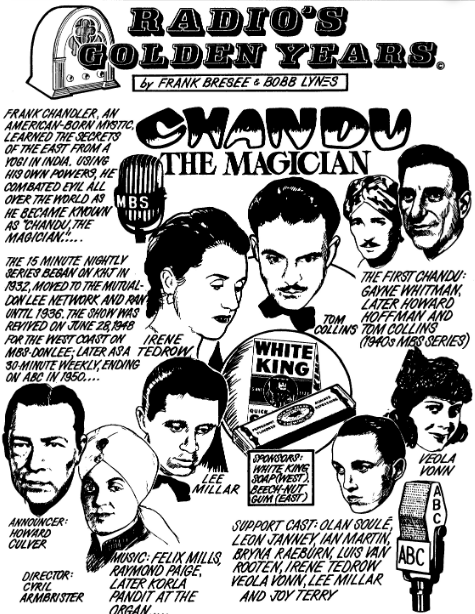
➦In 1937...'Mr. Keen, Tracer of Lost Persons' debuted on the NBC Blue Network. It was one of radio's longest running shows, airing to April 19, 1955, continuing well into the television era. It was produced by Frank and Anne Hummert, who based it upon Robert W. Chambers' 1906 novel The Tracer of Lost Persons. The sponsors included Whitehall Pharmacal (as in Anacin, Kolynos Toothpaste, BiSoDol antacid mints, Hill's cold tablets and Heet liniment), Dentyne, Aerowax, RCA Victor and Chesterfield cigarettes. It aired on the NBC Blue network until 1947, when it switched to CBS.
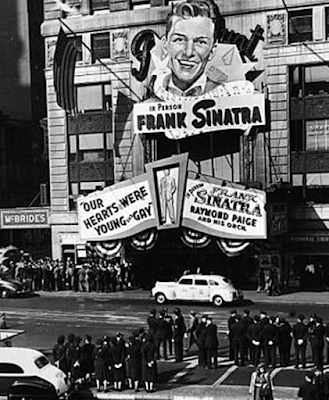
➦In 1944...What would come to be known as the "Columbus Day Riot" took place in New York City, when 35,000 hysterical teenage girls crowded into the Paramount Theatre for a chance to see the return of Frank Sinatra. The crowd of teen "bobbysoxer" girls stopped traffic in Times Square and refused to leave between shows.
➦In 1950…The George Burns and Gracie Allen Show, sometimes called The Burns and Allen Show, made it debut on TV. The is a half-hour series broadcast from 1950 to 1958 on CBS.
Burns and Allen were headliners in vaudeville in the 1920s, and radio stars in the 1930s and 1940s.
Their show was initially staged live and broadcast every other Thursday at 8 pm ET. In fall 1952, it became a weekly series filmed on the West Coast. From March 1953 through September 1958, The Burns and Allen Show aired Mondays at 8 pm ET.
The show was an immediate success.
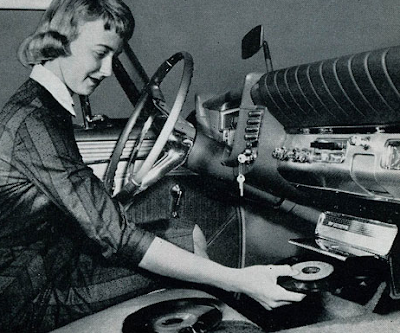
➦In 1955...Chrysler introduces the world's first sound system for it cars. The system consisted of -- record player mounted under the dashboard.
➦In 1969...Pop Culture's "Paul is Dead" hoax began when Tom Zarski, a student at Eastern Michigan University, called WKNR in Detroit and informed DJ Russ Gibb on air of the rumor that Paul McCartney died in a car crash, perhaps as long ago as 1966. Zarski told Gibb that by playing a section of the band's "Revolution 9" backwards, a clue emerges: the phrase "Turn me on, dead man." Gibb proceeds to do just that. Many listeners were stunned.
Two days after the WKNR broadcast, The Michigan Daily published a satirical review of Abbey Road by University of Michigan student Fred LaBour under the headline "McCartney Dead; New Evidence Brought to Light". It identified various "clues" to McCartney's death on Beatles album covers, including new clues from the just-released Abbey Road LP. As LaBour had invented many of the clues, he was astonished when the story was picked up by newspapers across the United States. WKNR-FM further fuelled the rumor with a special two-hour program on the subject, "The Beatle Plot", which aired October 19, 1969.
In the early morning hours of October 21, 1969, Roby Yonge, a disc jockey at New York radio station 77WABC, discussed the rumor on the air for over an hour before being pulled off the air for breaking format. At that time of night, WABC's signal covered a wide listening area and could be heard in 38 states and at times, other countries.
Later that day, the Beatles' press office issued statements denying the rumour which were widely reported by national and international media.
Various 'clues' were used to suggest the following story: three years previously on November 9, 1966. The rumored story was that McCartney, after an argument during a Beatles' recording session, had angrily driven off in his car. He had crashed it and died as a result. To spare the public from grief, the Beatles replaced him with "William Campbell", the winner of a McCartney look-alike contest.
➦In 1997...Henry John Deutschendorf Jr. died in a light plane accident (Born December 31, 1943). He was known professionally as John Denver, was an American singer-songwriter, record producer, actor, activist, and humanitarian, whose greatest commercial success was as a solo singer.
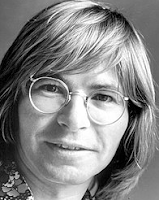 |
| John Denver 1974 |
Denver recorded and released approximately 300 songs, about 200 of which he composed, with total sales of over 33 million records worldwide. He recorded and performed primarily with an acoustic guitar and sang about his joy in nature, his disdain for city life, his enthusiasm for music, and his relationship trials. Denver's music appeared on a variety of charts, including country music, the Billboard Hot 100, and adult contemporary, in all earning 12 gold and four platinum albums with his signature songs "Take Me Home, Country Roads", "Annie's Song", "Rocky Mountain High", "Calypso", "Thank God I'm a Country Boy", and "Sunshine on My Shoulders".