Tuesday, May 26, 2026

FCC Opens Public Comment On 'The View'


The FCC has launched a formal public comment period to determine whether ABC’s daytime talk show The View meets the legal definition of a “bona fide news program,” which would exempt it from longstanding equal time obligations for political candidates.

FCC Chairman Brendan Carr announced the proceeding on Friday. Comments are due by June 22, with reply comments accepted until July 6.

The move centers on the equal time rule, a decades-old FCC regulation requiring broadcast stations that give airtime to one political candidate to offer comparable opportunities to opposing candidates. Bona fide news programs, newscasts, news interviews, and news documentaries are generally exempt if they meet FCC criteria for journalistic independence and content focus.

Brendan Carr
By opening the docket, the FCC is inviting broadcasters, advocacy groups, legal experts, and the public to weigh in on whether The View — hosted by Whoopi Goldberg and a rotating panel of commentators — functions primarily as news or as entertainment and opinion programming. The outcome could affect how networks schedule political content and respond to candidate appearance requests during the 2026 midterm election cycle and beyond.

Chairman Carr’s announcement signals growing scrutiny of daytime and late-night programming that blends news, commentary, and celebrity discussion. Similar debates have previously arisen around shows like Saturday Night Live and certain cable news programs.

The public comment process is the first formal step toward potential clarification or enforcement action. After the comment period closes, FCC staff will review submissions and could issue a declaratory ruling, initiate a broader rulemaking, or take no further action.

This proceeding reflects the FCC’s continued focus under Carr on modernizing broadcast regulations for an era when traditional distinctions between news, entertainment, and opinion have blurred across television platforms.

CBS News Pivots From Radio Newscasts to Audio


CBS News Radio aired the final edition of its iconic “World News Roundup” Thursday nighty, closing a program that began in 1938 as a victim of budget cuts at parent company Paramount.

Anchor Steve Kathan delivered the sign-off from a dimly lit studio at the CBS Broadcast Center in Manhattan, noting the program’s historic debut on March 13, 1938. He played a recording of Edward R. Murrow’s closing words from that first broadcast: “the best in radio reporting is yet to be — good night and good luck.”

The shutdown affects all 26 employees of CBS News Radio. Paramount announced the cuts in March, citing a shift in radio programming strategies and challenging economic conditions.

“A shift in radio station programming strategies, coupled with challenging economic realities, has made it impossible to continue the service,” the company said.

The radio unit had been operating at a loss, with monthly revenues recently as low as $67,000, according to a network executive. Though it reached 20 million listeners weekly and helped promote CBS News, leadership had long delayed closing it due to its storied legacy. CBS News editor-in-chief Bari Weiss was also reluctant to make the cuts, sources said. However, Paramount’s substantial debt from its acquisition of Warner Bros. Discovery has intensified pressure to reduce costs.

The end reflects broader industry challenges. Radio ad revenue fell about 2% to $14.37 billion, while digital audio advertising grew to more than $1.75 billion as advertisers favored targeted digital platforms, said Dustin Gervais, technical operations manager for the network.

CBS plans to stay in audio journalism through podcasts rather than traditional newscasts. Managing editor Charles Forelle told The LA Times the company is developing “a whole bunch of different things that are less news reading and more other things.”

CBS News Radio traces its roots to the company’s radio division, launched in 1927. After television rose to dominance, the radio arm focused on news. In 1967, CBS converted its owned AM stations, including KNX in Los Angeles, to all-news formats. The company sold its radio stations in 2017 but continued producing network content amid rising competition from digital media.

Experts point to the 1996 Telecommunications Act as a key turning point. The deregulation allowed companies to own more stations, leading to leveraged buyouts, reduced investment in programming, and pressure on network suppliers like CBS News Radio, said Michael Socolow, a journalism professor at the University of Maine.

Some previous CBS News Radio staffers have joined Worldwide News Network, a new hard-news service launched Saturday by John Catsimatidis, owner of New York’s WABC.

Twin Cities Radio: Bailey J. Hess Let Go as Dave Ryan Era Ends


As longtime morning host Dave Ryan wraps up his 33-year career at 101.3 KDWB, the station is undergoing a major lineup overhaul that includes the departure of his co-host Bailey J. Hess.

According to Bring Me The News, Hess confirmed Saturday night on Facebook that she was let go following Friday’s final show with Ryan.

“I’ve had a lot of people asking about what’s in store for me at KDWB,” Hess wrote. “I am sad to say that after the show yesterday, I was let go.”

Bailey J Hess
Falen Bonsett and Colt Parkey, who have co-hosted the afternoon drive shift together for the past several years, will move into the morning slot. Jenny Luttenberger will remain with the new morning team, while producer and co-host Vont Leak shifts to afternoons.

Hess had been a key part of the morning show since late 2023, first serving as a substitute for six months after Falen moved to afternoons. She was promoted to official co-host in May 2024 alongside Ryan, Luttenberger, and Leak.

In her emotional farewell post, Hess reflected on her time at the station with gratitude despite its brevity.

“I know I was only a sub for 6 months and official co-host for just 2 years, but that’s a good enough amount of time to fall in love with radio,” she wrote. “With deep conversations, celebrity gossip, playing games, and good bits… It has been a joy to be a small part of the morning show I’ve listened to since kindergarten. What a surreal chapter in my life.”

She added that the hardest part would be losing the daily early-morning connection with her coworkers: “The hardest part of this whole thing will be not seeing them at the crack of dawn every day.”The changes mark the end of an era for KDWB’s long-running morning show. Dave Ryan’s departure after more than three decades as the flagship voice of the station leaves a significant void, with Bonsett and Parkey now tasked with carrying the program forward alongside Luttenberger.

Hess’s exit closes a shorter but memorable run for the co-host, who grew up listening to the very show she eventually joined. No further details have been released about her future plans.

NYC Radio: Eddie Scozzare Signs Off After 37 Years at WFAN


Eddie Scozzare, the longtime producer and board operator for Audacy’s WFAN morning drive, officially ended his 37-year career on Friday, signing off in front of fans, colleagues, and cameras during the station’s “Kickoff to Summer” celebration in Belmar, New Jersey.

The 47-year-old Scozzare was celebrated by the station, its current morning show Boomer and Gio, and loyal listeners who gathered for the event. A true WFAN lifer, he became one of the few behind-the-scenes figures to build a genuine on-air connection with the audience through his quick wit, perfectly timed drops, and endless supply of trivia.

Eddie Scozzare
Over nearly four decades, Scozzare ran the board for many of the station’s biggest personalities, including Don Imus, Steve Somers, Mike and the Mad Dog, Boomer and Carton, and most recently Boomer and Gio. His deep institutional knowledge and distinctive personality made him synonymous with WFAN’s heritage as New York’s premier sports radio station.

Last week, Scozzare reflected on his career during a show appearance, revealing his one major regret: he didn’t study forestry in school, which stood in the way of his dream of becoming a park ranger. He noted, however, that national parks welcome volunteers — a potential post-radio pursuit that could help fill the void left by his departure from the airwaves.

While Scozzare now faces life after WFAN, the station faces its own challenge: replacing a one-of-a-kind talent. No other board operator has been with WFAN for its entire modern history, and few can match Scozzare’s ability to seamlessly interject sound bites, drops, and humorous commentary that enhanced the morning shows for generations of listeners.

Late Night Comedy Shifts Platforms


Stephen Colbert’s departure from CBS’s The Late Show marks the potential close of a historic franchise, yet the broader late-night comedy tradition has shifted online rather than disappearing.

Reuters reports Podcasts now offer comedians creative freedom, larger audiences, and stronger economics compared to traditional television. Former late-night hosts like Conan O’Brien, Chelsea Handler, and Samantha Bee have built successful second acts, joined by stars such as Amy Poehler, Theo Von, and rising talents like Kareem Rahma, whose subway celebrity interviews have gone viral.


Audience numbers demonstrate the shift. Trevor Noah’s podcast What Now? With Trevor Noah reaches far more people than his time hosting The Daily Show. The podcast has nearly 4.6 million YouTube subscribers—over 10 times the 372,000 average viewers his TV show drew in its final year. Noah highlighted the appeal during a recent YouTube upfront: “YouTube is fantastic. It’s a place where I get to make the shows that I want, with the people that I want, in a way that I want.”

Late-night TV audiences have declined steadily, with top network comedy programs once earning over $100 million annually now facing much tougher economics. Colbert’s The Late Show, which employed about 200 staff, reportedly lost up to $40 million a year.

Podcasts deliver clear financial advantages. They cost far less to produce than TV, and creators own their content, capturing revenue from ads, subscriptions, sponsorships, live events, and merchandise. Ad dollars have followed listeners: at least $30 million shifted from TV comedy to podcasts in the last quarter alone, while late-night TV ad spending has dropped nearly 60% since 2017.

YouTube: Top 2025 Podcasts
YouTube powers the video podcast boom. The platform has become the top destination for weekly podcasts, surpassing Spotify and Apple, per Edison Research. 

In October, living-room viewers watched more than 700 million hours of podcasts on YouTube, up from 400 million a year earlier—many formatted like traditional talk shows.

Conan O’Brien led the migration. After leaving NBC’s The Tonight Show, he launched Conan O’Brien Needs a Friend in 2018. It now ranks among the top 50 U.S. podcasts, with over 230 million downloads.
 
Edison Research’s Megan Lazovick noted: “He got pushed off late-night. Now, he has this huge career, and really the freedom to do whatever he wants.”

This ownership model contrasts sharply with TV’s corporate and political pressures. Talent agent Ben Davis (WME) explained: “You’re not just a hired host on someone else’s real estate. You can own your show, do what you want with it creatively.” Podcast businesses through ads, sponsorships, and licensing often deliver payoffs that far exceed traditional TV hosting salaries.

Advertising giant WPP reports podcast ad revenue rose 25% in the first quarter compared to the prior year, underscoring the format’s growing momentum. The late-night tradition lives on—just not on traditional television.

'Comic Unleashed" Takes Over Colbert Time Slot


Media mogul Byron Allen’s long-running comedy roundtable Comics Unleashed has replaced Stephen Colbert’s The Late Show in the prestigious 11:35 p.m. slot on CBS, fulfilling a 51-year personal goal for Allen.

In a wide-ranging NPR Newsmakers interview, Allen expressed excitement about the opportunity but made clear he has no plans to alter his established formula to chase Colbert’s former audience of more than 2.5 million viewers per episode.

No changes, no controversy, no corporate boundaries

When pressed on the show’s modest ratings (4.3/10 on IMDb) and whether he would adjust the format to “meet the moment,” Allen responded bluntly: “Absolutely not.”  He emphasized that Comics Unleashed, now celebrating 20 years and over 1,000 comedians, features diverse performers but deliberately avoids political, racist, sexist, or homophobic material. “We are doing a show with nothing political… Just clean comedy,” he said.

Allen stated he has had no conversations with CBS or Paramount about content boundaries. If they ever tried to impose restrictions, he said he would reply: “Guys, enjoy the 150 million I save you” — while noting he also pays the network additional millions.


“It’s not show business. It’s business show.”

Allen repeatedly framed his career through a business lens. Though he began as a comedian (appearing on Johnny Carson at age 18), he shifted focus to ownership. He has launched or acquired 74 television shows and currently airs more than 13 hours a day of first-run programming.

His core mission: ensuring Black Americans own media content rather than simply create it for others. 

“We have plenty of corporations out here who make money off of our style, our creativity, our swagger, but that’s over,” he said.

Media mogul strategy: Buy low, build scale

Allen has a pattern of acquiring distressed media assets — attempting to buy BET and VH1 in the past, bidding for Paramount, and recently taking a majority stake in BuzzFeed. He described his approach as buying companies “in the lobby and take them to the penthouse,” while chasing the scale of Disney and Murdoch.“I love business. I live for business,” he said. “I don’t smoke. I don’t drink. I don’t do drugs. I don’t play golf… My passion is busines.”

Consumer Sentiment Hits All-Time Low


Consumer confidence in the United States has plunged to the lowest level ever recorded in more than 70 years of tracking, according to the University of Michigan’s latest index released Friday.

The sharp decline comes as Americans grapple with persistently high prices, a softening labor market, and rising energy costs triggered by the Iran war that began at the end of February. The reading fell 10% below the previous record low set in June 2022, when inflation was at its highest level in decades.

“Prices remain extremely high, labor markets have unambiguously weakened in the last four years, and now we’re in the middle of a war,” said Joanne Hsu, director of consumer surveys at the University of Michigan. 


“I don’t think the fact that we’re lower than June 2022 should come as a surprise to anyone.” Sentiment was already weak entering 2026 but deteriorated rapidly after the conflict drove gas prices sharply higher. The new low underscores growing economic anxiety among ordinary Americans despite other positive signals in the broader economy.

Financial markets told a very different story on the same day. The S&P 500 posted its eighth straight week of gains, while the Dow Jones Industrial Average closed at a record high for the second consecutive session.

The divergence highlights a split in American experiences: those with substantial stock portfolios report feeling somewhat better than the national average, according to the Michigan survey. However, even these higher-income investors remain relatively unhappy compared with similar periods of strong market performance in the past.This marks a notable shift from historical patterns, where booming stock valuations typically lifted broader consumer sentiment more significantly. The current malaise suggests that everyday pressures — particularly at the gas pump and grocery store — are outweighing paper gains in retirement accounts for many households.

The University of Michigan’s consumer sentiment index, one of the longest-running measures of its kind, reflects Americans’ views on current economic conditions and their expectations for the future. Friday’s reading represents the latest sign that geopolitical shocks and lingering inflation scars continue to weigh heavily on public mood, even as Wall Street celebrates new highs.

NOAA Forecasts Scorching Summer for Most of U-S


Above-average temperatures are forecast across the vast majority of the United States this summer, according to the latest seasonal outlook released May 21 by NOAA’s Climate Prediction Center.

The June-July-August map is dominated by orange and red shading, indicating elevated probabilities of hotter-than-normal conditions from the West through the Great Plains, Lower Mississippi Valley, and East Coast. The highest confidence for above-normal temperatures centers on the Pacific Northwest. Above-normal temperatures are also favored for most of Alaska.

Only the Great Lakes and Upper Midwest appear in white, signaling equal chances of above-, near-, or below-normal temperatures.

USA Today reports Private forecasters at AccuWeather’s summer 2026 forecast agrees, predicting a hot season for nearly the entire contiguous United States with almost no areas expected to average below historical norms.

“A hot summer is predicted across most of the contiguous United States in 2026,” said AccuWeather meteorologist Brian Lada.

The official NOAA outlook does not predict exact temperatures but shows probabilities. Elevated odds of above-normal heat across most regions point to a higher likelihood of frequent heat waves and warmer-than-average seasonal conditions.


Heightened wildfire and heat risks in the West

The most intense heat is expected across California, Idaho, Montana, Nevada, Oregon, Utah, Washington, and Wyoming. AccuWeather warns this will fuel a significant wildfire threat in the Northwest and Great Basin.

“Northwest and Great Basin wildfires can be destructive this summer, along with impressive heat waves and increasing drought conditions,” said AccuWeather meteorologist Brandon Buckingham.

NOAA noted that strong heat signals in Oregon and Washington are consistent with a developing El Niño pattern.

Eastern cities will not escape the warmth 

AccuWeather forecasts the number of 90-degree days to be near or above average in Boston, Chicago, New York City, and Philadelphia.

Midwest faces more uncertainty

The Midwest is largely marked “Equal Chances” on NOAA’s map, meaning climate signals are weak and temperatures could swing above, near, or below normal.

“Equal chances of below, near, or above-normal temperatures are forecast for the Midwest, where a more variable temperature pattern is expected this summer,” said NOAA meteorologist Brad Pugh.

Later in the season, the outlook slightly tilts toward below-normal temperatures in parts of the Midwest due to El Niño influences.

El Niño expected to shape the broader pattern

Forecasters say El Niño is likely to develop early this summer and exert growing influence on U.S. weather through the remainder of 2026. The pattern is expected to increase hurricane activity in the eastern Pacific while suppressing the Atlantic hurricane season to below-average levels overall.

Bananas Sell Out Record-Shattering 101,000 Fans In Knoxville


A sold-out crowd of approximately 101,000 fans packed Tennessee’s Neyland Stadium in Knoxville on Sarturday, as the viral entertainment baseball team Savannah Bananas brought their unique “Banana Ball” brand to the iconic 101,915-capacity football venue for a game against the Texas Tailgaters.

The event marked one of the largest single-game attendances in Banana Ball history — second only to the 102,000 fans who attended the team’s May 2 game at Texas A&M’s Kyle Field — and represented the first organized baseball game at Neyland in nearly a century. 

Fans, many dressed in banana yellow, filled the stands for a high-energy night featuring trick plays, a two-hour game clock, players on stilts, backflips, a Dolly Parton-themed heel race, celebrity appearances including former Vol Alvin Kamara as a pinch runner, and Lady Vols softball stars throwing out the first pitch.

The Texas Tailgaters edged out the Bananas 8-7 in the entertaining matchup, but the real story was the massive turnout that highlighted the team’s explosive popularity during their 45-state, 75-stadium, 190-game tour.


The Savannah Bananas, known for their showmanship, costume elements, and rule-bending style of play that prioritizes fun over traditional baseball, have built a massive following by transforming games into full entertainment experiences. Their decision to play in a football stadium created a striking visual of a baseball diamond squeezed onto the field, drawing fans from across East Tennessee and beyond. The event also provided a significant economic boost to Knoxville, with strong ticket sales and tourism spending.

The Neyland sell-out follows a similarly packed game at Covenant Health Park earlier in the week and underscores the team’s ability to fill massive venues that typically host college football powerhouses. 

The success reflects broader enthusiasm for the Bananas’ innovative approach, which has turned them from a minor-league novelty into a national sensation capable of selling out historic stadiums across the country.

Radio History: May 26


➦In 1886
..iconic performer Al Jolson born Asa Yoelson (Died at age 64 - October 23, 1950) was a Russian-born American singer, comedian, and actor. At the peak of his career, he was dubbed "The World's Greatest Entertainer".  In the 1920s, Jolson was America's most famous and highest-paid entertainer.
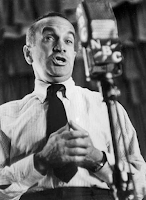
Al Jolson - 1938
Although best remembered today as the star of the first talking picture, The Jazz Singer (1927), he starred in a series of successful musical films during the 1930s. After the attack on Pearl Harbor, he was the first star to entertain troops overseas during World War II.

After a period of inactivity, his stardom returned with The Jolson Story (1946), for which Larry Parks played Jolson, with the singer dubbing for Parks. The formula was repeated in a sequel, Jolson Sings Again (1949). In 1950, he again became the first star to entertain GIs on active service in the Korean War, performing 42 shows in 16 days. He died weeks after returning to the U.S., partly owing to the physical exertion of performing. Defense Secretary George Marshall posthumously awarded him the Medal for Merit.

➦In 1903...Canadian radio pioneer Reginald Fessenden was granted a patent for the liquid barretter microphone.

➦In 1920...singer Peggy Lee, whose real name is Norma Delores Egstrom, was born in Jamestown, North Dakota.

She was among the few singers who can handle any type of song — pop, ballad, country, rhythm-and-blues or jazz. Benny Goodman gave her her stage name when she performed with his band from 1941 to ’43. Lee went out on her own after marrying Goodman’s guitarist, Dave Barbour. Her hit records included “Manana (mahn-YAH’-nah),” ”Fever” — a cover of Little Willie John’s r-and-b song — and ”Is That All There Is?” Peggy Lee died of a heart attack January 21st, 2002. She was 81.

Jimmie Rodgers
➦In 1933...Jimmie Rodgers, the “Father of Country Music,” died of tuberculosis in New York City at age 35, just two days after making his final recording.

He was so ill during his final recording sessions that he had to rest between takes on a cot.  Jimmie Rodgers recorded his first million-seller “T for Texas,” also known as “Blue Yodel,” in 1927, becoming country music’s first superstar. He never appeared on any major radio show or played the Grand Ole Opry. But he, Hank Williams and songwriter-publisher Fred Rose were the first to be elected to the Country Music Hall of Fame in 1961.

➦In 1940...CBS Radio first presented “Invitation to Learning”.  The 30-minute Sunday morning program that featured a discussion of great books, with Lyman Bryson as host, continued for 15 years.

Joe Kelly
➦In 1959...Chicago-based radio host Joe Kelly, who MC’d the WLS National Barn Dance & NBC’s Quiz Kids (1940-53), died at age 57.

➦In 1962...the original version of “Twist and Shout,” by the Isley Brothers, was released. The song was revived two years later by the Beatles.

➦In 1971...Don McLean was in New York to record his soon-to-be iconic signature song “American Pie.”

➦In 1989...Radio stations staged 30 seconds of silence at 7:42 AM (EST), to honor Radio.
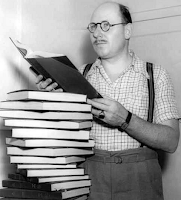
Carleton Morse
➦In 1993...Radio dramatist, Carleton Morse, best known for "One Man's Family", died at age 91.

"One Man's Family" centered on a family in the well-to-do Sea Cliff area of San Francisco, overlooking the Golden Gate Bridge. The tribulations of its main characters, Fanny, Henry and Jack Barbour, dominated the national airwaves from the time the show began in 1932 until it went off the air in 1959 after 3,256 episodes.

He covered radio and police news for The Sacramento Union before moving to San Francisco, where he worked for several newspapers, including The Call, The Bulletin and The Chronicle. He took a writing job at NBC in 1929 and went on to became a legendary radio pioneer.

At its peak, "One Man's Family" rivaled "Amos 'n' Andy" in popularity.
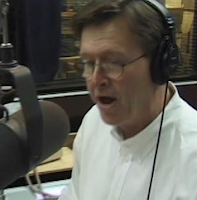
Dan Daniel - WCBS-FM
In 1996...Dan Daniel started at Oldies WCBS 101.1 FM NYC

He started as a disc jockey at age seventeen on Armed Forces Radio with the US Navy. His first commercial job was at KXYZ in Houston in 1955 and he then worked at WDGY in Minneapolis before moving to WMCA in 1961.

His first broadcast at WMCA was on August 18, 1961. He started on the graveyard shift overnight but from 1962 to 1968 he played the top 40 hits from 4 pm to 7 pm. The station produced a survey of the current sales in New York record stores and Dandy Dan gave the countdown of the week's best sellers every Wednesday in this late afternoon slot.

From 1968 to 1970, he did the early morning drive-to-work slot before leaving WMCA after nearly nine years; his final broadcast was on 11 July 1970.

Dan was heard coast-to-coast on NBC Radio's "Monitor" in the summer of 1973.

He subsequently worked on WYNY-FM where he hosted the mid-day slot and later morning and afternoon drives. He then did a stint at WHN playing country music before returning to WYNY-FM. Finally, he moved to WCBS-FM in 1996. He retired from WCBS on December 31, 2002.

Daniel died on June 21, 2016 after falling in his home the previous day. He was 81.