(Real Name Charles Thomas Aldrich, Jr., died from lung cancer June 30, 1995) is best remembered as Lucille Ball's longtime television foil—and particularly as cantankerously combustible, tightfisted bank executive Theodore J. Mooney, on Ball's second television situation comedy.
Gale Gordon
Gordon's first big radio break came via the recurring roles of "Mayor La Trivia" and "Foggy Williams" on Fibber McGee and Molly, before playing Rumson Bullard on the show's successful spinoff, The Great Gildersleeve.
Gordon and his character of Mayor La Trivia briefly left the show in December 1942 when Gordon enlisted in World War II and the storyline followed. He was the first actor to play the role of Flash Gordon, in the 1935 radio serial The Amazing Interplanetary Adventures of Flash Gordon. He also played Dr. Stevens in Glorious One.
In 1950, Gordon played John Granby in the radio series Granby's Green Acres, which became the basis for the 1960s television series Green Acres. Gordon went on to create the role of pompous principal Osgood Conklin on Our Miss Brooks, carrying the role to television when the show moved there in 1952. In the interim, Gordon turned up as Rudolph Atterbury on My Favorite Husband, which starred Lucille Ball in a precursor to I Love Lucy.
Jim Jewell
➦In 1906...James Jewell was born. He was a radio actor, producer and director at radio station WXYZ, Detroit, Michigan. (Died from a heart attack August 5, 1975 at age 69)
Jewell first got into radio in 1927. with a background of summer stock, vaudeville, burlesque, and even touring with a troupe of marionettes. In June 1932, George Trendle, the owner of radio station WXYZ Detroit, decided to drop network affiliation and produce his own radio programs. Jewell was hired as the dramatic director for the radio station. He supplied the actors from his own repertory company, the "Jewell Players".
Jewell was part of the station staff that worked out the original concepts for The Lone Ranger. Jewell is also credited for selecting The William Tell Overture as the theme music for the series. "Ke-mo sah-bee", Tonto's greeting to the masked Ranger, was derived from the name of a boys' camp owned by Jewell's father-in-law Charles W. Yeager. Camp Kee-Mo-Sah-Bee operated from 1911 until 1941 on Mullet Lake south of Mackinac, Michigan. After the radio show became popular, Yeager held "Lone Ranger Camps" at his camp.
Jewell produced, directed and occasionally wrote many of the early episodes for The Lone Ranger and The Green Hornet. He was the director for both series from their beginning up until 1938.
Jewell left WXYZ in 1938, and moved to Chicago and worked as a director-producer at WBBM (AM), the CBS radio affiliate in Chicago.
He directed Jack Armstrong, the All-American Boy beginning in 1938 until the series ended in 1951. From 1951-1955, Jewell was the producer/director of The Silver Eagle, a mountie adventure which ran on ABC and starred Jim Ameche, the brother of movie star Don Ameche.
As the era of radio dramatic series came to an end, attempted to bring The Silver Eagle to television.
➦In 1914...John Charles Patrick Croghan Daly was born (Died February 24, 1991). Known as John Daly, he was a radio and television personality, CBS News broadcast journalist, ABC News executive and TV anchor and a game show host, best known as the host and moderator of the CBS television panel show What's My Line?
Daly began his broadcasting career as a reporter for NBC Radio, and then for WJSV (now WTOP), the local CBS Radio Network affiliate in Washington, D.C., serving as CBS' White House correspondent. He appears on the famous "One Day in Radio" tapes of September 21, 1939, in which WJSV preserved its entire broadcast day for posterity.
Through covering the Roosevelt White House, Daly became known to the national CBS audience as the network announcer for many of the President's speeches. In late 1941, Daly transferred to New York City, where he became anchor of The World Today. During World War II, he covered the news from London as well as the North African and Italian fronts. Daly was a war correspondent in 1943 in Italy during Gen. George S. Patton's infamous "slapping incidents". After the war, he was a lead reporter on CBS Radio's news/entertainment program CBS Is There (later known on TV as You Are There), which recreated the great events of history as if CBS correspondents were on the scene.
As a reporter for the CBS radio network, Daly was the voice of two historic announcements. He was the first national correspondent to deliver the news of the attack on Pearl Harbor on Sunday, December 7, 1941, and he was also the first to relay the wire service report of the death of President Franklin D. Roosevelt on April 12, 1945, interrupting the program Wilderness Road to deliver the news. Transcriptions of those bulletins have been preserved on historical record album retrospectives and radio and television documentaries. Among the first were the Columbia Records spoken word series I Can Hear It Now and the later CBS Television series, The Twentieth Century.
In July, 1959, along with the Associated Press writer John Scali, he reported from Moscow on the famous Kitchen Debate between USSR General Secretary Nikita Khrushchev and then U.S. Vice President Richard M. Nixon in 1959.
➦In 1922...WGY-AM, Schenectady, NY signed-on. As early as 1912, General Electric company in Schenectady began experimenting with radio transmissions, being granted a class 2-Experimental license for 2XI on August 13, 1912 by the Commerce Department.
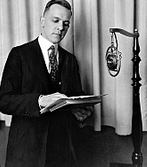
WGY signed on on February 20, 1922 at 7:47pm at 360 meters wavelength (about 833 kHz), with Kolin Hager at the mike, or as he was known on the air, as KH. Hager signed on with the stations call letters, explaining the W is for wireless, G for General Electric, and Y, the last letter in Schenectady.
(Real Name Charles Thomas Aldrich, Jr., died from lung cancer June 30, 1995) is best remembered as Lucille Ball's longtime television foil—and particularly as cantankerously combustible, tightfisted bank executive Theodore J. Mooney, on Ball's second television situation comedy.
Gale Gordon
Gordon's first big radio break came via the recurring roles of "Mayor La Trivia" and "Foggy Williams" on Fibber McGee and Molly, before playing Rumson Bullard on the show's successful spinoff, The Great Gildersleeve.
Gordon and his character of Mayor La Trivia briefly left the show in December 1942 when Gordon enlisted in World War II and the storyline followed. He was the first actor to play the role of Flash Gordon, in the 1935 radio serial The Amazing Interplanetary Adventures of Flash Gordon. He also played Dr. Stevens in Glorious One.
In 1950, Gordon played John Granby in the radio series Granby's Green Acres, which became the basis for the 1960s television series Green Acres. Gordon went on to create the role of pompous principal Osgood Conklin on Our Miss Brooks, carrying the role to television when the show moved there in 1952. In the interim, Gordon turned up as Rudolph Atterbury on My Favorite Husband, which starred Lucille Ball in a precursor to I Love Lucy.
Jim Jewell
➦In 1906...James Jewell was born. He was a radio actor, producer and director at radio station WXYZ, Detroit, Michigan. (Died from a heart attack August 5, 1975 at age 69)
Jewell first got into radio in 1927. with a background of summer stock, vaudeville, burlesque, and even touring with a troupe of marionettes. In June 1932, George Trendle, the owner of radio station WXYZ Detroit, decided to drop network affiliation and produce his own radio programs. Jewell was hired as the dramatic director for the radio station. He supplied the actors from his own repertory company, the "Jewell Players".
Jewell was part of the station staff that worked out the original concepts for The Lone Ranger. Jewell is also credited for selecting The William Tell Overture as the theme music for the series. "Ke-mo sah-bee", Tonto's greeting to the masked Ranger, was derived from the name of a boys' camp owned by Jewell's father-in-law Charles W. Yeager. Camp Kee-Mo-Sah-Bee operated from 1911 until 1941 on Mullet Lake south of Mackinac, Michigan. After the radio show became popular, Yeager held "Lone Ranger Camps" at his camp.
Jewell produced, directed and occasionally wrote many of the early episodes for The Lone Ranger and The Green Hornet. He was the director for both series from their beginning up until 1938.
Jewell left WXYZ in 1938, and moved to Chicago and worked as a director-producer at WBBM (AM), the CBS radio affiliate in Chicago.
He directed Jack Armstrong, the All-American Boy beginning in 1938 until the series ended in 1951. From 1951-1955, Jewell was the producer/director of The Silver Eagle, a mountie adventure which ran on ABC and starred Jim Ameche, the brother of movie star Don Ameche.
As the era of radio dramatic series came to an end, attempted to bring The Silver Eagle to television.
➦In 1914...John Charles Patrick Croghan Daly was born (Died February 24, 1991). Known as John Daly, he was a radio and television personality, CBS News broadcast journalist, ABC News executive and TV anchor and a game show host, best known as the host and moderator of the CBS television panel show What's My Line?
Daly began his broadcasting career as a reporter for NBC Radio, and then for WJSV (now WTOP), the local CBS Radio Network affiliate in Washington, D.C., serving as CBS' White House correspondent. He appears on the famous "One Day in Radio" tapes of September 21, 1939, in which WJSV preserved its entire broadcast day for posterity.
Through covering the Roosevelt White House, Daly became known to the national CBS audience as the network announcer for many of the President's speeches. In late 1941, Daly transferred to New York City, where he became anchor of The World Today. During World War II, he covered the news from London as well as the North African and Italian fronts. Daly was a war correspondent in 1943 in Italy during Gen. George S. Patton's infamous "slapping incidents". After the war, he was a lead reporter on CBS Radio's news/entertainment program CBS Is There (later known on TV as You Are There), which recreated the great events of history as if CBS correspondents were on the scene.
As a reporter for the CBS radio network, Daly was the voice of two historic announcements. He was the first national correspondent to deliver the news of the attack on Pearl Harbor on Sunday, December 7, 1941, and he was also the first to relay the wire service report of the death of President Franklin D. Roosevelt on April 12, 1945, interrupting the program Wilderness Road to deliver the news. Transcriptions of those bulletins have been preserved on historical record album retrospectives and radio and television documentaries. Among the first were the Columbia Records spoken word series I Can Hear It Now and the later CBS Television series, The Twentieth Century.
In July, 1959, along with the Associated Press writer John Scali, he reported from Moscow on the famous Kitchen Debate between USSR General Secretary Nikita Khrushchev and then U.S. Vice President Richard M. Nixon in 1959.
➦In 1922...WGY-AM, Schenectady, NY signed-on. As early as 1912, General Electric company in Schenectady began experimenting with radio transmissions, being granted a class 2-Experimental license for 2XI on August 13, 1912 by the Commerce Department.
WGY signed on on February 20, 1922 at 7:47pm at 360 meters wavelength (about 833 kHz), with Kolin Hager at the mike, or as he was known on the air, as KH. Hager signed on with the stations call letters, explaining the W is for wireless, G for General Electric, and Y, the last letter in Schenectady.
Longtime Southeast Wisconsin radio personality Bob Reitman is stepping away from the mic at the end of this week with his final edition of WUWM’s weekly music program “It’s All Right, Ma, It’s Only Music.”
Bob Reitman
According to a posting on the WTMJ website, Reitman has been on the air in the Milwaukee area since 1966. In addition to WUWM, he joined various local radio outlets including WZMF, WAWA, WTOS, WQFM and WKTI, where he teamed up with 620 WTMJ legend Gene Mueller.
His show, “It’s Alright, Ma, It’s Only Music,” was formed during an earlier stint at WUWM and relaunched in 2007 as a live weekly music show.
“For the past 17 years, Reitman was a bridge between our past and our future. Reitman’s underground and freeform style, which he pioneered with us, will always be a part of our ethos here at WUWM and we will miss him greatly,” said General Manager David Lee.
“Bob Reitman is the best of what we do in radio, from his origins at WUWM to his blockbuster career throughout Milwaukee, and back to where it all started. We are lucky to have been the home to ‘It’s Alright, Ma, It’s Only Music’ and are thankful for everything he’s done for our radio listeners. I am going to miss him so much,” Ele Ellis, Vice President of Content and Programming stated.
(Real Name Charles Thomas Aldrich, Jr., died from lung cancer June 30, 1995) is best remembered as Lucille Ball's longtime television foil—and particularly as cantankerously combustible, tightfisted bank executive Theodore J. Mooney, on Ball's second television situation comedy.
Gale Gordon
Gordon's first big radio break came via the recurring roles of "Mayor La Trivia" and "Foggy Williams" on Fibber McGee and Molly, before playing Rumson Bullard on the show's successful spinoff, The Great Gildersleeve.
Gordon and his character of Mayor La Trivia briefly left the show in December 1942 when Gordon enlisted in World War II and the storyline followed. He was the first actor to play the role of Flash Gordon, in the 1935 radio serial The Amazing Interplanetary Adventures of Flash Gordon. He also played Dr. Stevens in Glorious One.
In 1950, Gordon played John Granby in the radio series Granby's Green Acres, which became the basis for the 1960s television series Green Acres. Gordon went on to create the role of pompous principal Osgood Conklin on Our Miss Brooks, carrying the role to television when the show moved there in 1952. In the interim, Gordon turned up as Rudolph Atterbury on My Favorite Husband, which starred Lucille Ball in a precursor to I Love Lucy.
Jim Jewell
➦In 1906...James Jewell was born. He was a radio actor, producer and director at radio station WXYZ, Detroit, Michigan. (Died from a heart attack August 5, 1975 at age 69)
Jewell first got into radio in 1927. with a background of summer stock, vaudeville, burlesque, and even touring with a troupe of marionettes. In June 1932, George Trendle, the owner of radio station WXYZ Detroit, decided to drop network affiliation and produce his own radio programs. Jewell was hired as the dramatic director for the radio station. He supplied the actors from his own repertory company, the "Jewell Players".
Jewell was part of the station staff that worked out the original concepts for The Lone Ranger. Jewell is also credited for selecting The William Tell Overture as the theme music for the series. "Ke-mo sah-bee", Tonto's greeting to the masked Ranger, was derived from the name of a boys' camp owned by Jewell's father-in-law Charles W. Yeager. Camp Kee-Mo-Sah-Bee operated from 1911 until 1941 on Mullet Lake south of Mackinac, Michigan. After the radio show became popular, Yeager held "Lone Ranger Camps" at his camp.
Jewell produced, directed and occasionally wrote many of the early episodes for The Lone Ranger and The Green Hornet. He was the director for both series from their beginning up until 1938.
Jewell left WXYZ in 1938, and moved to Chicago and worked as a director-producer at WBBM (AM), the CBS radio affiliate in Chicago.
He directed Jack Armstrong, the All-American Boy beginning in 1938 until the series ended in 1951. From 1951-1955, Jewell was the producer/director of The Silver Eagle, a mountie adventure which ran on ABC and starred Jim Ameche, the brother of movie star Don Ameche.
As the era of radio dramatic series came to an end, attempted to bring The Silver Eagle to television.
➦In 1914...John Charles Patrick Croghan Daly was born (Died February 24, 1991). Known as John Daly, he was a radio and television personality, CBS News broadcast journalist, ABC News executive and TV anchor and a game show host, best known as the host and moderator of the CBS television panel show What's My Line?
Daly began his broadcasting career as a reporter for NBC Radio, and then for WJSV (now WTOP), the local CBS Radio Network affiliate in Washington, D.C., serving as CBS' White House correspondent. He appears on the famous "One Day in Radio" tapes of September 21, 1939, in which WJSV preserved its entire broadcast day for posterity.
Through covering the Roosevelt White House, Daly became known to the national CBS audience as the network announcer for many of the President's speeches. In late 1941, Daly transferred to New York City, where he became anchor of The World Today. During World War II, he covered the news from London as well as the North African and Italian fronts. Daly was a war correspondent in 1943 in Italy during Gen. George S. Patton's infamous "slapping incidents". After the war, he was a lead reporter on CBS Radio's news/entertainment program CBS Is There (later known on TV as You Are There), which recreated the great events of history as if CBS correspondents were on the scene.
As a reporter for the CBS radio network, Daly was the voice of two historic announcements. He was the first national correspondent to deliver the news of the attack on Pearl Harbor on Sunday, December 7, 1941, and he was also the first to relay the wire service report of the death of President Franklin D. Roosevelt on April 12, 1945, interrupting the program Wilderness Road to deliver the news. Transcriptions of those bulletins have been preserved on historical record album retrospectives and radio and television documentaries. Among the first were the Columbia Records spoken word series I Can Hear It Now and the later CBS Television series, The Twentieth Century.
In July, 1959, along with the Associated Press writer John Scali, he reported from Moscow on the famous Kitchen Debate between USSR General Secretary Nikita Khrushchev and then U.S. Vice President Richard M. Nixon in 1959.
➦In 1922...WGY-AM, Schenectady, NY signed-on. As early as 1912, General Electric company in Schenectady began experimenting with radio transmissions, being granted a class 2-Experimental license for 2XI on August 13, 1912 by the Commerce Department.
WGY signed on on February 20, 1922 at 7:47pm at 360 meters wavelength (about 833 kHz), with Kolin Hager at the mike, or as he was known on the air, as KH. Hager signed on with the stations call letters, explaining the W is for wireless, G for General Electric, and Y, the last letter in Schenectady.
➦In 1962...Edward Britt "Ted" Husing died from complications of a brain tumor at age 60 (Born - November 27, 1901). He was an early radio sportscaster and was among the first to lay the groundwork for the structure and pace of modern sports reporting.
At age 16, he joined the National Guard and in World War I was assigned to stand watch over New York's harbor. Following the war, he floated between jobs such as carnival barker and payroll clerk.
After he won an audition over 500 other applicants for announcer at New York City radio station WHN, Husing found his life's calling. He was schooled under the tutelage of pioneer broadcaster Major J. Andrew White. There he covered breaking news stories and political conventions and assisted White during football commentaries.
By 1926, Husing was working at WJZ, which made him "its specialist in announcing dance programs." A newspaper article reported that Husing was selected for the job "out of 610 applications for the position of announcer at station WJZ."
As an announcer, his use of descriptive language combined with a commanding voice made his broadcasts must-listen events. By 1927, he was voted seventh most popular announcer in a national poll. Following a pay dispute, he moved to Boston, where he broadcast Boston Braves (now Atlanta Braves) baseball games.
Later in 1927, he returned to New York and helped his mentor, J. Andrew White, start the new CBS chain. After cigar mogul William S. Paley bought the cash-strapped network in 1928, Ted Husing rose to new heights of glory and fame.
At CBS, Husing took on a wide variety of events. In 1929, he was named studio director of WABC (the CBS flagship station) in addition to continuing his work as an announcer for the network.
He was the original voice of the popular March of Time program and an announcer for shows such as George Burns and Gracie Allen. Above everything, his work on sports gave Husing the greatest prominence. He covered events as diverse as boxing, horse racing, track and field, regattas, seven World Series, tennis, golf, four Olympic Games, Indianapolis 500 motor racing, and especially college football.
Russia's defense ministry accused Ukraine of a "terrorist" drone attack on Moscow on Monday, after the city's mayor said that two buildings were hit and media reported that debris was found not far from the defense ministry's buildings. The defense ministry said on its Telegram messaging app that two drones "were suppressed and crashed."
Mayor Sergei Sobyanin said on his Telegram messaging app that two non-residential buildings were struck at around 4 a.m., adding that there was no "serious damage or casualties." It was unclear whether the drones hit the buildings when they were downed, or whether they deliberately targeted the buildings. Neither the defense ministry nor the mayor said where the drones were intercepted.
➤BLINKEN..RUSSIA HAS ALREADY LOST: Russia has "already lost" the war in Ukraine in terms of the goals Russian President Vladimir Putin had when his tanks rolled across the border 17 months ago, Secretary of State Antony Blinken said in an interview released Sunday. Blinken said Ukraine has taken back about half the land seized by Russia. He spoke with confidence about the war's outcome the same day Russian missiles slammed into the historic district of the Ukrainian port city of Odesa and Putin dismissed as a failure Ukraine's much-anticipated counteroffensive.
(Real Name Charles Thomas Aldrich, Jr., died from lung cancer June 30, 1995) is best remembered as Lucille Ball's longtime television foil—and particularly as cantankerously combustible, tightfisted bank executive Theodore J. Mooney, on Ball's second television situation comedy.
Gale Gordon
Gordon's first big radio break came via the recurring roles of "Mayor La Trivia" and "Foggy Williams" on Fibber McGee and Molly, before playing Rumson Bullard on the show's successful spinoff, The Great Gildersleeve.
Gordon and his character of Mayor La Trivia briefly left the show in December 1942 when Gordon enlisted in World War II and the storyline followed. He was the first actor to play the role of Flash Gordon, in the 1935 radio serial The Amazing Interplanetary Adventures of Flash Gordon. He also played Dr. Stevens in Glorious One.
In 1950, Gordon played John Granby in the radio series Granby's Green Acres, which became the basis for the 1960s television series Green Acres. Gordon went on to create the role of pompous principal Osgood Conklin on Our Miss Brooks, carrying the role to television when the show moved there in 1952. In the interim, Gordon turned up as Rudolph Atterbury on My Favorite Husband, which starred Lucille Ball in a precursor to I Love Lucy.
Jim Jewell
➦In 1906...James Jewell was born. He was a radio actor, producer and director at radio station WXYZ, Detroit, Michigan. (Died from a heart attack August 5, 1975 at age 69)
Jewell first got into radio in 1927. with a background of summer stock, vaudeville, burlesque, and even touring with a troupe of marionettes. In June 1932, George Trendle, the owner of radio station WXYZ Detroit, decided to drop network affiliation and produce his own radio programs. Jewell was hired as the dramatic director for the radio station. He supplied the actors from his own repertory company, the "Jewell Players".
Jewell was part of the station staff that worked out the original concepts for The Lone Ranger. Jewell is also credited for selecting The William Tell Overture as the theme music for the series. "Ke-mo sah-bee", Tonto's greeting to the masked Ranger, was derived from the name of a boys' camp owned by Jewell's father-in-law Charles W. Yeager. Camp Kee-Mo-Sah-Bee operated from 1911 until 1941 on Mullet Lake south of Mackinac, Michigan. After the radio show became popular, Yeager held "Lone Ranger Camps" at his camp.
Jewell produced, directed and occasionally wrote many of the early episodes for The Lone Ranger and The Green Hornet. He was the director for both series from their beginning up until 1938.
Jewell left WXYZ in 1938, and moved to Chicago and worked as a director-producer at WBBM (AM), the CBS radio affiliate in Chicago.
He directed Jack Armstrong, the All-American Boy beginning in 1938 until the series ended in 1951. From 1951-1955, Jewell was the producer/director of The Silver Eagle, a mountie adventure which ran on ABC and starred Jim Ameche, the brother of movie star Don Ameche.
As the era of radio dramatic series came to an end, attempted to bring The Silver Eagle to television.
➦In 1914...John Charles Patrick Croghan Daly was born (Died February 24, 1991). Known as John Daly, he was a radio and television personality, CBS News broadcast journalist, ABC News executive and TV anchor and a game show host, best known as the host and moderator of the CBS television panel show What's My Line?
Daly began his broadcasting career as a reporter for NBC Radio, and then for WJSV (now WTOP), the local CBS Radio Network affiliate in Washington, D.C., serving as CBS' White House correspondent. He appears on the famous "One Day in Radio" tapes of September 21, 1939, in which WJSV preserved its entire broadcast day for posterity.
Through covering the Roosevelt White House, Daly became known to the national CBS audience as the network announcer for many of the President's speeches. In late 1941, Daly transferred to New York City, where he became anchor of The World Today. During World War II, he covered the news from London as well as the North African and Italian fronts. Daly was a war correspondent in 1943 in Italy during Gen. George S. Patton's infamous "slapping incidents". After the war, he was a lead reporter on CBS Radio's news/entertainment program CBS Is There (later known on TV as You Are There), which recreated the great events of history as if CBS correspondents were on the scene.
As a reporter for the CBS radio network, Daly was the voice of two historic announcements. He was the first national correspondent to deliver the news of the attack on Pearl Harbor on Sunday, December 7, 1941, and he was also the first to relay the wire service report of the death of President Franklin D. Roosevelt on April 12, 1945, interrupting the program Wilderness Road to deliver the news. Transcriptions of those bulletins have been preserved on historical record album retrospectives and radio and television documentaries. Among the first were the Columbia Records spoken word series I Can Hear It Now and the later CBS Television series, The Twentieth Century.
In July, 1959, along with the Associated Press writer John Scali, he reported from Moscow on the famous Kitchen Debate between USSR General Secretary Nikita Khrushchev and then U.S. Vice President Richard M. Nixon in 1959.
➦In 1922...WGY-AM, Schenectady, NY signed-on. As early as 1912, General Electric company in Schenectady began experimenting with radio transmissions, being granted a class 2-Experimental license for 2XI on August 13, 1912 by the Commerce Department.
➦In 1962...Edward Britt "Ted" Husing died from complications of a brain tumor at age 60 (Born - November 27, 1901).
He was an early radio sportscaster and was among the first to lay the groundwork for the structure and pace of modern sports reporting.
At age 16, he joined the National Guard and in World War I was assigned to stand watch over New York's harbor. Following the war, he floated between jobs such as carnival barker and payroll clerk.
After he won an audition over 500 other applicants for announcer at New York City radio station WHN, Husing found his life's calling. He was schooled under the tutelage of pioneer broadcaster Major J. Andrew White. There he covered breaking news stories and political conventions and assisted White during football commentaries.
By 1926, Husing was working at WJZ, which made him "its specialist in announcing dance programs." A newspaper article reported that Husing was selected for the job "out of 610 applications for the position of announcer at station WJZ."
As an announcer, his use of descriptive language combined with a commanding voice made his broadcasts must-listen events. By 1927, he was voted seventh most popular announcer in a national poll. Following a pay dispute, he moved to Boston, where he broadcast Boston Braves (now Atlanta Braves) baseball games.
Later in 1927, he returned to New York and helped his mentor, J. Andrew White, start the new CBS chain. After cigar mogul William S. Paley bought the cash-strapped network in 1928, Ted Husing rose to new heights of glory and fame.
At CBS, Husing took on a wide variety of events. In 1929, he was named studio director of WABC (the CBS flagship station) in addition to continuing his work as an announcer for the network.
He was the original voice of the popular March of Time program and an announcer for shows such as George Burns and Gracie Allen. Above everything, his work on sports gave Husing the greatest prominence. He covered events as diverse as boxing, horse racing, track and field, regattas, seven World Series, tennis, golf, four Olympic Games, Indianapolis 500 motor racing, and especially college football.
In addition to his sports preeminence, Husing also did news/special events coverage for the CBS Radio Network. In the 1930s, he gave early tutelage to a budding CBS Radio announcer, Mel Allen, who, like Husing, would become a legendary sportscaster.
In 1946, Husing moved from CBS to WHN (later WMGM) to pursue a career as a disk jockey. Husing's popular music show the Ted Husing Bandstand ran from 1946 to 1954. He continued to busy himself with sports assignments, including boxing on CBS and DuMont television, one year (1950) as the radio voice of New York Giants football, and as host of DuMont's Boxing From Eastern Parkway from May 1952 to March 1953. Perhaps he was best known as the voice of Army football from 1947 to 1953. By that time, Husing's yearly salary was close to half a million dollars.
In the spring of 1954, an operation to treat a malignant brain tumor left him blind and forced him to retire. In 1963, Husing became the second inductee of the National Sportscasters and Sportswriters Association Hall of Fame. In 1984, Husing was part of the American Sportscasters Association Hall of Fame’s inaugural class which included sportscasting legends Red Barber, Don Dunphy, Graham McNamee and Bill Stern.
➦In 1964...Hooper ratings in Los Angeles had KRLA then-1110 AM leading rival top-40 station KFWB 980 AM: KRLA 16.7....KFWB 13.6. KFWB had recently tightened up their music playlist. KRLA jocks included Bob Eubanks, Casey Kasem, Dick Biondi, Wink Martindale and others.
In 1965, KHJ started its “Boss Radio” Top 40 format, which launched it to the No. 1 position. KRLA was the second-place Top 40 station. KFWB abandoned music and flipped to all-news in 1968.
➦In 1964...R&B WYNR 1390 AM in Chicago was about to go all-news on September 3. The station, operated by Gordon McLendon, changed call letters to WNUS.
When WYNR suddenly switched to all-news WNUS in 1964, McLendon bought WFMQ 107.5 FM (now WGCI-FM) and changed the call letters to WNUS-FM, creating an FM simulcast of the all-news station. This 1966 advertisement is looking for WNUS “newsmen.” McLendon was paying $88,800 a year in 2011 dollars.
All-news was catching on in big markets across the country. Westinghouse’s WINS 1010 AM in New York switched to all-news in 1965. In 1968, CBS and Westinghouse decided to flip many of their stations to all-news. In Los Angeles, KNX (CBS) and KFWB (Westinghouse) both switched to all-news. McLendon’s All-News XTRA could not compete with the fully staffed news operations of KNX and KFWB. He pulled the plug on the format.
The same happened in Chicago when CBS flipped powerful WBBM-AM to all-news. WNUS-AM-FM became an easy-listening station. Globetrotter Communications, the owners of soul music station WVON, bought WNUS-AM-FM in 1975. It wanted to move WVON-AM to the more powerful 5,000-watt allocation that WNUS used at 1390 AM.
WNUS-FM became urban WGCI-FM, which is a very successful Chicago radio station today. The AM station became WGCI-AM in 1984. Today it’s WGRB, a gospel station. iHeartMedia owns both stations.
➦In 1964...WNBC 660 AM, New York morning man Big Wilson, joined Lynda B. Johnson to serve as master of ceremonies at the first Folk Music Concert ever presented under the auspices of The White House. Big Wilson was personally asked by President Johnson to emcee the folk concert with participants Theodore Bikel, Nancy Ames, the Serendipity Singers and the comedy team of Stiller and Meara.
➦In 2001...Chicago Cubs broadcaster/Baseball Hall of Famer Lou Boudreau died of cardiac arrest at age 84. Boudreau did play-by-play for Cub games in 1958–59 before switching roles with manager "Jolly Cholly" Charlie Grimm in 1960. But after only one season as Cubs manager, Boudreau returned to the radio booth and remained there until 1987. He also did radio play-by-play for the Chicago Bulls in 1966–68.
➦In 2008...Artist and WRKS NYC Personality Isaac Hayes died at his home in Memphis from an apparent stroke. He was 65.
➦In 2016....Sportscaster John Saunders, who worked for ESPN for almost 30 years, died at age 61. Cause of death was an enlarged heart together with complications from diabetes.
➦In 2017...Taylor Swift testified in court that Denver radio personality David Mueller groped her.
Patti Austin is 72
🎂HAPPY BIRTHDAYS:
Actor James Reynolds (“Days of Our Lives”) is 76.
Singer-flutist Ian Anderson of Jethro Tull is 75.
Mandolin player Gene Johnson of Diamond Rio is 73.
Singer Patti Austin is 72.
Actor Rosanna Arquette is 63.
Actor Antonio Banderas is 62.
Drummer Jon Farriss of INXS is 61.
Actor Chris Caldovino (“Boardwalk Empire”) is 59.
Jennifer Hanson is 49
Singer Neneh Cherry is 58.
Singer Aaron Hall of Guy is 58.
Singer Lorraine Pearson of Five Star is 55.
Singer Michael Bivins (Bell Biv Devoe, New Edition) is 54.
Actor Angie Harmon (“Law and Order”) is 50.
Country singer Jennifer Hanson is 49.
Actor-turned-lawyer Craig Kirkwood (“Remember the Titans”) is 48.
Actor JoAnna Garcia Swisher (“Kevin (Probably) Saves The World,” ″Reba”) is 43.
Singer Cary Ann Hearst of Shovels and Rope is 43.
Singer Nikki Bratcher of Divine is 42.
Actor Aaron Staton (“Mad Men”) is 42.
Actor Ryan Eggold (“The Blacklist: Redemption,” ″90210″) is 38.
(Real Name Charles Thomas Aldrich, Jr., died from lung cancer June 30, 1995) is best remembered as Lucille Ball's longtime television foil—and particularly as cantankerously combustible, tightfisted bank executive Theodore J. Mooney, on Ball's second television situation comedy.
Gale Gordon
Gordon's first big radio break came via the recurring roles of "Mayor La Trivia" and "Foggy Williams" on Fibber McGee and Molly, before playing Rumson Bullard on the show's successful spinoff, The Great Gildersleeve.
Gordon and his character of Mayor La Trivia briefly left the show in December 1942 when Gordon enlisted in World War II and the storyline followed. He was the first actor to play the role of Flash Gordon, in the 1935 radio serial The Amazing Interplanetary Adventures of Flash Gordon. He also played Dr. Stevens in Glorious One.
In 1950, Gordon played John Granby in the radio series Granby's Green Acres, which became the basis for the 1960s television series Green Acres. Gordon went on to create the role of pompous principal Osgood Conklin on Our Miss Brooks, carrying the role to television when the show moved there in 1952. In the interim, Gordon turned up as Rudolph Atterbury on My Favorite Husband, which starred Lucille Ball in a precursor to I Love Lucy.
Jim Jewell
➦In 1906...James Jewell was born. He was a radio actor, producer and director at radio station WXYZ, Detroit, Michigan. (Died from a heart attack August 5, 1975 at age 69)
Jewell first got into radio in 1927. with a background of summer stock, vaudeville, burlesque, and even touring with a troupe of marionettes. In June 1932, George Trendle, the owner of radio station WXYZ Detroit, decided to drop network affiliation and produce his own radio programs. Jewell was hired as the dramatic director for the radio station. He supplied the actors from his own repertory company, the "Jewell Players".
Jewell was part of the station staff that worked out the original concepts for The Lone Ranger. Jewell is also credited for selecting The William Tell Overture as the theme music for the series. "Ke-mo sah-bee", Tonto's greeting to the masked Ranger, was derived from the name of a boys' camp owned by Jewell's father-in-law Charles W. Yeager. Camp Kee-Mo-Sah-Bee operated from 1911 until 1941 on Mullet Lake south of Mackinac, Michigan. After the radio show became popular, Yeager held "Lone Ranger Camps" at his camp.
Jewell produced, directed and occasionally wrote many of the early episodes for The Lone Ranger and The Green Hornet. He was the director for both series from their beginning up until 1938.
Jewell left WXYZ in 1938, and moved to Chicago and worked as a director-producer at WBBM (AM), the CBS radio affiliate in Chicago.
He directed Jack Armstrong, the All-American Boy beginning in 1938 until the series ended in 1951. From 1951-1955, Jewell was the producer/director of The Silver Eagle, a mountie adventure which ran on ABC and starred Jim Ameche, the brother of movie star Don Ameche.
As the era of radio dramatic series came to an end, attempted to bring The Silver Eagle to television.
➦In 1914...John Charles Patrick Croghan Daly was born (Died February 24, 1991). Known as John Daly, he was a radio and television personality, CBS News broadcast journalist, ABC News executive and TV anchor and a game show host, best known as the host and moderator of the CBS television panel show What's My Line?
Daly began his broadcasting career as a reporter for NBC Radio, and then for WJSV (now WTOP), the local CBS Radio Network affiliate in Washington, D.C., serving as CBS' White House correspondent. He appears on the famous "One Day in Radio" tapes of September 21, 1939, in which WJSV preserved its entire broadcast day for posterity.
Through covering the Roosevelt White House, Daly became known to the national CBS audience as the network announcer for many of the President's speeches. In late 1941, Daly transferred to New York City, where he became anchor of The World Today. During World War II, he covered the news from London as well as the North African and Italian fronts. Daly was a war correspondent in 1943 in Italy during Gen. George S. Patton's infamous "slapping incidents". After the war, he was a lead reporter on CBS Radio's news/entertainment program CBS Is There (later known on TV as You Are There), which recreated the great events of history as if CBS correspondents were on the scene.
As a reporter for the CBS radio network, Daly was the voice of two historic announcements. He was the first national correspondent to deliver the news of the attack on Pearl Harbor on Sunday, December 7, 1941, and he was also the first to relay the wire service report of the death of President Franklin D. Roosevelt on April 12, 1945, interrupting the program Wilderness Road to deliver the news. Transcriptions of those bulletins have been preserved on historical record album retrospectives and radio and television documentaries. Among the first were the Columbia Records spoken word series I Can Hear It Now and the later CBS Television series, The Twentieth Century.
In July, 1959, along with the Associated Press writer John Scali, he reported from Moscow on the famous Kitchen Debate between USSR General Secretary Nikita Khrushchev and then U.S. Vice President Richard M. Nixon in 1959.
➦In 1922...WGY-AM, Schenectady, NY signed-on. As early as 1912, General Electric company in Schenectady began experimenting with radio transmissions, being granted a class 2-Experimental license for 2XI on August 13, 1912 by the Commerce Department.
WGY signed on on February 20, 1922 at 7:47pm at 360 meters wavelength (about 833 kHz), with Kolin Hager at the mike, or as he was known on the air, as KH. Hager signed on with the stations call letters, explaining the W is for wireless, G for General Electric, and Y, the last letter in Schenectady.
The first broadcast lasted for about one hour and consisted of live music and announcements of song titles and other information. The early broadcasts originated from building 36 at the General Electric Plant in Schenectady. The original transmitter produced an antenna power of 1,500 watts into a T top wire antenna, located about 1/2 mile away, also at the GE plant.
WGY led the way in radio drama. In 1922 Edward H. Smith, director of a community-theater group called the Masque in nearby Troy, suggested weekly forty-minute adaptations of plays to WGY station manager Kolin Hager. Hager took him up on it and the troupe performed on the weekly WGY Players, radio’s first dramatic series.
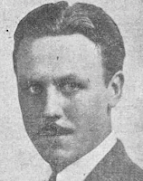
Kolin Hager
During their initial broadcast—of Eugene Walter’s The Wolf on August 3, 1922—Smith became the electronic media’s first Foley artist when he slapped a couple of two-by-fours together to simulate the slamming of a door, and radio sound effects were born. While the invisible audience could not see that the actors wore costumes and makeup—which were expected to enhance performance but didn’t and were soon discarded—they could hear the WGY Orchestra providing music between acts.
By May 15, 1923 the station was operating on 790 kHz with a frequency/time share agreement with RPI's WHAZ. Later, WHAZ moved to 1300 kHz allowing WGY to operate full-time on 790 kHz.
In 1924, the transmitter site was moved to its current location in the Town of Rotterdam known as South Schenectady. From this site, the station's power levels were increased first to 5,000 watts, then 10,000 watts and finally to 50,000 watts on July 18, 1925. Temporary broadcasts were carried out at the 100 KW (August 4, 1926) and 200 KW (March 9, 1930) power levels. From those broadcasts, the station received reception letters and telegrams from as far away as New Zealand. Plans were to make those power increases permanent, but were never carried out.
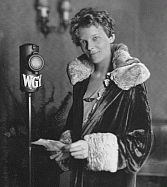
Amelia Earhart
WGY also used the first condenser microphone, developed by General Electric for radio studio applications, on February 7, 1923.
In 1923, WGY formed the first radio network with WJZ and WRC, however the station also broadcast programs from rival station WEAF. Later in 1925, the New York State radio network was formed with WMAK, WHAM, WFBL, and WGY. In 1926, WGY affiliated with the WEAF-based NBC Red Network, and after the split of the sister NBC Blue network into today's ABC Radio, WGY remained with NBC Radio until it folded in 1989.
To add to their laurels, six years later the Players performed an old spy melodrama titled The Queen’s Messenger in the world’s first dramatic program to be broadcast simultaneously over both radio and the new medium called television.
“Radio station WGY had cornered the market on talk and music by 1928,” the Daily Gazette recalled. “Scientists from the General Electric Co. could have winked to their audience and said, ‘You ain't seen nothing yet.’ The smart guys who developed amplifiers, transmitters and bright lights were working on that next step—sound and pictures. On Tuesday, Sept. 11, 1928, they succeeded. WGY became the first radio station in the world to televise a drama on separate radio channels.”
WGY Tower Base
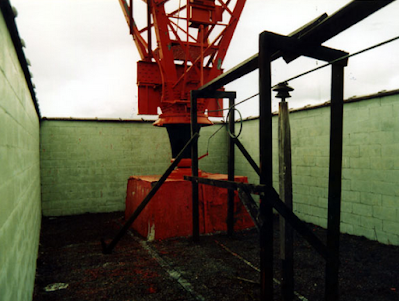
In 1941, WGY changed frequency from 790 kHz to 810 kHz to comply with the North American Radio Broadcasting Agreement also known as NARBA. In 1942, during World War II, a concrete wall was built around the base of the tower to prevent saboteurs from shooting out the base insulator on the tower and taking the station off-air.
WGY was the flagship station of General Electric's broadcasting group until 1983 when it was sold to Empire Radio Partners, Inc. General Electric also owned pioneering sister stations in television (WRGB-TV, signed on as WGY-TV in 1928) and FM radio (W2XOY, later WGFM, then WGY-FM, and today WRVE, signed on 1940).
As the golden age of radio ended, WGY evolved into a full service middle of the road format, slowly evolving as programming tastes changed. The station changed from full service to news/talk on Memorial Day Weekend, 1994.
Dame Media, Inc acquired WGY and WGY-FM the during proceedings in the Philadelphia bankruptcy court, late 1993. Dame moved the studios to One Washington Square at the end of Washington Avenue Extension, in the west end of Albany, New York late 1994, where they remained until 2005.
In 1999, Dame Media sold its entire radio group to Clear Channel (now iHeartMedia), whose ownership remains to this day. Clear Channel combined all of its radio station studio operations into the former CHP (Community Health Plan) building on Route 7 (Troy-Schenectady Road) in Latham August, 2005.
On September 20, 2010, WGY began simulcasting its programming on 103.1 FM (the former WHRL, which took the calls WGY-FM, previously on 99.5 FM). WGY 103.1 FM broadcasts at 5,600 watts power.
➦In 1949...future teen singing idol, 8-year old Ricky Nelson, and his older brother David began playing themselves on their parents’ radio show, “The Adventures of Ozzie & Harriet.” Until now Ricky had been played by child actor Henry Blair, while David was played by Tommy Bernard.
In 1952, the Nelsons tested the waters for a television series with the theatrically released film Here Come the Nelsons. The film was a hit, and Ozzie was convinced the family could make the transition from radio's airwaves to television's small screen. On October 3, 1952, The Adventures of Ozzie and Harriet made its television debut and was broadcast in first run until September 3, 1966, to become one of the longest-running sitcoms in television history.
➦In 1971...NORAD at Cheyenne Mountain in Colorado was ready to broadcast a required weekly test of the Emergency Broadcast System.
However, AT&T reported that the United States Air Force accidentally used the wrong tape for the test, and initiated an Emergency Action Notification, normally issued by the Office of Civil Defense or the President. This prompted all stations in the Fort Wayne, Indiana, area by order of the FCC to operate under emergency procedures and feed the broadcast from WOWO through their radios.
Bob Sievers was at the microphone at WOWO at the time. Sievers and everyone at the studio had no idea what was going on.
Mistake wasn't resolved for 30 minutes.
Walter Winchell
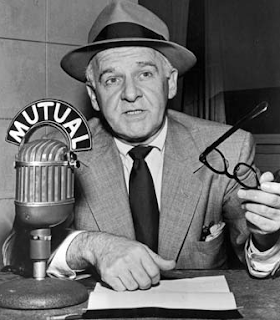
➦In 1972..Early radio broadcaster and syndicated newspaper columnist Walter Winchell died of prostate cancer at the age of 74 in Los Angeles. His weekly broadcasts in the 30’s, 40’s & 50’s began: “Hello Mr. & Mrs. North America & all the ships at sea, let’s go to press.” A later generation would only know him as narrator on the TV series The Untouchables. He is buried at Greenwood/Memory Lawn Mortuary & Cemetery in Phoenix.
Rosemary DeCamp
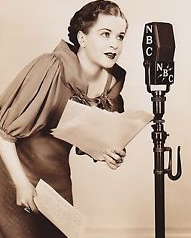
➦In 2001...Radio, TV, Film Actress actress Rosemary De Camp succumbed to pneumonia at age 90. She shined in many roles on bigtime radio, including the long running part of nurse Judy Price on CBS’ Dr. Christian. On TV she was Peg Riley on Life of Riley, and also had feature roles on The Bob Cummings Show & That Girl.
➦In 2003...99 people were killed when fire destroyed the nightclub The Station in West Warwick RI. The fire started with sparks from a pyrotechnic display being used by the band Great White. Among those who died in the fire were Great White's lead guitarist, Ty Longley, and the show's emcee, WHJY 94.1 FM Providence personality Mike "The Doctor" Gonsalves.
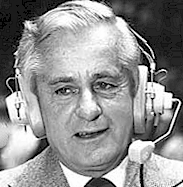
➦In 2006...Sportscaster Curtis Edward Gowdy (Born July 31, 1919) died of leukemia at age 86 in Palm Beach, Fla., at age 86, after a long battle with leukemia. He’d been part of the national broadcast of 13 World Series, 16 baseball All-Star Games, 9 Super Bowls, 14 Rose Bowls, 8 Olympic Games and 24 NCAA Final Fours. He also hosted ABC-TV’s long-running outdoors show The American Sportsman. He was well known as the longtime "voice" of the Boston Red Sox and for his coverage of many nationally televised sporting events, primarily for NBC Sports and ABC Sports in the 1960s and 1970s.
He had a knack for broadcasting, and, in 1942, worked at the small KFBC radio station and at the Cheyenne, Wyoming Eagle newspaper as a sportswriter (and later sports editor). After several years in Cheyenne, he accepted an offer from CBS's KOMA radio in Oklahoma City in 1946. He was hired primarily to broadcast Oklahoma college football (then coached by new-hire Bud Wilkinson) and Oklahoma State college basketball games (then coached by Hank Iba).
Curt Gowdy
Gowdy's distinctive play-by-play style earned him a national audition. Gowdy began his Major League Baseball broadcasting career working as the No. 2 announcer to Mel Allen for New York Yankees games on radio and television in 1949–50. There, he succeeded Russ Hodges, who departed to become the New York Giants.
In April 1951 at the age of 31, Gowdy began his tenure as the lead announcer for the Red Sox. For the next 15 years, he called the exploits of generally mediocre Red Sox teams on WHDH radio and on three Boston TV stations: WBZ-TV, WHDH-TV, and WNAC-TV (WBZ and WNAC split the Red Sox TV schedule from 1948 through 1955; WBZ alone carried the Red Sox from 1955 through 1957; and WHDH took over in 1958). During that time, Gowdy partnered with two future baseball broadcasting legends: Bob Murphy and Ned Martin. Chronic back pain caused Gowdy to miss the entire 1957 season. He also did nightly sports reports on WHDH radio when his schedule permitted.
He left WHDH after the 1965 season for NBC Sports, where for the next ten years he called the national baseball telecasts of the Saturday afternoon Game of the Week and Monday Night Baseball during the regular season (and the All-Star Game in July), and the postseason playoffs and World Series in October.
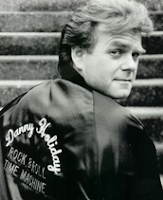
Danny Holiday
➦In 2012...Longtime Seattle radio personality known as Danny Holiday, a so-called “walking encyclopedia of rock & roll,” died following a long illness at age 68.
He spent decades spinning top-40 hits and oldies on Seattle stations KOL, KZOK and KBSG. In retirement, he brought his Rock ‘N’ Roll Time Machine to community radio, hosting the weekly show on Everett’s KSER (90.7 FM).
Holiday was inducted into NorthWest Music Hall of Fame in 1990.
In 2014…Former NBC News correspondent Garrick Utley died at age 74. His parents, Frayn and Clifton Utley, were correspondents for NBC radio in the mid-20th century, based in Chicago. When he passed he professor of broadcasting and journalism at the State University of New York at Oswego, NY.
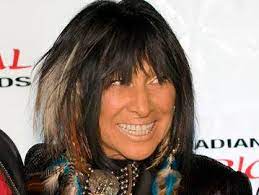
Buffy Sainte-Marie is 81
🎂HAPPY BIRTHDAYS:
Singer-songwriter Buffy Sainte-Marie is 81.
Actor Brenda Blethyn (“Atonement,” ″Pride and Prejudice”) is 76.
Actor Sandy Duncan is 76.
Actor Peter Strauss is 75.
Guitarist Billy Zoom of X is 74.
Country singer Kathie Baillie of Baillie and the Boys is 71.
Actor John Voldstad (“Newhart”) is 71.
Actor Anthony Head (“Buffy the Vampire Slayer”) is 68.
Actor James Wilby (“Gosford Park”) is 64.
Bassist Sebastian Steinberg (Soul Coughing) is 63.
Actor Joel Hodgson (“Mystery Science Theater 3000″) is 62.
Singer Ian Brown of Stone Roses is 59.
Rihanna is 34
Actor French Stewart (“Mom,” “Third Rock from the Sun”) is 58.
Model Cindy Crawford is 56.
Actor Andrew Shue (“Melrose Place”) is 55.
Actor Lili Taylor is 55.
Singer Brian Littrell of the Backstreet Boys is 47.
Actor Lauren Ambrose (“Six Feet Under”) is 44.
Actor Jay Hernandez (“Friday Night Lights,” ″Crazy/Beautiful”) is 44.
Actor Chelsea Peretti (“Brooklyn Nine-Nine”) is 44.
Guitarist Coy Bowles of Zac Brown Band is 43.
Actor Michael Zegen (“The Marvelous Mrs. Maisel,” ″Boardwalk Empire”) is 43.
Actor Majandra Delfino (“Roswell”) is 41.
Actor Jocko Sims (“New Amsterdam”) is 41.
Musician and “A Prairie Home Companion” host Chris Thile is 41.
Actor-singer Jessie Mueller is 39.
Comedian Trevor Noah (“The Daily Show”) is 38.
Actor Miles Teller (“Fantastic Four”) is 35.
Singer Rihanna is 34.
Actor Jack Falahee (“How to Get Away With Murder”) is 33.