MLS viewership for regular-season weekend matches in 2025 rose 29% year-over-year, with 3.7 million global aggregate viewers across 12-15 games per weekend, mostly in primetime, according to data shared with Sports Business Journal.
This marks the first public viewership insight, covering Apple TV, Fox, FS1, TSN/RDS in Canada, and EA FC Mobile in-game simulcasts, including English and Spanish broadcasts.
The figure excludes Leagues Cup and midweek games, which likely draw fewer viewers.
Direct comparisons to other leagues are not possible due to differing methodologies. “We’re bullish on this number. We’re happy with what we’re seeing,” said MLS SVP/Media Seth Bacon, commenting publicly on the MLS-Apple data for the first time as the postseason begins.
➦In 1861…The transcontinental telegraph line across the United States was first completed.
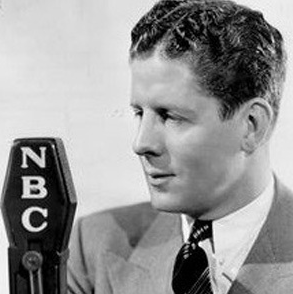
Rudy Vallee
➦In 1929...one of radio’s first “really big shows” The Fleishmann Hour starring Rudy Vallee was broadcast for the first time over NBC radio. Actually, the Rudy Vallee show had several different titles over the years, all of which were referred to by the public as The Rudy Vallee Show. Megaphone-totin’ Rudy and his Connecticut Yankees band were mainstays on radio into the late 1940s.
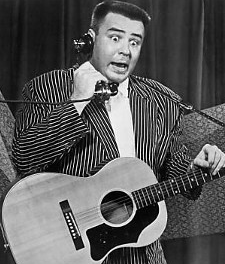
➦In 1930...Jiles Perry "J. P." Richardson Jr. born (Died – February 3, 1959). He was known as The Big Bopper, he was a musician, songwriter, and disc jockey. His best known compositions include "Chantilly Lace" and "White Lightning", the latter of which became George Jones' first number-one hit in 1959.
He was killed in a plane crash in Iowa in 1959, along with fellow musicians Buddy Holly and Ritchie Valens and the pilot Roger Peterson. The accident was famously referred to as "The Day the Music Died" in Don McLean's 1971 song "American Pie".
Richardson worked part-time at Beaumont, Texas radio station KTRM (now Gospel KZZB). He was hired by the station full-time in 1949 and quit college. He soon was promoted to supervisor of announcers at KTRM.
In March 1955 he was drafted into the United States Army and did his basic training at Fort Ord, California. He spent the rest of his two-year service as a radar instructor at Fort Bliss in El Paso, Texas.
Richardson returned to KTRM radio following his discharge as a corporal in March 1957, where he held down the "Dishwashers' Serenade" shift from 11 am to 12:30 pm, Monday through Friday. One of the station's sponsors wanted Richardson for a new time slot, and suggested an idea for a show. Richardson had seen college students doing a dance called The Bop, and he decided to call himself "The Big Bopper". His new radio show ran from 3:00 to 6:00 pm, and he soon became the station's program director.
From the Dick Clark Saturday Night Show on ABC-TV in 1958...
Richardson is credited for creating the first music video in 1958, and recorded an early example himself.
➦In 1989...Hank Ballard, Bobby Darin, the Four Tops, the Four Seasons, Holland-Dozier-Holland, the Kinks, Carole King and Gerry Goffin, the Platters, the Who, plus Simon & Garfunkel were all inducted into the Rock & Roll Hall of Fame.
Warner Bros. Discovery (WBD) is evaluating multiple strategic options, including a potential sale of the entire company or its parts, as well as its previously announced plan to split into two publicly traded entities, the company revealed in a news release on Tuesday. The announcement follows unsolicited interest from multiple parties, including a reported majority cash bid from Paramount Skydance for WBD’s cable networks and movie studio, according to The Wall Street Journal.
The company, formed through a 2022 merger, has been navigating a rapidly evolving media landscape. Initially, WBD planned to divide into two entities by mid-2026: Warner Bros., encompassing its namesake studio, HBO, HBO Max streaming services, and DC Comics film and television studios, and Discovery Global, which would include cable networks like CNN, TNT, TBS, and Discovery.
However, the company is now considering alternative paths, including a full sale, separate transactions for its Warner Bros. or Discovery Global businesses, or a merger of Warner Bros. with a spinoff of Discovery Global to shareholders.
The Atlanta Journal-Constitutionreportsthis strategic shift comes after a challenging period for WBD, marked by a $9.1 billion write-down on its cable networks’ book value in December 2024, reflecting underperforming assets from the 2022 merger.
The company’s review aims to “identify the best path forward” toward profitability, as stated by President and CEO David Zaslav, who emphasized ongoing efforts to position WBD for success in the competitive media industry.
The review process has no set deadline, leaving uncertainty about the impact on WBD’s workforce, including employees in Atlanta, and the broader structure of its operations.
WBD’s exploration of these options reflects the broader challenges facing media conglomerates as they adapt to shifting consumer preferences and financial pressures. The company will continue pursuing its planned split while evaluating these new opportunities, with a focus on maximizing value for shareholders and ensuring long-term competitiveness.
FOX News Channel (FNC) dominated with 98 of the top 100 weekly cable news telecasts, according to Nielsen Big Data + Panel. Year-to-date, FNC continues to lead all broadcast networks with Monday-Friday primetime viewers.
In Monday - Sunday primetime FNC nabbed 2.3 million viewers and 229,000 in the 25-54 demo. Across total day (6 AM-6 AM/ET), FNC posted 1.6 million viewers and 148,000 in the 25-54 demo.
The network commanded 63% of the primetime and total day cable news audience. The Five averaged 3.7 million viewers and 286,000 in the 25-54 demo, leading cable with viewers. At 6 PM/ET, Special Report with Bret Baier drew 2.8 million viewers and 224,000 in the 25-54 demo. The Ingraham Angle saw 2.5 million viewers and 234,000 in the 25-54 demo at 7 PM/ET. Jesse Watters Primetime commanded 3.1 million viewers and 303,000 in the 25-54 demo at 8 PM/ET. At 9 PM/ET, Hannity posted 2.4 million viewers and 233,000 with A25-54. At 11 PM/ET, FOX News @ Night secured 1.5 million viewers and 174,000 in the 25-54 demo.
FNC’s late-night hit Gutfeld! (weekdays, 10 PM/ET) averaged 2.9 million viewers and 317,000 in the 25-54 demo continuing to outpace the broadcast competition including CBS’ The Late Show with Stephen Colbert (2.1 million viewers) and ABC’s Jimmy Kimmel Live! (1.9 million viewers).
FNC continued to see its daytime programs outpace the broadcast competition. The Will Cain Show (weekdays, 4 PM/ET; 2,388,000 viewers) led ABC’s The View (2,372,000 viewers). America’s Newsroom (weekdays, 9-11 AM/ET; 2 million viewers), Outnumbered (weekdays, 12 PM/ET; 2 million viewers), America Reports (weekdays, 1-3 PM/ET; 2 million viewers), The Faulkner Focus (weekdays, 11 AM/ET; 2 million viewers) and The Story (weekdays, 3 PM/ET; 2 million viewers) all led NBC’s Today Third Hour (1.9 million viewers), NBC’s Today with Jenna and Friends (1.3 million viewers) and ABC’s GMA3 (1.3 million viewers).
On Saturday: Kayleigh McEnany’s Saturday in America (Saturday, 10 AM - 12 PM/ET) was the most-watched show of the day with 1.5 million viewers and 152,000 in the 25-54 demo. In primetime, Life, Liberty & Levin (weekends, 8 PM/ET) was most watched with over 1.2 million viewers, while FOX News Saturday Night with Jimmy Failla (Saturday, 10 PM/ET) led the way in primetime demo with 120,000 viewers.
On Sunday: Maria Bartiromo’s Sunday Morning Futures (Sunday, 10 AM/ET) was the number one show of the day with 1.7 million viewers. The Sunday Briefing (Sunday, 11 AM/ET) hosted by Peter Doocy followed with 1.4 million viewers. In primetime, Sunday Night in America with Trey Gowdy (Sunday, 9 PM/ET) drew 1.3 million viewers.
Source: Nielsen. Big Data + Panel. Week of 10-13-25 ratings data. Average audience for cable news networks Monday-Sunday based on Total Day and Prime (6a-6a, 8P-11P), P2+, P25-54. Cable News/Broadcast Program averages exclude repeats and include the corresponding program name.
A CBS News insider has sharply criticized internal opponents of new editor-in-chief Bari Weiss, dismissing them as either overly "progressive" or "really old" and out of touch with modern media demands. The remark, shared with Fox News on Wednesday, highlights deepening tensions at the network just weeks after Weiss's controversial appointment.
Weiss, a former New York Times opinion writer and founder of The Free Press, was named CBS News editor-in-chief on October 6, 2025, following Paramount's $150 million acquisition of her outlet. The move, orchestrated by new Paramount CEO David Ellison, aims to revitalize the struggling network—CBS News loses an estimated $50 million annually—by injecting a "post-partisan" ethos focused on "truth" and "trust."
In her first-day memo, Weiss outlined 10 journalistic principles, including equal scrutiny of both political parties and a commitment to "fair, fearless, and factual" reporting. Staff backlash erupted immediately, with anonymous leaks describing the newsroom as in "doomsday" mode.
Critics invoked CBS legends like Walter Cronkite and Edward R. Murrow, claiming they would "toss her out" for not embodying objective journalism. Former anchor Dan Rather publicly questioned the hire, while external voices like New York Times columnist Jamelle Bouie called it a reward for "unethical" flattery of conservative elites.
The insider's assessment divides resisters into two groups: younger "progressive" staffers irked by Weiss's staunch pro-Israel stance and anti-"woke" commentary, and older veterans nostalgic for Cronkite-era traditions who "don’t know how to grow with the times." This echoes Weiss's own past framing of media "civil wars" between "young wokes" and "liberals." Fears of politicization intensify amid Ellison's plan to cut $2 billion in costs, including hundreds of layoffs, while reportedly funneling $100-200 million to Weiss's team—moves staff see as prioritizing ideology over journalism.
In a significant statement, FCC Chairman Brendan Carr has signaled that he is open to revoking broadcast licenses from stations that fail to meet the agency’s public interest standards.
Speaking in an interview with Media Research Center President David Bozell, posted on YouTube, Carr emphasized that broadcast licenses are not untouchable and could be stripped if broadcasters do not comply with regulatory expectations.
Carr underscored the distinction between a license and a property right, stating, “Broadcast licenses are not sacred cows. If you think there’s nothing you can do to lose a license, then it’s not a license. That’s called a property right. And that’s something very fundamentally different.”
The remark highlights his view that licenses are conditional privileges, subject to revocation if broadcasters fail to serve the public interest, a core obligation under FCC regulations.
While Carr did not specify which broadcasters might be at risk, his comments suggest a willingness to take strong action against those who violate the agency’s standards. He acknowledged, however, that revoking a license involves a detailed process, noting, “There’s a whole process that has to be run there that people don’t really focus on.” This indicates that any move to revoke a license would follow established legal and administrative procedures, ensuring due process.
The FCC’s public interest standard requires broadcasters to operate in ways that serve their communities, including providing programming that addresses local issues and maintaining transparency in their operations.
Carr’s remarks come amid ongoing debates about media accountability and the role of broadcasters in shaping public discourse. His openness to license revocation could signal a stricter enforcement approach under his leadership, potentially affecting stations found to be in violation of FCC rules.
Michigan State Police (MSP) troopers are probing a potential fraud scheme after a business reported being targeted by scammers posing as WKFR Radio representatives, demanding payment for a promotional spot tied to Veterans Day—despite the holiday falling on November 11.
The incident unfolded at a business in Quincy, Branch County, when the owners received a call from individuals claiming to represent WKFR, Town Square a radio station based near Kalamazoo. The callers pitched an on-air promotion to highlight the business in honor of Veterans Day but raised red flags by stating the ad would air in December, well after the actual observance date.
Suspicious of the mismatch, the business leaders withheld any personal or financial details and promptly contacted MSP to report the attempted scam.
Troopers from the MSP's Paw Paw Post quickly notified WKFR management, confirming the station had no involvement or knowledge of the outreach. No money or sensitive information changed hands, averting immediate loss, though the impersonators' identities remain unknown.
In a public alert, MSP emphasized vigilance against such radio promotion scams, advising businesses to verify callers' identities directly with the claimed organization before sharing details. "If you are contacted by anyone stating they are from WKFR, be advised and take appropriate steps," the release urged, recommending immediate reports to police if any information has been disclosed.
Spotify, Apple Music, and YouTube Music are adding subscribers in the US market in Q3 2025, but growth has slowed to a sluggish 1-2% year-to-date, reflecting market saturation, according to preliminary data from DMN Pro’s Streaming Music Subscriber Market Share database.
Spotify leads with a 37% share, roughly 53.8 million US subscribers, boosted by 646,000 Individual and 355,000 Duo plan additions by May 2025, fueled by family plan uptake after a price increase to $11.99/month. Apple Music, holding 32% with about 46.5 million users, grew slightly via multi-user bundles but saw a 0.13% quarterly dip. YouTube Music, at 19% usage share, gains from video-music synergies but struggles with declining music video engagement due to TikTok rivalry.
These three, plus Amazon Music, dominate 97% of the US market, which hit 100 million paid subscribers in March 2025.The drop to 1-2% growth from 5%+ in prior years signals subscriber fatigue and economic pressures. Spotify offset a 5% Q1 2025 subscriber dip with promotions, while Apple’s $0.01-per-stream payout retains creators.
Price hikes across platforms heighten churn, with users shifting to cost-effective group plans like Spotify Family or Apple One.
DMN Pro forecasts flat growth into 2026 without innovations like Spotify’s “super-premium” tier or advanced AI personalization. The $30+ billion industry faces royalty disputes and competitive stagnation, with Spotify and Apple controlling two-thirds of subscribers. Growth depends on new features like audiobooks or spatial audio to revive momentum.
Cumulus Media is urging a federal judge to accelerate the discovery process in its antitrust lawsuit against Nielsen, warning that delayed access to critical evidence could inflict lasting damage to its Westwood One national radio network by year's end, crippling ad revenue and competitive viability.
The push for fast-track discovery emerged as a key escalation in last week's complaint filed in the U.S. District Court for the Southern District of New York, where Cumulus accuses Nielsen of monopolistic practices under the Sherman Antitrust Act and state laws. At its core, the suit targets Nielsen's "Tying Policy," announced in September 2024, which bars access to comprehensive national radio ratings data unless broadcasters buy Nielsen's local ratings in every market where they operate stations—even if those local data are unwanted or sourced from rivals like Eastlan Ratings.
This forces Cumulus, which owns nearly 400 stations across 80+ markets, into overpaying for superfluous products or accepting "Swiss cheese" national datasets riddled with gaps, like excluding Memphis where it already uses Eastlan. Cumulus labels this "textbook abuse of monopoly power," claiming it has already spiked Westwood One's costs by 36% since 2022 while degrading service quality amid over 50 reported outages in 2025.
Nielsen, the sole provider of national radio ratings with 100% dominance in 75 of Cumulus's local markets, allegedly wields this leverage to stifle competition, inflate prices untethered to value, and entrench its grip on a sector vital to hundreds of millions in annual ad commerce.
A pivotal July 2025 call with Nielsen Audio's Rich Tunkel underscored the stakes: he admitted incomplete national data would render Westwood One's product "not real or useful," effectively holding the network hostage.
Without swift discovery—including Nielsen's internal documents on pricing, policy rationale, and rival suppression—Cumulus argues it faces "irreparable harm" as contract renewals loom by December 31, 2025, potentially slashing ad deals, eroding advertiser trust, and inviting market share erosion in an industry already battered by digital shifts.
On Wednesday, the U.S. broadcasting industry faced ongoing disruptions from the federal government shutdown, now in its third week, which has halted most FCC operations and delayed key regulatory deadlines for radio and TV stations.
FCC Shutdown Halts Key Broadcaster Deadlines
The FCC's suspension of most activities since October 1 has frozen proceedings critical to radio and TV operators, including the major change filing window for Low Power TV (LPTV), Class A, and TV translator stations, originally set to open Wednesday.
A related filing freeze on minor modifications and displacement applications, due October 15, remains paused. The agency has not clarified rescheduling, leaving stations in limbo amid the shutdown's extension. Enforcement responses, like the October 17 deadline for 300 stations' EEO audit uploads, were still required despite the chaos, but broader reviews—such as relaxing local radio/TV ownership rules and the Dual Network Rule—are stalled.
The FCC aims to hold its monthly open meeting on October 28 to address ATSC 3.0 acceleration and earth station licensing, but shutdown uncertainty could derail it. Broadcasters are urged to monitor for public notices on rescheduled dates, as delays may cascade into Q4 filings like ETRS reports (due November 1 for noncommercial stations).
The Defense Department has announced a new media press corps, primarily composed of right-wing outlets and independent journalists, nearly a week after numerous Pentagon reporters surrendered their press credentials in protest of a restrictive new media policy.
Pentagon spokesperson Sean Parnell stated on X that the 60-member group from various news organizations represents “a broad spectrum of new media outlets and independent journalists” who agreed to the agency’s policy, which prohibits soliciting unauthorized information, including unclassified details.
Pentagon Press Area
The coalition includes outlets like Lindell TV, founded by MyPillow CEO and Trump ally Mike Lindell, as well as the Gateway Pundit, the Post Millennial, Human Events, the National Pulse, Turning Point USA’s Frontlines, Tim Pool’s Timcast, and the Substack-based Washington Reporter, according to a draft announcement obtained by The Washington Post.
Confirmations of participation came from Timcast, the National Pulse, Washington Reporter, and others via X, alongside Just the News. Initially, 26 individuals from 18 outlets, including OAN, the Federalist, and the Epoch Times, signed the policy, with 15 reported signatories as of October 16, 2025.
Parnell praised the new media corps, claiming they “circumvent the lies of the mainstream media” and deliver “real news” with greater reach and balance. The policy, a significant shift in Pentagon press relations, led to a walkout by journalists unwilling to comply, with some, like The Australian (owned by Rupert Murdoch’s News Corp.), later withdrawing due to concerns over press freedom restrictions. The Defense Department declined to provide further comments or a full list of signatories, leaving questions about the full scope of the new press corps and its implications for media access.
A new survey revealed at NAB Show New York on Wednesday, underscores widespread public concern about artificial intelligence (AI) eroding trust in journalism, with 76% of Americans worried about AI stealing or reproducing local news stories without permission, according to research by OnMessage Inc.
The survey, discussed during the panel “The Future of News: AI, New Revenues and Risks, and the Policy Response,” also found strong public support for legislative action, with 77% favoring a law to make such AI practices illegal and 59% strongly supporting it.
The data highlights a significant lack of trust in AI-generated information, with only 26% of respondents finding it trustworthy, while 68% deem it unreliable. Additionally, 72% believe the federal government should implement guardrails to protect consumers from AI’s potential misuse in media.
NAB President-CEO Curtis LeGeyt emphasized the threat to journalism’s integrity, stating, “This data reflects a real and growing concern among Americans that AI could erode the integrity of journalism and undermine the trusted connection between broadcasters and the communities we serve.”
The panel also addressed the economic pressures AI imposes on local newsrooms, including shrinking margins, high production costs, and content misappropriation by AI systems, which jeopardize the sustainability of fact-based, community-focused journalism.
LeGeyt stressed the need for a national dialogue to ensure AI supports, rather than exploits, local journalism and for policies that allow broadcasters to fairly negotiate terms with AI platforms. The conversation at NAB Show New York signals the start of broader efforts to address these challenges and protect the credibility of local news.
NYC Mayoral Bid CurtisSliwa, the Republican candidate for New York City mayor, dramatically resigned from his radio show at 77 WABC on Wednesday during a heated on-air confrontation with host Sid Rosenberg, vowing never to return to the station’s studios.
The outburst followed pressure from Rosenberg and station owner John Catsimatidis, who urged Sliwa to abandon his longshot mayoral campaign to bolster independent candidate, former Gov. Andrew Cuomo, against Democratic nominee ZohranMamdani.Sliwa accused WABC colleagues of betraying him and favoring Cuomo, raging, “They have said I’m selfish. Selfish? Are you out of your mind?”
He expressed deep offense at personal attacks from station staff, many of whom he claimed owed their jobs to him, stating, “I know there are people there at WABC who are personally attacking me, saying I’m running a lazy campaign.” Sliwa declared, “You will never see me at the studios of WABC again, never, no matter how this election turns out.”
Curtis Sliwa quit his WABC radio gig after he and Sid Rosenberg got into a heated clash over the state of his campaign.
"You're going to lose and you're going to lose badly."
Sliwa declared during the fight that WABC "turned" on him like a scene out of The Godfather. pic.twitter.com/K1gDh3hQrg
Catsimatidis, a billionaire businessman and Gristedes supermarket chain owner, acknowledged Sliwa’s potential as mayor but insisted he had no chance of defeating Mamdani, intensifying calls for Sliwa to withdraw. However, GOP chairs across New York City’s five boroughs, including Catsimatidis’ daughter, Manhattan chair Andrea Catsimatidis, reaffirmed their support for Sliwa’scandidacy.
Sliwa’s radio program, The Curtis Sliwa Show, has been on hiatus during his campaign, which centers on his role as the founder of the Guardian Angels. The fiery exchange with Rosenberg provided a dramatic moment for listeners, highlighting tensions within the station and the broader political landscape as Sliwa resists pressure to exit the race.
iHeartMedia has announced Stefan Schellhas has been named Market President for Cincinnati. He will report to Dave Carwile, Division President of the Midwest and Southeast for iHeartMedia.
“We’re thrilled to welcome Stefan Schellhas as the new Market President for iHeartMedia Cincinnati,” said Carwile. “Stefan brings not only a strategic vision and proven leadership, but also a deep-rooted understanding of the Cincinnati market. Having spent years building relationships and driving results across the region, he knows the pulse of the city and what resonates with our listeners and advertising partners. His passion for the community, combined with his commitment to innovation and team development, makes him the ideal leader to guide our Cincinnati brands into the future.”
Stefan Schellhas
Schellhas joins iHeartMedia Cincinnati from Sinclair, where he most recently served as the Vice President and General Manager of Local 12 News, Star 64, and CW Cincinnati, following an earlier role as Director of Sales. Schellhas began his career at WGRR-FM.
“My career started with an internship at 700 WLW, so returning truly feels like coming full circle,” said Schellhas. “While consumer media habits—driven by technology—have evolved exponentially, what hasn’t changed is that ‘content is king,’ and iHeart continues to lead the way in the audio space. I’m honored to work alongside such a passionate team here in Cincinnati, and together we’ll continue to serve our advertisers and the Greater Cincinnati community.”
The Alliance for Women in Media (AWM) has launched the Call for Entries for the 51st Annual Gracie Awards, inviting radio, audio, and podcasting professionals to submit their best work by January 22, 2026.
Celebrating programming created by, for, and about women, the Gracies honor excellence across media, from local morning shows to national programs, and serve as the AWM Foundation’s largest fundraiser, supporting scholarships and educational programs for future women in media.
For 2026, AWM introduced new categories, including
Video Podcast, and Video Podcast Host/Co-Host, to align with today’s digital and podcasting trends.
Submissions are open for work aired between January 1 and December 31, 2025, with an early bird deadline of December 11, 2025.
Following its sponsorship of the Women’s Brunch at Morning Show Boot Camp, AWM invites the MSBC community to participate in the Gracies, celebrating women’s voices in radio and beyond.




.png)


.webp)


