Is Radio Next? In a 2-1 split, the agency voted to eliminate a rule that prohibits any company from owning television stations reaching more than 39% of U.S. TV households. The FCC said it would instead review proposed station acquisitions on a case-by-case basis.
Podcasts Continue: Cumulus Media denies reports that it eliminated the entire staff of its Cumulus Podcast Network amid a new round of layoffs across its broadcast, network and digital operations as the company continues financial restructuring.
Golic Gig: Longtime media personality and former Notre Dame defensive lineman Mike Golic Sr. will serve as the new color analyst for Fighting Irish football radio broadcasts this season.
Media Industry
Nielsen Spending Cash: Nielsen will acquire DoubleVerify in an all-cash deal valued at about $2.15 billion in enterprise value. The combination aims to create an independent end-to-end media intelligence platform that pairs Nielsen’s audience measurement and cross-screen data with DoubleVerify’s tools for verifying media quality.
Who Is Matt Gutman? The “CBS Evening News” averaged 4.1 million viewers last week, its strongest performance in 17 weeks and the first time the program cleanly surpassed the 4 million-viewer mark since March. The milestone came while regular anchor Tony Dokoupil was on a two-week summer vacation.
Don't Mess w/Golden Goose: Fox CEO Lachlan Murdoch said Thursday that the company will not reopen or amend its current NFL media rights contract until after the 2029 season, becoming the first major network executive to state on the record that it will not renegotiate early.
U-S News
Let's Try Again: President Donald Trump is making another bid to curtail birthright citizenship after the Supreme Court ruled his earlier effort was unconstitutional, announcing executive orders limiting who qualifies for automatic citizenship and cracking down on so-called "birth tourism." "We had a very unfortunate decision in the Supreme Court concerning birthright… so we’re making adjustments," Trump said Thursday.
Will Hardliner's Playball? Can Iran’s Diminished Diplomats Deliver a Hormuz Deal? - Hard-liners’ growing clout raises the risk that they will undermine an agreement to reopen the strait.
He's Home: Sen. Mitch McConnell has been discharged from a rehabilitation center, where he was recovering from a fall and a subsequent bout of pneumonia that forced a lengthy Senate absence. The 84-year-old said Thursday that he would undertake an “intensive regimen of physical therapy” from home.
Nielsen will acquire DoubleVerify in an all-cash deal valued at about $2.15 billion in enterprise value, taking the digital ad verification company private. DoubleVerify shareholders will receive $13.60 per share in cash, a 30% premium to the company’s 60-trading-day volume-weighted average price as of August 5, 2026. The transaction, approved by both companies’ boards, is expected to close by the first quarter of 2027, subject to DoubleVerify shareholder approval, regulatory clearances, and other customary conditions.
Upon closing, DoubleVerify will become a privately held unit of Nielsen and its shares will be delisted from public markets. It will continue operating under its existing name and brand. Nielsen will finance the deal through committed debt from Barclays, BofA Securities, and Citi, plus incremental equity financing and cash on hand. Funds affiliated with Providence Equity Partners, which hold roughly 11.8% of DoubleVerify’s shares, have agreed to vote in favor of the deal and will exit upon closing.
The combination aims to create an independent end-to-end media intelligence platform that pairs Nielsen’s audience measurement and cross-screen data with DoubleVerify’s tools for verifying media quality, detecting invalid traffic, ensuring brand suitability, optimizing ad performance, and proving campaign outcomes.
The companies project the combined entity will generate more than $4 billion in pro forma annual revenue and serve clients representing over $300 billion in advertising spend. Nielsen CEO Karthik Rao said the deal extends the company’s reach deeper into digital media so that advertising dollars reach real people in brand-suitable, verified environments.
DoubleVerify CEO Mark Zagorski described it as an opportunity to accelerate innovation by combining DoubleVerify’s quality signals with Nielsen’s deduplicated audience measurement to create a single currency for both audience delivery and media environment quality.
The announcement comes as advertisers and media companies increasingly seek unified measurement across linear TV, streaming, and digital channels. Nielsen, already private since its 2022 take-private by a consortium including Brookfield and Elliott, continues expanding beyond traditional TV ratings.
DoubleVerify, a leading software platform for media verification, reported second-quarter 2026 revenue of $193.8 million, up 3% year over year. The move follows a similar take-private of rival Integral Ad Science earlier in the year.
The FCC voted 2-1 on Thursday to eliminate the longstanding 39% national ownership cap on broadcast television stations, replacing the bright-line limit with a case-by-case public interest review of any deals that would exceed it.
The party-line decision, with Democratic Commissioner Anna Gomez dissenting, marks the first modification of the rule in roughly two decades and grants the agency greater flexibility to approve or reject transactions based on whether they serve the public interest.
Republican Chairman Brendan Carr and Commissioner Olivia Trusty supported the change. Broadcasters who have long lobbied against the caps welcomed the outcome. National Association of Broadcasters President and CEO Curtis LeGeyt called it “a generational step toward strengthening local stations and ensuring they can compete in today’s media marketplace.”
Opponents, however, vowed legal action. Public interest group Free Press announced plans to sue shortly after the vote, describing the order as an “unlawful power grab” and arguing that only Congress has authority to alter the ownership limits established in a 2004 law. Legal challenges are widely expected to follow.
Carr framed the repeal as essential to protecting local journalism in a media environment dominated by big tech and streamers such as Netflix. “I don’t want local broadcast TV to go the way of local newspapers, and yet the risk is real,” he said, noting that more than 80% of local journalism jobs have disappeared over the past two decades.
He described the old 39% cap as a “blunt instrument” that the new case-by-case approach would replace with more nuanced analysis focused on localism and economic sustainability.
While the vote applies only to television, industry observers see it as a potential signal for radio. No formal proceeding is underway to lift local radio ownership limits, but radio groups have intensified lobbying efforts as part of the FCC’s ongoing quadrennial media ownership review.
Kristin Klingshirn, a longtime Atlanta radio personality and former co-host of “The Bert Show,” has been let go from Cumulus Media’s top 40 station Q99.7 just six months after launching an afternoon program there.
She announced the news on Instagram on Thursday, writing: “I was let go from Cumulus Media today. I’ll have more to say later. Right now, I’m gonna process and discuss plans with my husband. And then I’m gonna pick up my son from school. Because I can now.”
Klingshirn had been given the 2-7 p.m. afternoon slot in January, co-hosting “The Kristin Show” with Ethan Cole. The Atlanta Journal-Constitution could not confirm whether Cole remains employed by Cumulus. Neither Klingshirn nor Cole responded to requests for additional comment. Cumulus Atlanta market manager Justin Schaflander and chief content officer Brian Philips also did not reply to inquiries.
A Cumulus spokesperson described the move as part of a broader organizational realignment that includes “the difficult decision to eliminate certain roles” across the company’s broadcast, network, and digital units. The cuts come as Atlanta-based Cumulus Media, which owns Q99.7, continues restructuring after filing for bankruptcy protection earlier this year to reduce about $592 million in debt.
Klingshirn spent 14 years on the nationally syndicated “The Bert Show,” which aired on Q99.7 and in more than 20 markets, until creator Bert Weiss ended the program in the fall of 2025. She joined the show in 2011 after earlier stops in Lexington, Cincinnati, and Raleigh. In 2025 she received a Gracie Award for her work and advocacy on issues affecting women and mothers.
Cumulus Media denies reports that it eliminated the entire staff of its Cumulus Podcast Network amid a new round of layoffs across its broadcast, network and digital operations as the company continues financial restructuring.
A company spokesperson said Cumulus “made the difficult decision to eliminate certain roles as part of a broader organizational realignment,” but stressed that the podcast network “is operating in full force,” with dozens of employees still handling production, content acquisition, operations and monetization.
The company reaffirmed its commitment to the podcast network, its podcasters, partners and advertisers.
The cuts include Senior Vice President of Marketing and Podcasting Carolyn Chauncey, who had overseen the network’s day-to-day operations, content acquisition, editorial and production since August 2024. Chauncey was a founding member of the team that launched the network and previously led marketing, audience development and creative services for Westwood One.
Also departing is Vice President of Podcast Operations and Production Jason “Jay” Soderberg, who managed the network’s audio and video production; he noted in a social media post that he received the familiar “good luck with your future endeavors” call.
Podcasting had been a relative bright spot for Cumulus while broadcast radio revenue declined. In Q3 2025, podcasting revenue rose 15% on a normalized basis even as combined broadcast revenue fell double digits. The next quarter showed a similar pattern, with the company highlighting digital marketing services and podcasting as evidence the business was not simply shrinking, though results were more muted in Q1 2026.
Workforce reductions also affect other areas. Sales and programming positions have been cut in markets including Washington, D.C., Columbia, S.C., Mobile, Ala., and Shreveport, La. High-profile departures include KNBR/San Francisco sports broadcaster and San Francisco 49ers play-by-play voice Greg Papa and co-host Greg Silver.
Townsquare Media reported second-quarter net revenue of $115.4 million, essentially flat with a year ago, while posting a net loss of $41.8 million compared with net income of $2.0 million in the prior-year period.
The loss stemmed mainly from a $25.1 million rise in non-cash impairment charges linked to the declining value of the company’s FCC licenses, plus a higher income tax provision.
Digital operations continued to expand their share of the business:
Townsquare Ignite digital advertising net revenue rose 11% year-over-year to $47.2 million, and digital overall accounted for 57% of net revenue in the first half of 2026.
For the six months, digital businesses also generated 59% of Segment Profit.
Subscription Digital Marketing Solutions (Townsquare Interactive) delivered record Segment Profit margins of nearly 38%, even as net revenue fell 8.5% because of reduced sales headcount.
Broadcast Advertising net revenue declined 5.5%, or 7.2% excluding political advertising.
Media Partnerships, the division that white-labels Townsquare’s programmatic advertising infrastructure for other local media operators, kept growing rapidly.
The unit, which did not exist two years ago, now partners with 16 media companies across 41 markets the company does not own, bringing Townsquare’s total digital programmatic footprint to 115 markets when combined with its 74 owned markets.
Revenue from the segment is expected to more than double in 2026.
For the third quarter, Townsquare forecasts net revenue of $108 million to $110 million. Full-year guidance was narrowed to $425 million to $431 million in net revenue, remaining within the original range.
“We believe the combination of multiple scalable, high-margin digital growth platforms and a durable Broadcast cash flow business creates a differentiated company with significant long-term opportunities to drive shareholder value,” said CEO Bill Wilson.
The “CBS Evening News” averaged 4.1 million viewers last week, its strongest performance in 17 weeks and the first time the program cleanly surpassed the 4 million-viewer mark since March.
The milestone came while regular anchor Tony Dokoupil was on a two-week summer vacation.
Substitute anchor Matt Gutman delivered the numbers during his first week in the chair in late July, according to Nielsen ratings data obtained by Status. The 4 million threshold has long been viewed as a key benchmark for the embattled broadcast.
Matt Gutman
The program, overhauled earlier this year under CBS News editor-in-chief Bari Weiss, has repeatedly fallen short of it under Dokoupil, who took over as sole anchor in January. Dokoupil last exceeded 4 million in the week of March 30 (averaging about 4.2 million) and briefly touched exactly 4 million in the week of June 22, but the show has otherwise struggled to clear the mark consistently.
Gutman’s week represented a rare ratings victory for CBS’s third-place evening newscast, which continues to trail far behind ABC’s “World News Tonight” (typically 7–8 million viewers) and NBC’s “Nightly News” (typically around 6 million). The strong showing for the fill-in has been described as an “unexpected and somewhat awkward result” for the network.
One veteran television executive called Dokoupil’s decision to take two weeks off “a baffling move given his collapsing show,” noting that the substitute “outclassed him in the ratings” and labeling the episode “another dagger.”
Inside the CBS newsroom, some staff reportedly reacted positively to Gutman’s on-air presence, describing him as more “likeable” and “personable.” The program remains under pressure after months of soft ratings following the Weiss-era reboot, which replaced a dual-anchor format and aimed to refresh the newscast’s approach.
Fox CEO Lachlan Murdoch said Thursday that the company will not reopen or amend its current NFL media rights contract until after the 2029 season, becoming the first major network executive to state on the record that it will not renegotiate early.
Speaking on Fox’s fourth-quarter earnings call, Murdoch told investors the network sees “no changes to our contractual terms until the 2030 season.”
The existing NFL media deals run through the 2033 season, but the league holds opt-out clauses that can take effect after the 2029 campaign for most partners, including Fox. “We’ve had recent, thorough and productive discussions with the league, and as a result, we will not be making any amendments to our existing contractual relationship, which extends to the completion of the 2029 season,” Murdoch said.
“We’ll be ready to engage with the NFL on the opt-out seasons and beyond at a date closer to the 2030 season, which has been the customary timetable.”
He added that Fox maintains “an incredibly positive” relationship with the league and continues to discuss the future of its rights both for the remaining years of the current deal and beyond the opt-out window.
NFL Commissioner Roger Goodell has previously indicated the league prefers to return to the market earlier than the contractual windows allow, potentially as soon as 2026, amid beliefs that the current packages are undervalued relative to recent sports rights deals.
Murdoch’s comments effectively close the door on any near-term adjustment for Fox’s Sunday afternoon package. Murdoch’s stance comes days after reports that negotiations between the NFL and CBS had been paused.
Those talks were complicated by the pending merger between Paramount (CBS’s parent) and Warner Bros. Discovery. Skydance’s 2025 acquisition of Paramount already triggered a change-in-control provision that gives the NFL an independent option to exit its CBS deal early.
Fox’s decision leaves the league without an immediate path to higher rights fees from one of its key broadcast partners, while other networks continue to navigate their own timelines and contractual triggers.
Longtime media personality and former Notre Dame defensive lineman Mike Golic Sr. will serve as the new color analyst for Fighting Irish football radio broadcasts this season, the university announced.Golic replaces Ryan Harris, a former NFL offensive tackle who stepped away after eight seasons in the booth to finish law school and pursue television and NFL opportunities.
He will join returning play-by-play announcer Tony Simeone and studio host Johnny Soper on the SoFi Notre Dame Radio Network.
The hire makes Golic just the fourth permanent radio analyst for Notre Dame football in the past 42 seasons. A standout defensive lineman for the Irish from 1981 to 1984 under coach Gerry Faust, Golic went on to a 10-year NFL career with the Houston Oilers, Philadelphia Eagles and Miami Dolphins. He later became a prominent broadcaster, co-hosting ESPN Radio’s “Mike & Mike” with Mike Greenberg for nearly 18 years and working as a football analyst across ESPN platforms.
“Some places never leave your heart; Notre Dame is one of those places for me,” Golic said in a statement. “To now have the opportunity to serve on the radio team with Tony and Johnny is both humbling and exciting. I am looking forward to every game, and sharing the passion that makes Irish football unlike anything else.”
Jim Fraleigh, Notre Dame’s deputy athletics director for corporate relations, praised the addition: “We are thrilled to add a voice of Mike’s caliber to our radio broadcast team. As a former player, Mike brings a rare combination of broadcasting expertise and a genuine passion for Notre Dame and college football as a whole.”
Golic and his son, former Notre Dame offensive lineman Mike Golic Jr., recently returned to ESPN Radio to launch a new show, “The Golics.” His first Irish radio broadcast is scheduled for the season opener against Wisconsin on Sept. 6 at Lambeau Field.
FOX Nation will debut Dirty Money, an all-new documentary hosted and executive produced by multi-platinum country music star Brantley Gilbert on Tuesday, August 11. As the agricultural industry faces rising costs and mounting economic pressures, the 90-minute documentary takes viewers inside the lives of America's farmers and explores the challenges threatening the future of one of the nation's most essential industries. A first look is now available here.
From Tennessee’s struggling family farms to California’s sprawling orchards, Dirty Money immerses viewers in the lives of farmers who are navigating a critical crossroads. Through firsthand accounts and untold stories, Gilbert spotlights the economic challenges, everyday difficulties and harsh realities that farmers are facing across the country. The documentary was directed by Shaun Silva and produced by Don Lepore and Jake Allyn. Executive producers include Gilbert and Silva, alongside Three Son Films, Aaron Keiser and Keith J. Leman.
In commenting on the documentary, Gilbert said, “Dirty Money is about giving farmers the opportunity to tell their own stories and shine a light on the realities they deal with every day, from rising costs to protecting the lands that have been in their families for generations. Whether you grew up on a farm or have never set foot on one, I hope people walk away with a better understanding of the challenges these families face and why protecting the future of American agriculture matters to all of us.”
Worldwide News Network (WWNN) is stepping into the weekend business and financial news space with the launch of WWNN Weekend Business Reports, a new series of reports delivering timely, insightful coverage of the markets, the economy and the companies driving growth.
The reports debuted on Hubbard Broadcasting’s WTOP in Washington, D.C., on Saturday, Aug. 1, marking the first affiliate partnership for the new WWNN service.
WWNN Weekend Business Reports will go beyond traditional market updates, focusing on the industries and economic sectors shaping the future, including automotive, technology and entertainment. The reports will also spotlight breakthrough companies and emerging trends driving innovation.
Anchored and produced by veteran correspondents John Terrett and Jake Novak, the reports bring together decades of financial, business and international news experience, giving listeners the context they need to understand not just what is happening in the markets, but why it matters.
“Our listeners want and need insightful financial and business news they can trust, and they depend on us to deliver it every day of the week,” said Julia Ziegler, Director of News and Programming at WTOP. “As the industry has contracted over the last few years, it has left a void. It is exciting to work with a company like WWNN that understands the importance of providing quality reporting seven days of the week.”
Country Radio Broadcasters (CRB) has released the latest installment of its CRS360 webinar series, "Perfectly Legal: How Air Talent Gains Leverage Before Sitting Down to Negotiate," now available for on-demand streaming.
The webinar features Denise Shackelford, founder of The Primacy Firm, legal counsel for CRB, and an associate professor in Middle Tennessee State University's Department of Recording Industry within the Scott Borchetta College of Media and Entertainment.
Originally presented as a workshop during Country Radio Seminar 2026, the session is designed to help on-air personalities approach employment contract negotiations with greater confidence and preparation.
Drawing on more than three decades of experience in the Nashville music industry, Shackelford offers practical guidance on understanding employment agreements, identifying negotiating leverage, recognizing key contract provisions and protecting long-term career interests. Before launching her entertainment law practice in 2010, she held positions with Arista Records and artist management executive Clarence Spalding.
The webinar is intended for air personalities at every stage of their careers, whether negotiating a first contract, seeking a renewal or evaluating a new opportunity. CRB said participants will gain actionable strategies to maximize their value before entering contract negotiations.
Entravision has announced the multi-market expansion of its groundbreaking AI-co-hosted show starring Geraldine "GeeGee" Guzman and Coyotec, the industry’s first Latino AI radio personality. Beginning Monday, August 3rd, the duo brings their signature chemistry, culture, and high-energy format to five new key markets across Entravision’s premier Fuego Network, which targets one of the fastest rising consumers: bicultural & bilingual Latinos.
Building on the proven track record of their hit show Al Aire y Sin Permiso on José 97.5 FM in Los Angeles—which drove audience growth, particularly among younger Hispanic male listeners—the program is scaling up to reach a broader, highly engaged bicultural audience. To align with the vibe & sound of the Fuego Network, the expanded show features an increased English-language mix, tapping into the natural, bilingual energy of young Latino listeners alongside the hottest Latin Urban and Música Mexicana hits.
The show is now airing across the following Fuego stations in these markets:
Sacramento, CA – FUEGO 101.9 (10:00 AM – 12:00 PM PDT)
Las Vegas, NV – FUEGO 92.7 (10:00 AM – 12:00 PM PDT)
Modesto, CA – FUEGO 98.9 (10:00 AM – 12:00 PM PDT)
Palm Springs, CA – FUEGO 103.5 (10:00 AM – 12:00 PM PDT)
McAllen, TX – FUEGO 99.5 (1:00 PM – 2:00 PM CDT)
"This expansion is a prime example of how content innovation drives our industry forward,” said Eduardo Maytorena, President of Audio. “GeeGee and Coyotec represent the future of multi-market audio—delivering authentic culture, seamless versatility, and unmatched value for our brand partners."
At the heart of the expansion is the ability to adapt cutting-edge AI technology to diverse regional audiences while preserving authentic human connection.
“Hearing GeeGee and Coyotec together in English has been one of the most exciting parts of this expansion,” said LeaAnna Hernandez, EVP of AI Strategy. “We intentionally created Coyotec to be our ‘amigo inteligente’ (intelligent friend)—a trusted companion that informs, entertains, and connects with listeners. Their chemistry shows how naturally AI can adapt when paired with great talent, and it’s a powerful reminder that AI isn’t limited to a single language, platform, or audience.”
For lead host Geraldine "GeeGee" Guzman, stepping onto the Fuego Network represents a natural evolution in reflecting how modern bicultural audiences communicate.
"For me it's less about switching gears and more about getting to show up as my full self," said GeeGee Guzman. "So many of us grew up bouncing between English and Spanish without even thinking twice about it. So getting to bring that same energy to Fuego feels like a blessing honestly, like I finally get to sound like the people who raised me. I'm thankful for the opportunity to grow with an audience that already feels like home.”
By pairing human emotional intelligence with AI’s ability to rapidly adapt, process information, and scale across regions, Entravision continues to redefine the future of localized radio with national and cultural impact.
Burger King reported an 8.5% rise in U.S. same-store sales for the quarter ended June 30, driven by earlier upgrades to its signature Whopper. Executives said the revamp of the bun, packaging, mayo and other elements has drawn customers back.
“A lot of people are saying they’re coming back for the first time in a long time,” Tom Curtis, president of Burger King’s U.S. and Canada business, said in an interview. He added that the chain is taking market share from rivals, including some from McDonald’s, and aims to turn new visitors into long-term fans.
“The next generation of burger lovers are being exposed to Burger King, and that means we’ve got runway ahead for years to come,” Curtis said.
Tom Curtis
The gains come as McDonald’s faces softer U.S. traffic after promotions and marketing fell short. The larger chain is installing a new U.S. president to lead a turnaround centered on better food and service. It is testing hand-breaded chicken items and brightly colored drinks, some mixed with Red Bull, while working on improved store designs.
“We’ve got to elevate the taste and quality of the food,” McDonald’s CEO Chris Kempczinski said on an investor call this week. “We’re going to elevate the experience that we’re offering our customers.”
Both chains have overhauled core burgers in recent years. McDonald’s refreshed its Big Mac and other sandwiches in 2023 to make them hotter and juicier. Burger King, owned by Restaurant Brands International, followed with its Whopper improvements earlier this year.
Curtis said those changes are delivering results and that the focus is now shifting to hospitality. He still takes direct customer calls several days a week, with friendly service ranking among the top complaints.
In July, Burger King began guaranteeing Whopper quality, promising to remake unsatisfactory orders on the spot and offer a free future Whopper.
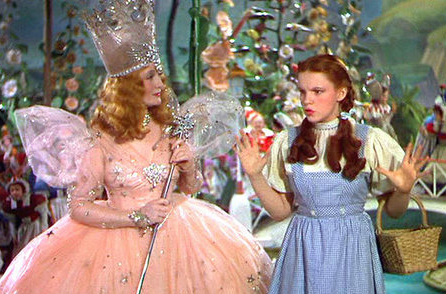
➦In 1885...Mary William Ethelbert Appleton Burke born (Died at age 84 – May 14, 1970). She was professionally known as Billie Burke and was famous on Broadway, on radio, early silent film, and subsequently in sound film. She is best known to modern audiences as Glinda the Good Witch of the North in the Metro-Goldwyn-Mayer movie musical The Wizard of Oz (1939).
Billie Burke and Judy Garland
Burke was nominated for the Academy Award for Best Supporting Actress in 1938 for her performance as Emily Kilbourne in Merrily We Live and is also remembered for her appearances in the Topper film series. Her high-pitched, wavering, aristocratic voice was her trademark, which made her a frequent choice to play dim-witted, spoiled society types.
Billie Burke was the wife of Broadway producer and impresario Florenz Ziegfeld Jr. founder of dance troupe and theatrical revue (and adapted to a radio program from 1932 and 1936), the Ziegfeld Follies which operated from 1914 until his death in 1932.
On CBS Radio, The Billie Burke Show was heard on Saturday mornings from April 3, 1943, until September 21, 1946. Sponsored by Listerine, this situation comedy was initially titled Fashions in Rations during its first year. Portraying herself as a featherbrained Good Samaritan who lived "in the little white house on Sunnyview Lane," she always offered a helping hand to those in her neighborhood. She worked often in early television, appearing in the short-lived sitcom Doc Corkle (1952). She was a guest star on several TV and radio series, including Duffy's Tavern.
➦In 1886...Louis Hazeltine, who invented the neutrodyne circuit, was born. (Died - May 24, 1964).
➦In 1906...Actress/singer Ernestine Wade born (Died at age 76 – April 15, 1983). She is best known for playing the role of Sapphire Stevens on both the radio and TV versions of The Amos 'n' Andy Show. Ernestine began playing Sapphire Stevens in 1939, but originally came to the Amos 'n' Andy radio show in the role of Valada Green. In her interview which is part of the documentary Amos 'n' Andy: Anatomy of a Controversy, Wade related how she got the job with the radio show. Initially there for a singing role, she was asked if she could "do lines". When the answer was yes, she was first asked to say "I do" and then to scream; the scream got her the role of Valada Green.
Stan Freberg
➦In 1926...Stan Freberg was born (Died – April 7, 2015). He was an author, actor, recording artist, voice artist, comedian, radio personality, puppeteer and advertising creative director, whose career began in 1943. He remained active in the industry into his late 80s, more than 70 years after entering it.
His best-known works include "St. George and the Dragonet", Stan Freberg Presents the United States of America, his role on the television series Time for Beany, and a number of classic television commercials.
Freberg began making satirical recordings for Capitol Records, beginning with the February 10, 1951, release of "John and Marsha", a soap opera parody that consisted of the title characters (both played by Freberg) doing nothing but repeating each other's names (with intonations to match the moods). Some radio stations refused to play "John & Marsha," believing it to be an actual romantic conversation between two real people. In a 1954 follow-up, he used pedal steel guitarist Speedy West to satirize the 1953 Ferlin Husky country hit, "A Dear John Letter", as "A Dear John and Marsha Letter". A seasonal recording, "The Night Before Christmas"/"Nuttin' for Christmas", made in 1955, still remains a cult classic.
The popularity of Freberg's recordings landed him his own program, the situation comedy That's Rich. Freberg portrayed bumbling but cynical Richard E. Wilt, a resident of Hope Springs, where he worked for B.B. Hackett's Consolidated Paper Products Company. Freberg suggested the addition of dream sequences, which made it possible for him to perform his more popular Capitol Records satires before a live studio audience. The CBS series aired from January 8 to September 23, 1954.
The Stan Freberg Show was a 1957 replacement for Jack Benny on CBS radio.
➦In 1941...TV station WNBT, Channel 4 in New York City, broadcast the first audience-participation show. Studio guests played charades as part of the fun. Now known as, NewsChannel 4, the station signed on the air as WNBT on July 1, 1941, at 1:29 p.m. This historic event was the beginning of commercial television in the United States. But the imminent start of WWII for America put TV on the back burner for another five years.
➦In 1969...Charlie Greer aired his last show on WABC 770 AM New York.
Charlie Greer (1923-1996) did mid-days and overnights. Given WABC's 50,000 clear channel signal, Greer became a popular all-night disc jockey heard on more than 38 states punching his way through famous tongue twister commercials for an all night men's clothing store called Dennison's in Union, New Jersey.
Greer also spent time with New York City's WCBS-FM in 1973, then and became part of WCBS-FM's Rock and Roll Radio Greats Weekend in the '80s and '90s.
From WAKR in Akron Ohio, Charlie started at WABC on December 7, 1960. He moved back and forth between overnights and middays a couple of times. He was one of the original Swingin’ Seven from Seventy Seven.
He moved to Philadelphia's WIP in 1969 and then back to the New York area to WRKL in New City for a short while, and later worked at WHAM in Rochester, before returning to Akron.
➦In 1971... 93KHJ - Los Angeles early evening DJ/personality - “Humble’ Harve Miller pleaded guilty to second degree murder of his adulterous wife Mary. In a short statement, he said he accidentally shot his wife and still loved her. Miller was the subject of a 13-day nationwide search after the murder in May.
The Federal Communications Commission voted 2-1 on Thursday to repeal the longstanding national television ownership cap that barred any single broadcaster from reaching more than 39% of U.S. TV households, replacing the bright-line limit with a case-by-case public interest review of proposed mergers and acquisitions.
The decision, led by Republican Chairman Brendan Carr and supported by fellow Republican Commissioner Olivia Trusty, overturns a rule in place since 2004. Democratic Commissioner Anna Gomez cast the sole dissenting vote, arguing that Congress alone has the authority to alter the statutory limit and warning that the change would accelerate media consolidation harmful to local news and competition.
Under the new framework, the FCC will evaluate each transaction individually against standards of localism, viewpoint diversity, and competition rather than automatically blocking deals that exceed the old threshold. Carr has described the prior rule as outdated in an era when national programmers and streaming services face no comparable restrictions, saying the shift will let local broadcasters gain the scale needed to compete and invest in community journalism.
The vote arrives as Nexstar Media Group’s $6.2 billion acquisition of Tegna remains frozen in legal limbo. The FCC’s Media Bureau waived the 39% cap in March to clear the deal, which would create the nation’s largest station group reaching roughly 80% of TV households (or about 54.5% after the traditional UHF discount).
Nexstar closed the transaction the same day, but a federal judge later issued a preliminary injunction blocking further integration while an antitrust challenge by DirecTV and several state attorneys general proceeds.
Opponents of the repeal, including public interest groups and some lawmakers, contend the agency exceeded its authority because Congress set the 39% figure in a 2004 appropriations law. Supporters, including the National Association of Broadcasters and major station groups, argue the FCC retains inherent power under the Communications Act to modify its own ownership rules and that the case-by-case approach better reflects today’s fragmented media marketplace.
The order is widely expected to face immediate court challenges.
News Corp reported an 11% rise in fiscal fourth-quarter revenue to $2.34 billion, beating analyst expectations, while net income from continuing operations more than doubled to $230 million.
Shares nonetheless fell more than 3% in after-hours trading.
Segment earnings before interest, taxes, depreciation and amortization climbed 31% to $423 million. On a per-share basis, earnings from continuing operations attributable to shareholders rose to 33 cents from 9 cents a year earlier. Adjusted earnings of 35 cents a share topped the 24 cents analysts polled by FactSet had forecast. The quarter ended June 30.
Growth was broad-based. Dow Jones revenue increased 7% to $644 million, with segment earnings up 20% to $181 million. Advertising revenue rose 5%, as digital gains more than offset print declines.
The Wall Street Journal averaged more than 4.46 million digital-only subscriptions, up from 4.33 million in the prior quarter; total subscriptions including print reached 4.83 million, compared with 4.71 million previously.
Versant Media shares jumped nearly 12% after the company raised its full-year revenue outlook, even as third-quarter sales declined in its third earnings report since spinning off from Comcast.
The owner of cable networks CNBC, MS NOW and E! now expects annual revenue of $6.2 billion to $6.45 billion, up from its May forecast of $6.15 billion to $6.4 billion. Analysts estimate $6.41 billion.
The company posted a profit of $211 million, or $1.49 a share, down from $302 million, or $2.09 a share, a year earlier but above the $1.35 consensus forecast by FactSet analysts. Revenue fell 3.8% to $1.64 billion, beating the $1.62 billion projection.
Versant completed the divestiture of its youth-sports management platform SportsEngine in the second quarter. Excluding that business, total sales declined 2.8%.
Linear distribution revenue dropped 6.3% to $954 million. Advertising and content licensing revenue each fell less than 1%. Platforms revenue rose less than 1% overall and increased 9% excluding SportsEngine.
Executives had previously warned of quarterly fluctuations from content licensing, working capital and higher second-half programming costs, which are factored into the updated full-year guidance.
Versant’s platforms reached more than 120 million viewers monthly during the quarter, Chief Executive Mark Lazarus said. The company also secured multiyear renewal deals with two large distribution partners in the U.S. and Canada.
Cumulus Media has laid off air talent, programmers and management across multiple markets as part of its ongoing financial restructuring.
The company has not disclosed the total number of employees affected, but confirmed departures span stations in California, Michigan, Arkansas, South Carolina, Alabama, Louisiana, Illinois and New York, with additional exits expected in the coming days.
Among the most prominent cuts are longtime KNBR San Francisco midday hosts Greg Papa and Greg Silver. Papa, the play-by-play voice of the NFL’s San Francisco 49ers, has been at KNBR since 2019 after previously hosting at KGMZ-FM. Silver joined the station in 2023 as a producer and moved to middays last November.
Other confirmed departures include Dave Fuller, afternoon host at WDVD Detroit; McConnell Adams, program director of KURB and KLAL in Little Rock; Leo “LB” Baldwin, program director of WOMG and WTCB in the Columbia, S.C., market; and Cami Marlowe, program director and afternoon host at WABD Mobile.
Also let go were Anthony “Big Ant” Simmons, program director at KMJJ and KRMD-FM in Shreveport; Wes Jordan, production director for the Bloomington/Peoria cluster and afternoon host at WZPW; Jordan Lass, assistant program director for WHTS and WKLQ in Grand Rapids and afternoon host at WLAV; and Jay Soderberg, vice president of digital programming operations, podcasts and digital operations in New York.
The layoffs come as Cumulus awaits FCC approval to complete its Chapter 11 restructuring. The court-approved plan would eliminate roughly $592 million in debt, cut annual cash interest expense by about $49 million and transfer ownership to the company’s lenders.
Cumulus has not publicly commented on the reductions or announced programming plans for the affected stations. Several vacancies, including morning and programming leadership roles, are expected to require replacements in the coming weeks.
Cumulus Media's KNBR has laid off longtime Bay Area sportscaster Greg Papa, 63, and his midday co-host Greg Silver. The pair will be replaced on the 10 a.m. to 2 p.m. show by John Lund, a veteran Bay Area radio voice who was dismissed by the station in November 2024.
Silver confirmed the layoffs. Papa declined to comment.
Papa, a 42-year broadcasting veteran and four-time California Sportscaster of the Year, retains his separate contract as the San Francisco 49ers’ radio play-by-play announcer, a role he has held since 2019. His status with the team is unchanged, a team spokesman said.
Papa was diagnosed with leukemia just over a year ago. He returned to his North Bay home last month after a life-threatening 78-day hospital stay at UCSF Medical Center that included lung failure. He underwent a successful bone marrow transplant on March 4 and is now cancer-free, though he continues to use supplemental oxygen at reduced levels after both lungs collapsed during his nearly three-month hospitalization.
President Donald Trump’s job approval varies sharply based on a person's primary news source. Data from national surveys, such as the Marquette Law School Poll, show a distinct political polarization of news audiences, where right-leaning outlets record high net approval ratings and mainstream or public media audiences lean heavily negative.
Pro-Trump and Conservative Audiences
Audiences whose primary news sources are conservative networks or alternative media platforms report high rates of approval for President Trump:
Newsmax: Highest net approval, with audience approval ratings around 85% (+70 net margin).
Fox News: High approval, with roughly 68% to 74% approval among its regular viewers (+36 net margin).
Podcasts: Show majority support, averaging around 58% approval (+16 net margin).
Neutral and Mixed Media Audiences
Audiences relying on local reporting, general social platforms, or traditional print show split or moderately negative margins:
Local Radio: Sits near an even split, with roughly 47% approval (-6 net margin).
Social Media: Leans negative, with roughly 39% approval (-22 net margin).
Local Newspapers: Leans more negative (-30 net margin).
A recent Ampere Analysis survey underscores the growing dominance of media in daily life, revealing that consumers in the UK and US devote nearly 11 hours each day to it—more time than they typically spend sleeping or working. The study also highlights how varied and fragmented these habits have become.
People now draw from an expanding array of options shaped by mood, age, and immediate needs. “Today’s consumers have more varied media diets than ever before, selecting from an expanding menu of media depending on what they want in the moment,” said Ampere Research Manager Sam Nursall.
“Whether they’re looking to relax, discover something new or simply fill spare time, each medium serves a different purpose. That’s today’s attention economy. For advertisers and broadcasters, understanding those different moments is just as important as understanding the audience itself.”
For the 16th week in a row, “World News Tonight with David Muir” stood as the No. 1 program in Total Viewers (8.168 million) on all of broadcast and cable (excluding sports) during the week of July 27, 2026, based on Live+Same Day Big Data Plus Panel Program Ratings from Nielsen Media Research.
“World News Tonight with David Muir” ranked as the No. 1 newscast in all of broadcast and cable in Total Viewers (8.168 million), Adults 25-54 (1.078 million) and Adults 18-49 (822,000).
“World News Tonight” outperformed “NBC Nightly News” (6.620 million, 948,000 and 708,000, respectively) in Total Viewers (+23%/+1.548 million), Adults 25-54 (+14%/+130,000) and Adults 18-49 (+16%/+114,000).
“World News Tonight” (8.168 million, 1.078 million and 822,000, respectively) beat “CBS Evening News” (4.127 million, 570,000 and 401,000, respectively) in Total Viewers (+98%/+4.041 million), Adults 25-54 (+89%/+508,000) and Adults 18-49 (+105%/+421,000).
FOX News Channel (FNC) wrapped up the week of July 27th with 2.7 million weekday primetime viewers, dominating all of television, surpassing NBC (2.6 million viewers), ABC (2.3 million viewers) and CBS (2.2 million viewers) according to Nielsen Media Research Big Data + Panel.
Year to date (12/29/26 - 8/02/26), FNC has overtaken CBS in weekday primetime viewers, averaging 2,885,000 viewers while CBS is averaging 2,878,000 viewers. In Monday – Sunday primetime, FNC secured over 2.3 million viewers, marking a two percent increase week to week and leading CBS (2.1 million viewers) and ABC (2.1 million viewers).
In Monday – Sunday total day, FNC notched nearly 1.5 million viewers, marking a four percent increase week to week and a three percent increase year over year. Notably, CBS’ CBS Mornings (1,568,000 viewers; 228,000 A25-54) continued its downward trajectory, delivering its lowest-rated week in the program’s history, posting under 1.6 million viewers for the third consecutive week. The week also marks the program’s tenth straight week below 300,000 viewers in the 25-54 demo.
FNC’s The Five continued to lead the week, claiming nearly 3.4 million viewers and 302,000 in the 25-54 demo. In the 6 PM/ET hour, Special Report with Bret Baier garnered almost 2.6 million viewers and 198,000 in the 25-54 demo. At 7 PM/ET, The Ingraham Angle saw 2.5 million viewers and 226,000 in the 25-54 demo. During the 8 PM/ET hour, Jesse Watters Primetime clinched more than 3.1 million viewers and 298,000 in the 25-54 demo. In the 9 PM/ET hour, Hannity delivered nearly 2.6 million viewers and 236,000 in the 25-54 demo. At 11PM/ET, FOX News @ Night with Trace Gallagher secured almost 1.5 million viewers and 132,000 in the 25-54 demo.
The Walt Disney Co. has sold out all commercial time for ESPN’s telecast of the 2027 Super Bowl, which will air on ABC on Feb. 14.
Chief Financial Officer Hugh Johnston announced the sellout during the company’s earnings call Wednesday. The game, to be played at SoFi Stadium in Los Angeles, will also air on ESPN with an alternative feed hosted by Peyton and Eli Manning, and stream on the ESPN app and NFL+ app.
Disney did not disclose pricing, though reports indicated it sought about $10 million for a 30-second spot—matching rates NBC achieved the prior year. Spots went to 58 brands across 34 product categories, including financial services, candy, personal care and software; nine of the brands will appear in the Super Bowl for the first time.
The Super Bowl remains the most-watched television event of the year and a major revenue driver. Fox reported more than $800 million across its platforms for the 2025 contest, in which the Philadelphia Eagles defeated the Kansas City Chiefs 40-22. Viewership reached a record 127.7 million on Fox and Tubi in 2025, following 125 million the previous year on NBC, Telemundo and Peacock.
ESPN has carried NFL games since 1987 but has never produced a Super Bowl. ABC last aired the game in 2006 (Super Bowl XL), when the Pittsburgh Steelers’ 21-10 win over the Seattle Seahawks drew 90.7 million viewers under Nielsen’s then-methodology, which excluded out-of-home viewing.
More Layoffs: Cumulus Media has laid off air talent, programmers and management across multiple markets as part of its ongoing financial restructuring. The company has not disclosed the total number of employees affected, but confirmed departures span stations in California, Michigan, Arkansas, South Carolina, Alabama, Louisiana, Illinois and New York, with additional exits expected in the coming days.
Papa Out: Cumulus Media's KNBR has laid off longtime Bay Area sportscaster Greg Papa, 63, and his midday co-host Greg Silver. The pair will be replaced on the 10 a.m. to 2 p.m. show by John Lund.
Media Life: A recent survey underscores the growing dominance of media in daily life, revealing that consumers devote nearly 11 hours each day to it—more time than they typically spend sleeping or working. The study also highlights how varied and fragmented these habits have become.
Cumulus Media is further trimming its portfolio by returning the license of 560 KZAC San Francisco to the FCC, ending the station’s nearly century-long history.
The company had kept the station silent since March 2025 after moving its programming to 810 KGO in November 2024.
During that silent period, Cumulus told the FCC it was negotiating a sale that ultimately did not materialize.
(5kw)
Originally launched as 1390 KTAB Oakland in 1925, the station shifted frequencies before settling on 560 in 1929. It adopted the KSFO call letters in 1935 and retained them until 2024, when Cumulus transferred the intellectual property to the former 810 KGO frequency. The two stations simulcast until KZAC went silent.
Acquired by Gene Autry’s Golden West Broadcasters in 1956, the station ran a middle-of-the-road format into the early 1980s, followed by adult standards and oldies. It flipped to talk in 1993 and later became a conservative talk outlet after becoming co-owned with the former KGO.